-
Call Now ! +86 18231158869
-
Email Now [email protected]

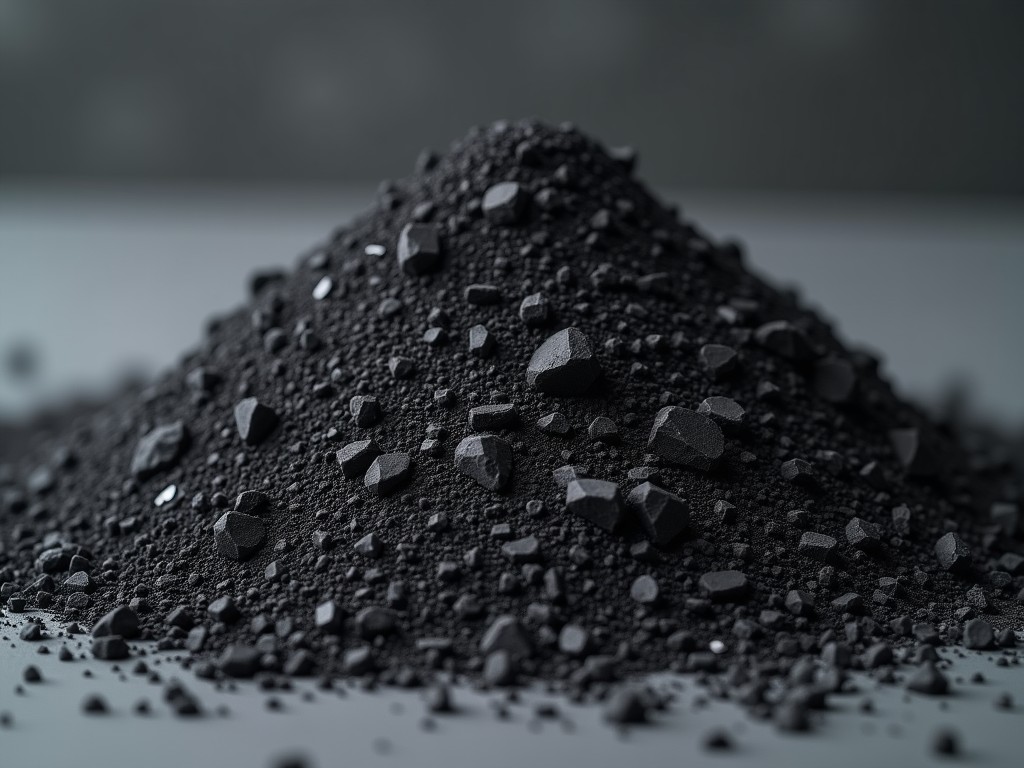
Calcined Petroleum Coke Manufacturing Process
Calcined Petroleum Coke Manufacturing Process
Calcined petroleum coke (CPC) is produced by heating green petroleum coke in a controlled atmosphere to drive off volatiles and increase fixed carbon content. The resulting material is used primarily as a carbon additive in aluminum smelting, steelmaking, and as a precursor for graphite electrodes.
Raw Material Preparation
Green petroleum coke, the by‑product of delayed coking units, contains residual hydrocarbons, sulfur, and moisture. Before calcination, it is crushed to a uniform size distribution (typically 5–25 mm) and dried to reduce moisture below 0.5 % to prevent steam explosions in the kiln.
Calcination Stage
The dried coke is fed into a rotary kiln or shaft calciner where temperatures are raised to 1,200–1,400 °C under a low‑oxygen atmosphere (often nitrogen or flue gas). At these temperatures, volatile matter is expelled, increasing fixed carbon from roughly 85 % to over 98 % and reducing hydrogen and sulfur content.
Residence time varies with kiln design but generally ranges from 30 to 60 minutes. The process is monitored by thermocouples and gas analyzers to maintain a consistent temperature profile and prevent over‑burning, which would cause structural weakening of the coke particles.
Cooling and Handling
After calcination, the hot coke is discharged onto a vibrating grate or into a cooler where it is reduced to below 200 °C using ambient air or water spray. Proper cooling prevents thermal shock and preserves the crystalline structure needed for downstream applications.
The cooled product is then screened to remove oversize fragments and conveyed to storage silos. Bulk density of calcined petroleum coke typically falls between 0.80 and 0.95 g/cm³, depending on the source green coke and calcination severity.
Quality Control Philosophy
Key specifications are verified through routine laboratory testing: fixed carbon (≥ 98 %), volatile matter (≤ 0.5 %), sulfur (≤ 0.5 % for anode grade), moisture (≤ 0.2 %), and real density (measured via toluene displacement). Particle size distribution is checked to ensure suitability for anode baking or electrode extrusion.
Sampling is performed at multiple points—kiln discharge, cooler exit, and final storage—to capture any variations. Control charts track trends in sulfur and volatile content, enabling prompt adjustments to kiln temperature or feed rate.
Typical Applications
In aluminum production, calcined petroleum coke serves as the primary carbon anode material; its low sulfur and high conductivity reduce anode consumption and improve cell efficiency. In steelmaking, it is used as a recarburizer to adjust carbon content of molten steel with minimal impact on melt temperature.
For graphite electrode manufacturing, the coke is further graphitized at temperatures exceeding 2,500 °C; the purity achieved during calcination directly influences the final electrode’s electrical resistivity and mechanical strength.
Specifications Table
| Parameter | Typical Range | Test Method |
|---|---|---|
| Fixed Carbon (%) | 98.0 – 99.5 | ASTM D3172 |
| Volatile Matter (%) | 0.2 – 0.6 | ASTM D3175 |
| Sulfur (%) | 0.3 – 0.7 (anode grade) | ASTM D4239 |
| Moisture (%) | ≤ 0.2 | ASTM D3302 |
| Real Density (g/cm³) | 0.80 – 0.95 | ISO 12106 |
| Top Size (mm) | ≤ 25 | Sieving (ASTM D4749) |
Frequently Asked Questions
Can the calcination temperature be adjusted for specific end‑use requirements?
Yes. Higher temperatures (up to 1,450 °C) further reduce volatiles and sulfur, producing a product suited for ultra‑low‑anode applications. Lower temperatures preserve more volatile matter, which may be beneficial for certain carbon‑raising processes. Adjustments are made based on customer specifications and are discussed during project scoping.
What information is needed to obtain a quotation?
To generate an accurate quote we require the desired fixed carbon and sulfur limits, required particle size distribution, estimated annual volume, and any special packaging or certification needs (e.g., REACH, ISO 9001). Providing this data enables us to tailor the kiln schedule and logistics.
How is quality consistency ensured between batches?
We implement statistical process control on key kiln variables—temperature profile, residence time, and feed rate. Each batch undergoes full chemical analysis, and results are compared against historical averages. Any deviation beyond defined control limits triggers a review and possible reprocessing.
Get in Touch
For technical inquiries, sample requests, or project‑specific consultation, please contact our engineering team. We will respond with a detailed process proposal and lead‑time estimate.
Contact Us
×