-
Call Now ! +86 18231158869
-
Email Now [email protected]

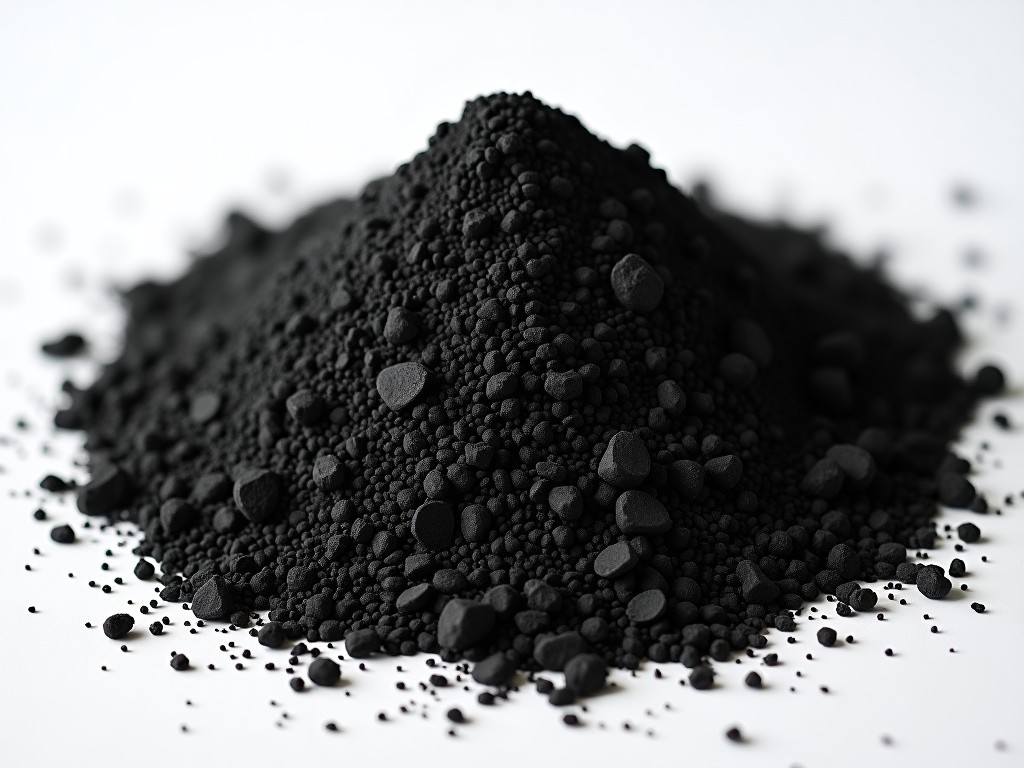
China Graphite Petroleum Coke Manufacturer
Graphite Petroleum Coke – Technical Overview
Graphite petroleum coke (GPC) originates from the delayed coking of heavy petroleum fractions. After coking, the green coke undergoes calcination at approximately 1,200 °C to remove volatiles, followed by graphitization at 2,500 – 3,000 °C in an inert atmosphere, which orders the carbon layers into a graphite‑like structure.
Material Composition and Properties
Typical fixed carbon content ranges from 98.5 % to 99.5 % on a dry basis, while sulfur remains below 0.5 % for low‑sulphur grades. Ash content is generally under 0.5 %, and volatile matter is less than 0.5 % after calcination. The real density lies between 2.05 and 2.15 g/cm³, and electrical resistivity measures 5‑8 µΩ·m at room temperature, reflecting its high graphitic order.
Manufacturing Process in China
Chinese producers integrate delayed coking units with rotary kiln calciners and Acheson‑type graphitization furnaces. The coking step operates at 480‑500 °C under slight pressure, producing green coke with a porous structure. Calcination removes residual hydrocarbons, and the subsequent graphitization stage uses direct current heating to achieve the required crystalline alignment, allowing precise control over sulfur and nitrogen levels.
Typical Specifications
| Parameter | Unit | Typical Range | Test Method |
|---|---|---|---|
| Fixed Carbon (dry basis) | % | 98.5 – 99.5 | ASTM D3172 |
| Sulfur | % | ≤0.5 (low‑S) / 0.5‑1.2 (standard) | ASTM D4239 |
| Ash | % | ≤0.5 | ASTM D3174 |
| Volatile Matter | % | ≤0.5 | ASTM D3175 |
| Real Density | g/cm³ | 2.05 – 2.15 | ASTM D2854 |
| Electrical Resistivity | µΩ·m | 5 – 8 | ASTM D257 |
Primary Industrial Applications
In aluminium smelting, GPC serves as the principal anode material due to its high electrical conductivity and resistance to electrochemical erosion at operating currents exceeding 300 kA. The low sulfur content minimizes anode gas emissions, supporting compliance with environmental regulations.
Steel mills utilize GPC as a carbon raiser in electric arc furnaces; its high fixed carbon and low ash improve melt carbon recovery while reducing slag volume. The consistent particle size distribution ensures uniform dissolution during the melt cycle.
Power plants employ low‑sulphur GPC as a supplementary fuel in circulating fluidized bed boilers, where its high calorific value (~33 MJ/kg) and low ash reduce fouling and extend interval between maintenance outages.
Additionally, GPC is a precursor for graphite electrodes and specialty carbon products, where its graphitic structure provides the necessary mechanical strength and thermal conductivity for high‑temperature electrolysis.
Quality Assurance and Testing
Producers implement a multi‑stage sampling plan: incremental samples are taken from each lot during discharge, combined to form a composite, and subdivided for laboratory analysis. Test protocols follow ASTM and ISO standards, covering proximate analysis, sulfur determination, density, and resistivity. Calibration of equipment is performed quarterly using certified reference materials.
Traceability is maintained through batch numbers linked to production parameters (coking temperature, calcination soak time, graphitization current). Non‑conforming material is segregated and investigated to prevent recurrence.
Customization Options
- Particle size grading – from fine powder (<0.063 mm) to coarse lumps (5‑25 mm) according to downstream processing requirements.
- Moisture content control – drying to ≤0.1 % for anode bake applications or maintaining controlled moisture for fuel blending.
- Sulfur level specification – low‑sulphur (<0.3 %), standard (0.3‑0.8 %), or high‑sulphur grades based on client emission targets.
- Packaging – 25 kg multi‑wall paper bags, 500 kg flexible intermediate bulk containers (FIBC), or bulk vessel loading with liner protection.
Inquiry and Technical Support
For detailed technical datasheets, sample requests, or project‑specific consultation, please reach out to our engineering team.
Request a quotation | Download datasheet | Contact technical support
×