-
Call Now ! +86 18231158869
-
Email Now [email protected]

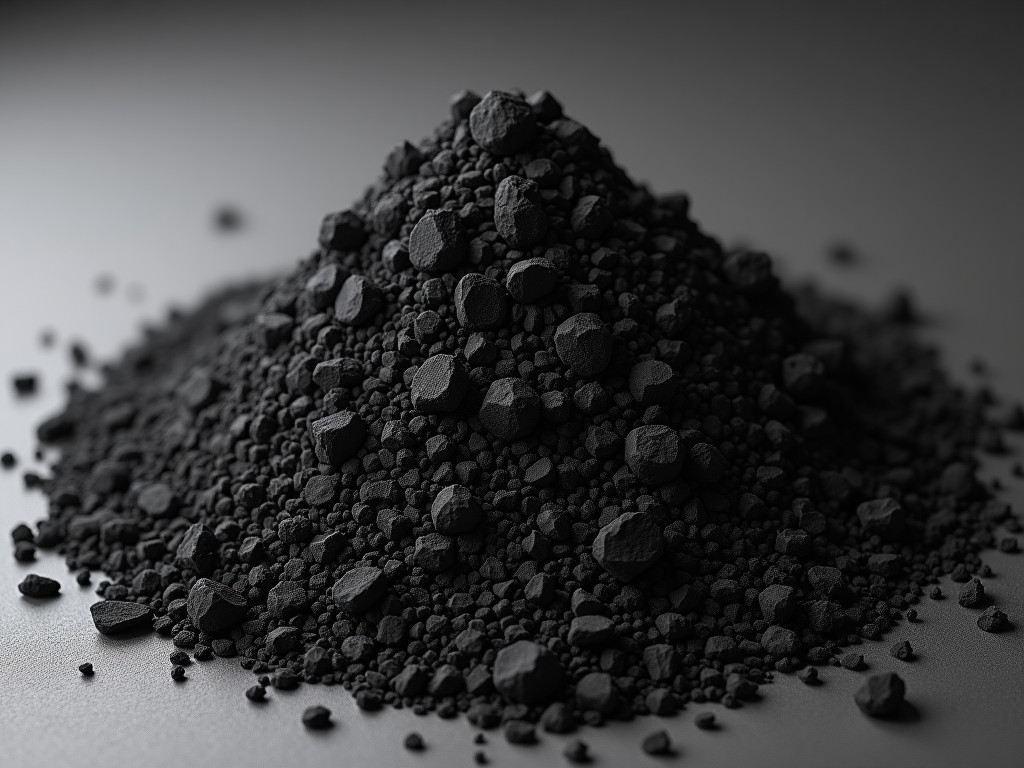
Factory Price Hard Coke Coal Price
Factory Price Hard Coke Coal
Hard coke coal is a high‑carbon, low‑volatile solid fuel produced by heating bituminous coal in the absence of air. Its properties make it suitable for use as a reducing agent in blast furnaces, foundry cupolas, and chemical processes where consistent carbon content and low impurity levels are required.
Technical Specifications
Typical laboratory analysis of hard coke coal supplied from major producers shows the following ranges. Values vary with feed coal and coking conditions; actual figures are confirmed per lot.
| Property | Typical Value | Test Method |
|---|---|---|
| Fixed Carbon (dry basis) | 85 % – 92 % | ASTM D3175 |
| Volatile Matter (dry basis) | 1 % – 5 % | ASTM D3175 |
| Ash (dry basis) | 4 % – 12 % | ASTM D3174 |
| Sulfur (dry basis) | 0.3 % – 0.8 % | ASTM D4239 |
| Calorific Value (GCV) | 28 – 32 MJ/kg | ASTM D5865 |
| Top Size (screen) | 50 mm (max) | ASTM D4749 |
| Bottom Size (screen) | 5 mm (min) | ASTM D4749 |
Sampling follows ISO 18283 procedures; each batch is accompanied by a certificate of analysis indicating the actual values for the lot.
Applications
In ironmaking, hard coke serves as both fuel and reductant; its high fixed carbon provides the necessary heat while low volatile matter minimizes gas generation that could disturb furnace burden distribution. The low sulfur content helps maintain steel quality by limiting sulfur pickup in the melt.
Foundry cupolas rely on consistent particle size and reactivity; the specified top size of 50 mm ensures stable bed permeability, while the bottom size limit prevents excessive fines that could cause channeling or pressure drops.
Chemical industries use hard coke as a carbon source for carbide production or as a support material in catalytic reactors; the predictable ash composition allows accurate mass balance calculations in downstream processes.
Quality Control Philosophy
Control starts with coal selection; only bituminous coals with known volatile matter and caking index are accepted for coking. During coking, temperature ramps and soak times are monitored to achieve target fixed carbon development without over‑cracking the structure.
After quenching, the coke is screened and stored under cover to prevent moisture reabsorption. Each shift’s output undergoes proximate analysis; results are trended and any deviation beyond ±1 % for fixed carbon or ±0.2 % for sulfur triggers a hold and investigation.
Final inspection includes visual assessment for surface cracking and size conformity; only lots meeting all criteria are released for shipment.
Pricing & Availability
Factory price is quoted on an FOB basis at the loading port. Price depends on the contracted specification (fixed carbon, sulfur, size) and the volume ordered; larger tonnages typically receive a graduated discount.
Minimum order quantity is usually 500 metric tons for standard grades; smaller trial lots can be arranged upon request, subject to additional handling charges.
Lead time from order confirmation to vessel loading ranges from 10 to 25 working days, depending on plant schedule and port congestion. Exact dates are confirmed at the time of quotation.
Frequently Asked Questions
Can the size distribution be customized?
Yes. Screening can be adjusted to meet specific top and bottom size limits; any change may affect handling characteristics and should be discussed during quotation.
What information is required before a quotation?
Required details include desired fixed carbon range, maximum sulfur, size specifications, order quantity, delivery port, and preferred Incoterms. Providing a target consumption rate helps the supplier assess lot homogeneity.
How is quality verified upon receipt?
Buyers typically conduct independent proximate analysis on a representative sample taken according to ISO 18283. Results are compared to the supplier’s certificate of analysis; discrepancies above agreed tolerances trigger a claim procedure.
What packaging options are available for export?
Standard export is in bulk via open‑top containers or flat‑rack containers. For specialized handling, the coke can be bagged in 25 kg polypropylene sacks or placed in super‑sacks of 1 metric ton, both options subject to additional cost.
To obtain a current factory price quotation or discuss technical suitability for your process, please use the link below.
Contact Us for a Quotation
×