-
Call Now ! +86 18231158869
-
Email Now [email protected]

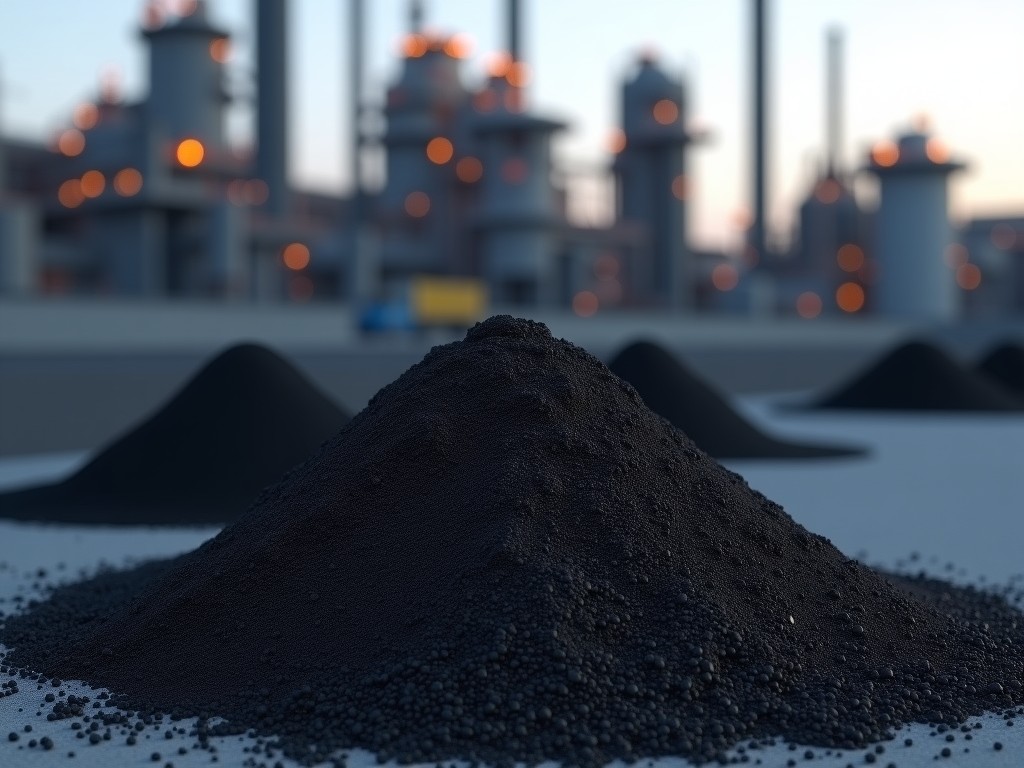
Non Calcined Petroleum Coke Calcination Refinery
Non Calcined Petroleum Coke Calcination Refinery
Non calcined petroleum coke, commonly referred to as green coke, is the solid carbonaceous residue produced during the delayed coking unit of a petroleum refinery. It contains significant volatile matter, residual hydrocarbons, and varying sulfur levels that must be removed before the material can be used in anode or graphite applications. The calcination process drives off these volatiles through controlled heating, transforming green coke into a product with predictable electrical and physical properties.
Material Characteristics of Green Coke
Typical green coke exhibits a volatile matter content between 10 and 18 wt %, measured according to ASTM D3172. Its sulfur content generally ranges from 2.5 to 5.0 wt % depending on the feedstock crude and coking conditions. Moisture after handling is usually below 0.5 wt %, while the real density falls in the range of 1.30 to 1.45 g/cm³. Particle size distribution is often reported as a Rosin‑Rammler spread with a D50 between 2 and 5 mm for as‑received lumps.
Calcination Process Overview
Calcination is performed in either a rotary kiln or a shaft (vertical) kiln, where the green coke is heated to a peak temperature of 1280 °C to 1350 °C under an inert or slightly reducing atmosphere. The residence time at peak temperature typically lasts 30 to 60 minutes, sufficient to decompose residual hydrocarbons and drive off volatile matter as CO, CO₂, and light hydrocarbons. Off‑gas treatment systems capture sulfur oxides and particulates to meet environmental regulations.
Resulting Calcined Coke Properties
After calcination, volatile matter is reduced to less than 0.5 wt %, and the real density increases to 1.55‑1.65 g/cm³ due to structural ordering. Electrical resistivity of the calcined product falls in the range of 45‑65 µΩ·m, making it suitable for prebaked anodes. The CO₂ reactivity, measured by the ISO 10462 method, typically shows a value below 0.5 % / min, indicating low gasification tendency under anode baking conditions.
Industrial Applications
Calcined petroleum coke serves as the primary carbonaceous binder in the manufacture of prebaked anodes for aluminum smelting, where its low resistivity and controlled reactivity ensure efficient energy consumption and stable cell voltage. It is also used as a filler and strengthener in graphite electrodes for electric arc furnaces, where the material’s high real density and low ash content contribute to mechanical integrity. In addition, certain grades find use as a carburizing agent in steelmaking, providing a controlled carbon boost with minimal sulfur introduction.
Quality Control and Testing
Quality assurance follows ASTM standards: volatile matter (D3172), ash content (D3174), sulfur (D3177/D4239), moisture (D3173), and real density (D3805). Electrical resistivity is measured using a four‑point probe method on baked specimens, while CO₂ reactivity is assessed via thermogravimetric analysis under a controlled CO₂ flow. Each lot is accompanied by a certificate of analysis that reports the average and standard deviation of these parameters.
Customization Options
Customers can specify size fractions such as crushed to 0‑5 mm, 5‑10 mm, or custom screenings to match downstream grinding or feeding equipment. Sulphur limits can be tightened to below 2.0 wt % through selective blending or additional desulfurization steps. Moisture content after calcination is typically kept under 0.1 wt % by employing cooled storage and dry‑air conveyance. Packaging options include bulk railcars, sealed super‑sacks of 1 tonne, or 25 kg valve‑sealed bags for laboratory trials.
Typical Values
| Property | Green Coke (Typical) | Calcined Coke (Typical) |
|---|---|---|
| Volatile Matter (wt %) | 12‑16 | <0.5 |
| Sulfur (wt %) | 2.5‑5.0 | 2.5‑5.0 (unchanged) |
| Real Density (g/cm³) | 1.30‑1.45 | 1.55‑1.65 |
| Electrical Resistivity (µΩ·m) | Not applicable (high) | 45‑65 |
| CO₂ Reactivity (%/min) | Not applicable | <0.5 |
| Ash (wt %) | 0.5‑1.2 | 0.5‑1.2 (unchanged) |
Technical Support and Inquiry
To obtain a quotation or discuss specific project requirements, provide the desired quantity, target sulfur level, size fraction, and any special testing criteria. Our technical team will review the information and respond with a detailed proposal, including lead time and logistics options.
×