-
Call Now ! +86 18231158869
-
Email Now [email protected]

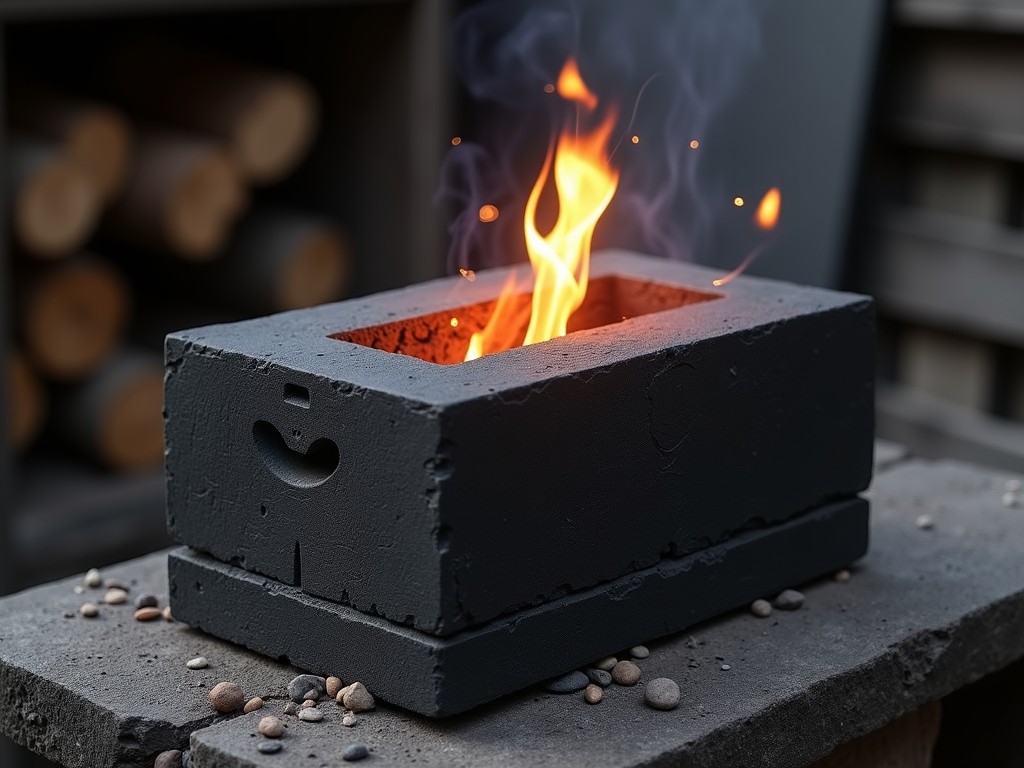
Oem Blacksmith Coke Forge For Sale
OEM Blacksmith Coke Forge for Sale
A blacksmith coke forge is a refractory‑lined chamber designed to burn metallurgical coke at temperatures sufficient to heat ferrous workpieces for forging, welding, or heat‑treatment. The forge provides a controlled, oxidizing atmosphere where coke combustion releases radiant heat, enabling the workpiece to reach typical forging temperatures between 1,200 °C and 1,350 °C.
The forge body is typically fabricated from welded steel plate, 6 mm to 8 mm thick, forming a rectangular or cylindrical shell. Inside, a hot‑face lining of high‑alumina firebrick (Al₂O₃ ≥ 85 %) or silicon carbide castable protects the steel from temperatures exceeding 1,400 °C. A forced‑air blower delivers pre‑heated secondary air through tuyeres positioned at the grate, maintaining a stable coke bed and adjustable flame characteristics.
| Parameter | Typical Value | Unit |
|---|---|---|
| Internal Chamber Length | 300 – 600 | mm |
| Internal Chamber Width | 200 – 400 | mm |
| Internal Chamber Height | 150 – 250 | mm |
| Maximum Operating Temperature | 1,350 | °C |
| Coke Consumption Rate | 0.8 – 1.2 | kg/h |
| Air Supply Pressure | 0.2 – 0.4 | bar (gauge) |
| Refractory Lining Thickness | 75 – 100 | mm |
| Overall Length (incl. frame) | 800 – 1,200 | mm |
| Overall Width | 500 – 800 | mm |
| Overall Height | 900 – 1,300 | mm |
| Approximate Weight | 120 – 250 | kg |
OEM blacksmith coke forges are commonly used in small‑to‑medium forge shops that produce hand‑forged tools, knives, axes, and artistic metalwork. The radiant heat profile from a coke fire allows precise temperature control for processes such as drawing out, upsetting, and forge welding of carbon and alloy steels. Because the forge operates with a solid fuel source, it is suitable for locations where electrical or gas supplies are limited or where a traditional solid‑fuel process is preferred for metallurgical reasons.
- Internal chamber size adjustable from 200 mm × 150 mm × 100 mm up to 800 mm × 600 mm × 300 mm.
- Choice of refractory lining: high‑alumina firebrick, silicon carbide castable, or insulating firebrick for lower heat loss.
- Air supply options: single‑stage blower, variable‑frequency drive (VFD) controlled blower, or manual damper system.
- Frame configurations: stationary base with leveling feet, portable skid with fork‑lift pockets, or integrated work‑bench.
- Instrumentation: thermocouple ports, temperature indicator, pressure gauge, and optional PID controller for air flow.
- Surface treatment: primer‑coated steel shell with optional high‑temperature resistant paint.
Each forge undergoes dimensional verification of the shell and chamber using calibrated CMM or laser tracker to ensure tolerances within ±2 mm. Refractory linings are inspected for proper curing and adhesion, with a non‑destructive tap test and visual inspection for cracks prior to shipment. A functional fire test is performed at 1,200 °C for 30 minutes to validate temperature uniformity and to confirm that the air system delivers the specified flow rate.
Frequently Asked Questions
Q: Can the forge dimensions be customized to match existing tooling?
A: Yes. The internal chamber size, overall frame, and tuyere placement are all adjustable according to the customer’s workpiece size and forging process requirements.
Q: What refractory materials are available for the lining?
A: Options include high‑alumina firebrick (≥85 % Al₂O₃), silicon carbide castable, and insulating firebrick for lower thermal mass applications.
Q: How is the forge shipped and protected against damage?
A: The unit is crated with foam edge protectors, sealed in a heat‑shrinkable polyethylene cover, and secured to a pallet for fork‑lift handling. Moisture‑absorbent desiccant packs are included to prevent refractory degradation during transit.
Q: Is installation assistance provided?
A: Installation manuals, electrical schematics for the blower, and optional on‑site commissioning services are available upon request.
For detailed quotation, technical drawings, or to discuss specific forge requirements, please contact our engineering team.
Request a Quote
×