-
Call Now ! +86 18231158869
-
Email Now [email protected]

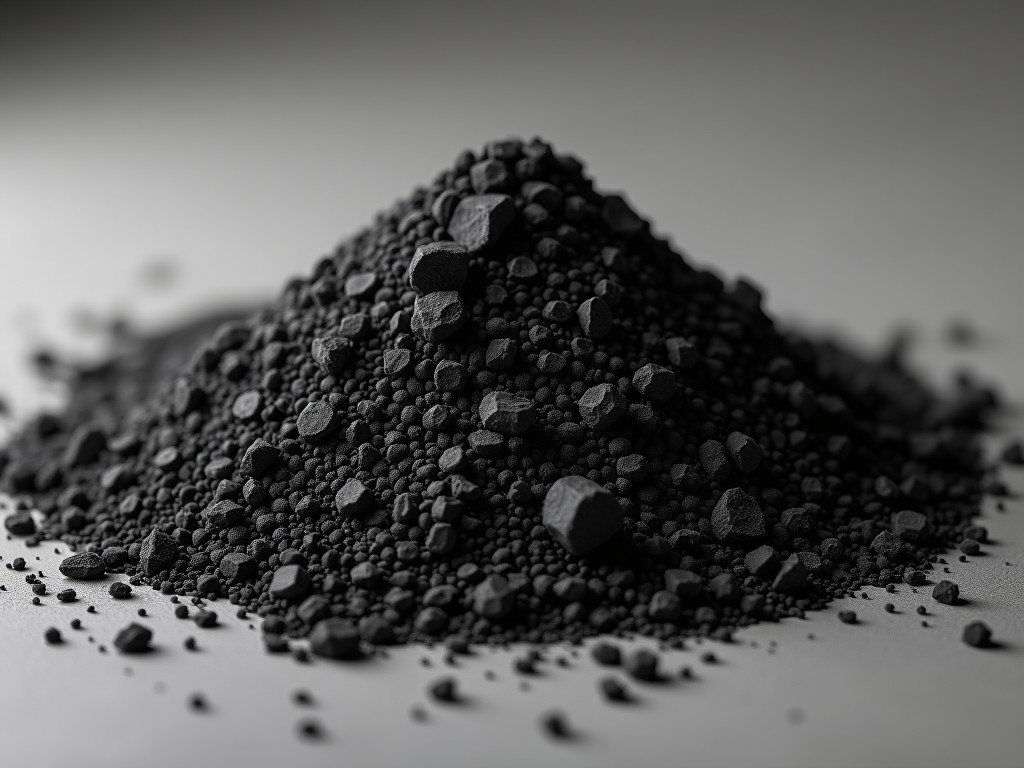
B2B Petroleum Needle Coke Price And Production
Petroleum Needle Coke: Price and Production Overview for B2B Buyers
Petroleum needle coke is a premium carbon material derived from the delayed coking of specific heavy oil fractions, characterized by a highly anisotropic structure with needle‑shaped domains that develop during high‑temperature heat treatment.
Its key engineering attributes include a real density typically above 2.00 g/cm³, low electrical resistivity (often below 8 µΩ·m), and a coefficient of thermal expansion that is markedly lower in the axial direction than radially, properties that stem from the preferred orientation of graphene layers.
Production Process and Critical Controls
The process begins with selection of a low‑sulphur, low‑metal vacuum residue that feeds a delayed coker operating at temperatures around 480‑500 °C and pressures of 1‑2 bar to form green coke.
Green coke then undergoes calcination at 1200‑1300 °C in a rotary kiln to remove volatiles and stabilize the structure, followed by graphitization at 2800‑3000 °C where the needle‑like texture develops under applied pressure or tension to enhance anisotropy.
Throughout these stages, parameters such as soaking time, heating rate, and atmosphere composition are tightly monitored because they directly influence the final domain size, pore structure, and impurity levels.
Factors That Influence B2B Pricing
Feedstock quality is the primary cost driver; residues with higher aromatic content and lower heteroatom levels yield more needle‑coke per ton but command a premium price.
Coking severity—measured by the conversion yield and the coke’s hydrogen‑to‑carbon ratio—affects both yield and the degree of anisotropy, which in turn impacts market value.
Post‑coking treatments such as calcination temperature profile and graphitization pressure add energy costs; plants that recover waste heat or utilize renewable electricity can offer more competitive pricing.
Finally, logistics and lot size influence the quoted price; larger, regular shipments reduce handling overhead, while specialized grades with tight size distributions may incur additional processing fees.
Typical Technical Specifications
| Property | Typical Value | Unit |
|---|---|---|
| Real Density | 2.00‑2.15 | g/cm³ |
| Electrical Resistivity | 6‑9 | µΩ·m |
| Axial CTE | 0.5‑1.0 | ×10⁻⁶/K |
| Radial CTE | 5‑7 | ×10⁻⁶/K |
| Ash Content | 0.1‑0.3 | wt% |
| Volatile Matter | <0.5 | wt% |
Values represent typical ranges for commercial needle coke grades; actual figures can be tailored to meet specific customer requirements through adjustments in feedstock selection and process parameters.
Applications and Rationale for Use
Needle coke’s anisotropic structure enables the production of graphite electrodes with low electrical resistivity and high mechanical strength, essential for efficient electric arc furnace (EAF) steelmaking where energy consumption and electrode consumption directly affect operating costs.
In lithium‑ion battery manufacturing, needle coke serves as a precursor for synthetic graphite anodes; its high degree of layer alignment provides superior lithium intercalation kinetics and cycling stability compared with isotropic coke.
- EAF steel mills – reduces electrode breakage and lowers specific energy demand.
- Graphite anode producers – improves first‑cycle efficiency and rate capability.
- Specialty carbons – used in high‑modulus composites where directional thermal conductivity is required.
- Nuclear graphite – low impurity levels and predictable dimensional change under irradiation.
Each application leverages the directional properties that arise from the needle‑like texture, making the material selection a technical decision rather than a generic commodity choice.
Quality Control Philosophy
Control starts with feedstock inspection, where spectroscopic analysis quantifies sulphur, nitrogen, and trace metals that could impair graphitization.
During coking, online temperature and pressure logs are correlated with periodic coke sampling for nitrobenzene insoluble (NBI) content, a proxy for anisotropic development.
Post‑calcination, real density is measured via helium pycnometry, while electrical resistivity is assessed using a four‑point probe on extruded specimens.
Final graphitized lots undergo lot‑to‑lot comparison of X‑ray diffraction (XRD) peak sharpening and Raman ID/IG ratios to confirm domain size consistency before release.
Customization Options
Particle size distribution can be adjusted through crushing and screening to meet specific downstream milling or extrusion processes, with common cuts ranging from 0‑5 mm for anode powder to 5‑20 mm for electrode blanks.
Surface treatment options include oxidation to increase wettability for binder impregnation or coating with pitch to improve green strength before graphitization.
For customers requiring ultra‑low impurity grades, additional solvent extraction steps can be quoted, which reduce metal content to sub‑ppm levels.
Frequently Asked Questions
Can the needle coke be supplied with a guaranteed maximum sulphur content?
Yes, specifications can be set to ≤0.05 wt% sulphur upon request, which involves selecting appropriate feedstock and may affect pricing.
What information is needed to obtain a formal quotation?
Required details include desired grade (based on real density and resistivity), target particle size range, lot size, delivery terms, and any special testing or certification needs.
How is product consistency verified between batches?
Each batch is accompanied by a certificate of analysis showing real density, resistivity, ash, volatile matter, and XRD-derived crystallite size; statistical process control charts are maintained for trending.
What packaging options are available for export?
Standard packaging comprises 25 kg multi‑wall paper bags placed on pallets and stretch‑wrapped; bulk options include 1‑tonne flexible intermediate bulk containers (FIBCs) with inner liners for moisture protection.
Next Steps
To discuss how our petroleum needle coke can meet your specific technical and commercial requirements, please reach out for a detailed quotation.
Request a Quote
×