-
Call Now ! +86 18231158869
-
Email Now [email protected]

Nov Back to list
Industrial Recarburizer Manufacturer Technical Performance Analysis
Precision in carbon content is the thin line between a high-performance alloy and a structural failure. For foundries and steel plants, the ability to introduce carbon accurately and efficiently into the melt is not just a matter of chemistry, but a critical operational cost driver.
Many procurement managers struggle with "invisible losses"—where low-purity carburizers lead to excessive slag, increased oxidation, and unpredictable casting quality. The shift toward higher-grade petroleum coke derivatives has redefined what industrial buyers expect from a recarburizer manufacturer.
This report examines the technical criteria for selecting high-density carbon agents and how vertically integrated production affects the purity and stability of the final industrial output.

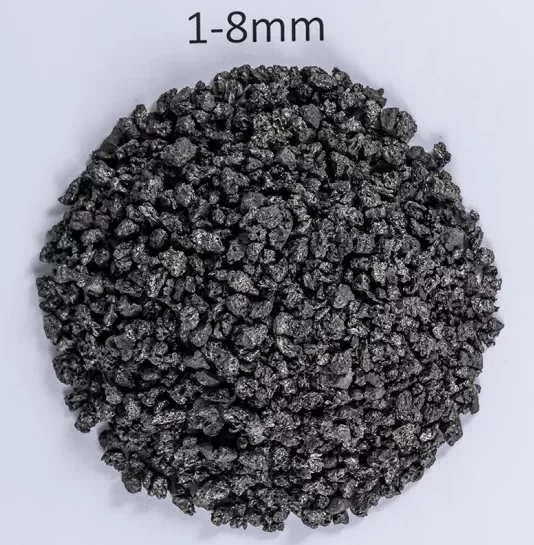
High-purity calcined and graphitized carbon products used as industrial recarburizers in steel and iron foundries.
◆ ◆ ◆
In This Article
◆ ◆ ◆
The Role of Carbon Agents in Modern Metallurgy

Processed GPC and CPC materials optimized for carbon recovery and low ash content.
Recarburization is the process of adding carbon to a molten metal bath to achieve the desired chemical composition. This is critical in the production of ductile iron, grey iron, and specific steel grades where the hardness, tensile strength, and machinability depend entirely on precise carbon percentages.
Historically, simple coke or anthracite was used, but these often introduced high levels of sulfur and ash. The modern industry has shifted toward Calcined Petroleum Coke (CPC) and Graphitized Petroleum Coke (GPC) due to their superior fixed carbon levels and lower impurity profiles.
—
Technical Parameters of High-Efficiency Recarburizers
The performance of a carbon agent is measured by its "carbon recovery rate"—the percentage of carbon that actually dissolves into the metal rather than burning off as gas or floating away in slag. This recovery is primarily influenced by the density of the material and its particle size distribution.
Fixed carbon content is the primary metric; premium grades typically exceed 98.5% (CPC) or 99% (GPC). When fixed carbon is low, the resulting "waste" (ash and volatiles) increases the volume of slag in the furnace, requiring more flux and increasing the energy needed to maintain temperature.
Sulfur and ash content must be strictly controlled. High sulfur leads to brittleness in the final metal product, while high ash content can clog filtration systems in precision casting and increase the cleaning frequency of industrial pit furnaces.
—
Overcoming Quality Inconsistency in Sourcing
A common failure in the supply chain occurs when buyers source from traders who aggregate materials from multiple small mills. This leads to "batch variance," where the ash content of the first shipment is 0.5%, but the second shipment jumps to 1.5%, disrupting the furnace's thermal balance.
Vertical integration is the only reliable safeguard against quality drift. A manufacturer that controls the process from calcination to final sizing can guarantee a ±0.5% consistency in ash content across thousands of tons.
To mitigate these risks, industrial buyers should demand a Certificate of Analysis (CoA) for every single batch, rather than relying on a general "typical specification" sheet. Lab-grade testing for volatiles and sulfur is non-negotiable for high-precision automotive or aerospace components.
—
Comparative Efficiency of Carbon Grades
Choosing between CPC and GPC involves a trade-off between cost and purity. CPC is generally sufficient for large-scale smelting where volume is high and absolute purity is less critical. However, GPC, which undergoes a graphitization process, offers the highest possible fixed carbon and the lowest ash levels.
In precision applications—such as artisan forges or high-end aluminum electrolysis—the higher cost of GPC is offset by the reduction in downtime and the elimination of slag-related defects.
Figure 2. Relative Performance Index: CPC vs GPC
—
Application Scenarios: From Forge to Furnace
In industrial smelting, such as brass or aluminum production, a high-density CPC grade with ≥98.5% carbon is typically used to maintain stable melt temperatures and minimize slag. In these settings, bulk delivery in jumbo bags is standard to support continuous 24/7 operations.
Conversely, in blacksmithing and artisan forges, the focus shifts to airflow and combustion. GPC grades sized specifically (e.g., 3-6mm) are preferred because they prevent "jamming" in the burner and provide a more uniform heat distribution, allowing for faster ramp-up times.
—
Evolution of Carbon Sizing and Blending
One size does not fit all in recarburization. Fines (0-3mm) dissolve quickly but can be lost to oxidation if not injected properly. Larger aggregates (8-15mm) provide a slower, more sustained carbon release, which is ideal for certain pit furnace configurations.
The industry is moving toward custom OEM blends where a manufacturer optimizes the particle size distribution for the specific burner or furnace type of the client. This precision reduces fuel waste and improves the consistency of the molten metal.
Furthermore, the integration of lower-sulfur petroleum coke has allowed foundries to meet stricter environmental regulations regarding emissions while maintaining the high BTU output required for heavy industrial melting.
—
Selection Framework for Industrial Buyers
Evaluating a recarburizer manufacturer requires looking beyond the price per ton. The true cost is found in the "cost per unit of carbon recovered." A cheaper product with 12% ash may actually be more expensive than a premium product with 0.5% ash due to the increased loss of metal and energy.
Buyers should assess the manufacturer's laboratory capabilities. ISO 9001 certification is a baseline, but the ability to provide a full analysis report (Fixed Carbon, Sulfur, Ash, Volatiles) with every shipment is the mark of a professional partner.
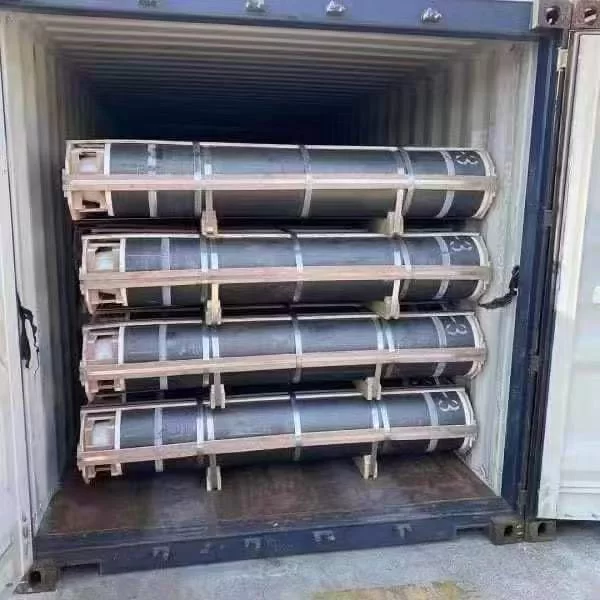
Finally, logistics reliability is critical. Because carbon agents are heavy and essential for production, a failure in the supply chain can stall an entire foundry. Experience in global shipping (FOB/CIF) and customs compliance is essential for international procurement.
| Evaluation Factor | CPC Grade | GPC Grade | Recommended Scenario |
|---|---|---|---|
| Fixed Carbon | ≥ 98.5% | ≥ 99.0% | GPC for high-precision casts |
| Ash Content | ≤ 0.8% | ≤ 0.5% | GPC for low-slag requirements |
| Sulfur Level | Low | Ultra-Low | GPC for aerospace/automotive |
| Recovery Rate | High | Very High | GPC for energy saving |
| Cost Profile | Economical | Premium | CPC for bulk smelting |
| Typical Sizing | 0-15mm | 3-8mm (Fine) | Custom blend based on burner |
◆ ◆ ◆
Questions & Answers
What is the primary difference between CPC and GPC in recarburization?
Calcined Petroleum Coke (CPC) is produced by heating petroleum coke to remove volatiles, making it a cost-effective, high-carbon agent for general industrial melting. Graphitized Petroleum Coke (GPC) goes a step further through a graphitization process at extreme temperatures, resulting in even higher fixed carbon (typically ≥99%) and significantly lower ash and sulfur. GPC is preferred for precision casting and high-end alloy production where any impurity can cause structural defects.
How does particle size affect the carbon recovery rate?
Particle size determines the surface area available for reaction. Very fine powders dissolve quickly but are susceptible to "floating" or burning off before they can integrate into the melt, especially in open-top furnaces. Larger granules provide a slower, more controlled release. The ideal size depends on the equipment; for example, 3-6mm is often optimal for coke-fired forges to maintain a balance between rapid heating and consistent carbon absorption.
Why is ash content a critical concern for pit furnaces?
Ash consists of non-combustible mineral matter. In a pit furnace, high ash content leads to the accumulation of clinkers and slag at the bottom of the furnace, which obstructs airflow and reduces thermal efficiency. This necessitates more frequent shutdowns for cleaning and increases the wear on the furnace lining. By using a recarburizer with ≤0.5% ash, operators can extend the interval between maintenance cycles and improve overall BTU output.
Can I mix different grades of carbon agents to save costs?
While technically possible, mixing grades can introduce inconsistency in the melt's chemical composition. If a foundry blends a high-purity GPC with a lower-grade coal-based agent, the resulting slag volume will increase, potentially offsetting the cost savings through higher fuel consumption and longer processing times. It is generally more efficient to select one consistent grade that meets the minimum technical requirement for the specific alloy being produced.
What are the red flags when auditing a carbon material supplier?
The biggest red flag is the inability to provide a batch-specific CoA. If a supplier provides a "general specification" sheet that applies to all their products, it suggests they are trading rather than manufacturing. Other warning signs include vague answers regarding the origin of the raw petroleum coke or a lack of internal laboratory testing capabilities. A professional manufacturer should be able to detail their calcination and sizing process and offer samples for lab validation.
How does sulfur content impact the final metal product?
Sulfur is a detrimental impurity in most steels and irons. It causes "hot shortness," which is the tendency of the metal to crack during hot working or forging. In precision components, sulfur can lead to unpredictable brittleness and reduced fatigue life. This is why high-purity recarburizers from a specialized manufacturer are essential; they ensure that the carbon is added without introducing sulfur that would otherwise require expensive refining processes to remove.
◆ ◆ ◆
Final Thoughts
The efficiency of industrial recarburization is not determined by the quantity of carbon added, but by the precision of the material's purity and physical form. Transitioning from generic carbon sources to engineered CPC and GPC materials allows foundries to reduce slag, lower energy consumption, and guarantee the structural integrity of their alloys.
As the industry moves toward more stringent quality standards and environmental regulations, the partnership between a foundry and its recarburizer manufacturer becomes a strategic asset. Prioritizing vertical integration and lab-verified consistency is the most effective way to eliminate invisible operational losses.


Latest news
×