-
Call Now ! +86 18231158869
-
Email Now [email protected]

Nov Back to list
calcined petroleum coke technical performance analysis
Selecting the right carbon additive can mean the difference between a high-performance metal casting and a flawed batch plagued by impurities. In industrial metallurgy, the demand for a structurally stable carbon source with minimal volatiles is not just a preference—it is a technical requirement for stability.
The shift toward higher purity standards in aluminum smelting and steelmaking has pushed many operators away from raw coke toward processed alternatives. The primary goal is to maximize fixed carbon while aggressively reducing sulfur and ash content, which directly influences the conductivity and strength of the final industrial product.
Understanding the technical nuances of calcined petroleum coke allows procurement teams to balance cost-efficiency with strict performance specifications. This article examines the processing logic and selection criteria essential for high-end carbon applications.
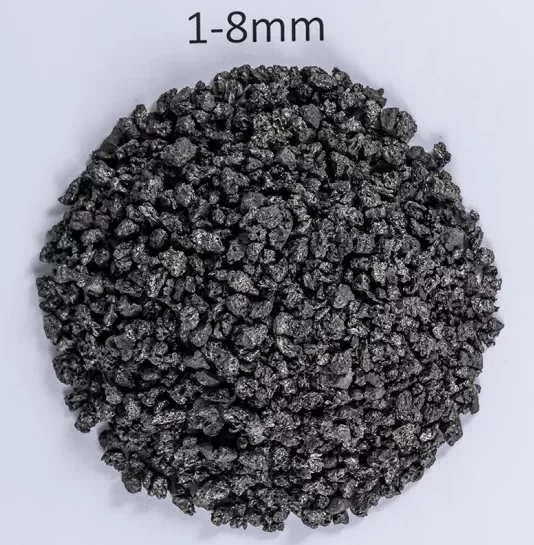
Industrial-grade calcined petroleum coke processed for high thermal stability and purity.
◆ ◆ ◆
In This Article
◆ ◆ ◆
Thermal Transformation of Raw Coke
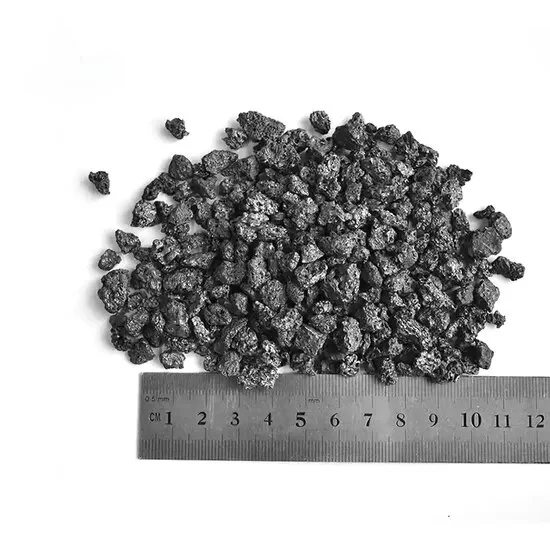
The transition from raw petroleum byproduct to optimized industrial carbon.
At its core, the production of calcined petroleum coke is a process of purification via heat. Raw petroleum coke, a byproduct of oil refining, contains significant moisture and volatile organic compounds that would cause instability or gas eruptions in a high-temperature furnace. By subjecting the material to temperatures between 1200°C and 1500°C, these volatile elements are driven off.
This thermal treatment does more than just "clean" the material; it fundamentally alters the physical structure. The process converts low-purity raw coke into a structurally stable carbon material. This ensures that when the coke is used in electrolytic aluminum cells or as a recarburizer, it maintains its integrity and provides a predictable carbon yield.
—
Critical Chemical Parameters for Performance
Evaluating the quality of carbon additives requires a look beyond the product name. The first priority is Fixed Carbon content. High-grade materials typically range from 98% to 99.5%. This high concentration ensures superior electrical conductivity and maximum carbon recovery during the smelting process, reducing the amount of additive required to reach the target carbon percentage in the melt.
Impurity control is the second pillar of quality. Sulfur (ideally 0.3–0.8%) and Ash (0.5–1.2%) must be kept low to prevent contamination. Excessive sulfur can lead to brittleness in steel, while high ash levels introduce non-carbon residues that can degrade the quality of anode blocks or refractories.
Finally, particle size distribution is critical for operational efficiency. A range of 0.5mm to 25mm is common, but the choice depends on the application. For anode pastes, finer particles are necessary for density, whereas larger grains are often preferred in carburizing processes to ensure steady dissolution without excessive dusting.
—
Distinguishing Calcination from Graphitization
In the carbon industry, terms are often used interchangeably, leading to procurement errors. It is vital to distinguish between calcined petroleum coke and graphitized petroleum coke. While both are processed at high temperatures, they serve different structural roles. Calcination focuses on removing volatiles to stabilize the material for further use or direct application.
Calcination removes volatile matter to create a stable carbon structure, whereas graphitization involves a further high-temperature transition to create a crystalline graphite structure. They are not interchangeable substitutes.
For applications like the production of pre-baked anodes in aluminum electrolysis, calcined coke is the standard. However, for specialized electrode manufacturing or lithium-ion battery anode components, the graphitized version is required due to its superior conductivity and lower internal resistance.
—
Analyzing Volatile Matter Reduction
The removal of volatile matter (down to ≤0.5%) is the primary objective of the 1200–1500°C heating cycle. In a furnace, volatile components expand rapidly, which can cause porosity in anode blocks or unpredictable pressure spikes in a casting vessel. By eliminating these components, the material becomes denser and more thermally stable.
This stability directly translates to energy efficiency. Materials with lower volatile content require less energy to maintain temperature within the furnace and offer faster carburization rates in molten metal. The following index illustrates how various technical attributes contribute to the overall efficiency of the material.
Figure 2. Impact of Carbon Specifications on Process Efficiency
—
Operational Scenarios in Metallurgy
In a typical industrial setting, such as a grey or ductile iron foundry, the carbon additive acts as a recarburizer. The manufacturer must ensure the additive dissolves uniformly to avoid "carbon spots" in the casting, which can lead to structural failure in auto parts or boilers. Because calcined petroleum coke has a controlled particle size and high fixed carbon, it allows for rapid and uniform dissolution.
For those in the aluminum industry, the focus shifts to the production of pre-baked anodes. Here, the coke is mixed with coal tar pitch. The low ash and sulfur levels of the material provided by specialists like Ding An Heng New Material Technology Co., Ltd. ensure that the anodes have the necessary electrical conductivity and a longer lifespan, reducing the frequency of anode replacements and lowering overall energy costs.
—
Evolution of Carbon Addition Standards
The industry is moving toward "precision carbonization." Previously, bulk coke was often sufficient, but modern high-performance alloys require much tighter impurity tolerances. This has led to an increased reliance on tailored blends, where sulfur levels are pushed even lower for specific applications, such as lithium-ion battery anodes.
Sustainability is also playing a role. The move toward reducing furnace energy consumption is driving the adoption of materials with virtually zero volatile matter. When volatile gases are removed during the calcination stage rather than during the smelting stage, the primary furnace operates more efficiently with fewer emissions.
Consequently, procurement is shifting from a price-per-ton model to a value-per-carbon-yield model. Buyers now evaluate the "effective carbon" provided by the material, accounting for how impurities like ash affect the final production cycle and waste disposal costs.
—
Carbon Material Selection Framework
When deciding between different carbon additives, procurement teams must map the technical requirements of their process against the material's specification. A common mistake is substituting a coal-based recarburizer for petroleum-based coke without checking the volatile matter levels, which can lead to unexpected gas evolution in the melt.
The trade-off usually involves cost versus purity. While some additives are cheaper, they often contain higher ash or sulfur, which can necessitate additional refining steps or result in lower-grade end products. A structured comparison based on fixed carbon and impurity limits is the only way to ensure technical compatibility.
The following framework provides a relative suitability guide for different carbon materials based on common industrial requirements.
| Material Type | Fixed Carbon | Impurity Level | Best Application |
|---|---|---|---|
| Calcined Petroleum Coke | 98.0% - 99.5% | Very Low | Aluminum Anodes / Steel |
| Graphitized Coke | > 99.0% | Ultra Low | Battery Anodes / Electrodes |
| Coal Recarburizer | Variable | Moderate | General Iron Casting |
| Semi Coke | Moderate | Higher | Industrial Heating / Fuel |
| Raw Petroleum Coke | Moderate | High (Volatiles) | Initial Feedstock |
| Graphite Powder | Very High | Very Low | Lubricants / Special Alloys |
◆ ◆ ◆
Questions & Answers
What is the primary purpose of calcining petroleum coke?
The primary purpose is to remove moisture and volatile organic compounds through high-temperature treatment (1200–1500°C). This process transforms the raw byproduct of oil refining into a structurally stable carbon material. By eliminating volatiles, the material avoids gas eruptions during smelting and achieves a much higher fixed carbon concentration, making it suitable for high-performance applications like aluminum anodes and steel recarburization.
How does sulfur content affect the quality of the final metal?
Sulfur is a critical impurity in metallurgy. High sulfur levels in carbon additives can lead to "hot shortness" in steel, where the metal becomes brittle and cracks during hot working. In aluminum production, sulfur contamination can degrade the quality of the anode and increase pollution. High-quality calcined petroleum coke keeps sulfur levels between 0.3% and 0.8% to ensure the metal maintains its required mechanical properties and purity.
Should I choose calcined coke or coal-based recarburizers?
The choice depends on your purity requirements and budget. Calcined petroleum coke generally offers much higher fixed carbon (up to 99.5%) and significantly lower volatile matter compared to coal-based options. For high-end steelmaking or aluminum electrolysis, petroleum coke is the technical standard. Coal recarburizers may be cost-effective for general iron casting where extreme purity is not the primary driver, but they carry a higher risk of impurity introduction.
Why is particle size important for recarburization?
Particle size affects the dissolution rate in molten metal. If particles are too large, they may not dissolve completely, leading to unreacted carbon pockets in the casting. If they are too fine, they can create excessive dust and may burn off (oxidize) before they can merge with the melt. A controlled range (e.g., 0.5–25mm) allows manufacturers to optimize the feeding system for the fastest, most uniform carbon addition.
How do I evaluate the cost-effectiveness of a carbon additive?
Do not evaluate based on price per ton alone. Instead, calculate the "cost per unit of fixed carbon." A cheaper material with 90% fixed carbon and high ash will require more volume to achieve the same result as a premium material with 99% fixed carbon. Additionally, factor in the cost of potential scrap caused by impurities (sulfur/ash) and the energy savings gained from lower volatile matter.
Is calcined petroleum coke used in battery manufacturing?
Yes, but often as a precursor. For lithium-ion battery anodes, the carbon material must have extremely high purity and specific structural properties. While calcined petroleum coke provides the necessary baseline purity, it is frequently further processed through graphitization to enhance electrical conductivity. Some specialized "ultra-low sulfur" calcined blends are specifically tailored for the battery industry to prevent chemical degradation of the cell.
◆ ◆ ◆
Final Thoughts
The transition toward high-performance industrial materials has made the technical specification of carbon additives more critical than ever. By focusing on the removal of volatiles and the strict control of sulfur and ash, manufacturers can ensure process stability and superior product quality.
For industrial buyers, the path to optimization lies in moving beyond generic product names and adopting a data-driven selection framework. Prioritizing fixed carbon yield and thermal stability ensures that the materials integrated into the production line drive efficiency rather than introducing risk.


Latest news
×