-
Call Now ! +86 18231158869
-
Email Now [email protected]

Oct Back to list
Calcined Petroleum Coke Manufacturers Technical Performance Analysis
The efficiency of aluminum electrolysis and steel casting hinges heavily on the quality of carbonaceous raw materials used in the production process. Specifically, the transition from green petroleum coke to a stable, high-conductivity material requires a precise thermal treatment process known as calcination.
For industrial procurement officers, the challenge lies in identifying calcined petroleum coke manufacturers that can consistently maintain low sulfur and ash content while ensuring optimal electrical conductivity. This balance is critical because any volatility in the raw material purity directly impacts the energy consumption and anode life of the smelting cells.
This analysis explores the technical parameters that define high-grade calcined coke, the role of sintering in creating specialized graphite components, and the operational frameworks used to evaluate supplier reliability in the global carbon market.

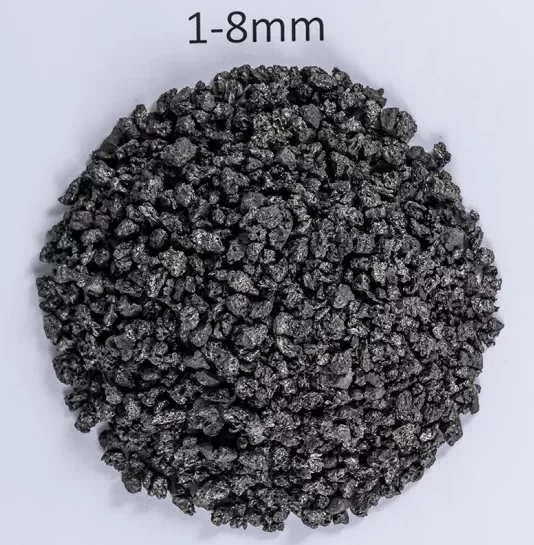
High-purity calcined petroleum coke processed for industrial electrolytic and smelting applications.
◆ ◆ ◆
In This Article
◆ ◆ ◆
The Role of Calcination in Carbon Production

The thermal processing of green coke into calcined petroleum coke.
Calcination is the essential thermal process where green petroleum coke is heated to remove volatile organic compounds (VOCs). By eliminating these impurities, the carbon structure becomes more stable and dense, which is a prerequisite for any downstream application, whether it be the manufacturing of pre-baked anodes or the production of high-precision graphite blocks.
Reliable calcined petroleum coke manufacturers focus on controlling the temperature curve to prevent the over-oxidation of the carbon, which would otherwise compromise the mechanical strength of the final product.
—
Critical Parameters for Material Selection
When evaluating carbon materials, the industry focuses on a specific set of technical indicators: sulfur content, ash percentage, and carbon mass fraction. For high-performance applications, a carbon mass fraction of 88% to 90% is often the baseline for refractory materials. Higher purity reduces the risk of contamination in molten metal and lowers the electrical resistance in electrolytic cells.
Ash content is particularly scrutinized because metallic impurities within the ash can create "hot spots" in anodes, leading to premature failure. Consequently, the precision of the raw material blend—often involving coke, anthracite, and graphite—determines the material's ability to withstand aggressive slag erosion and molten metal penetration.
Beyond purity, the physical form—whether it is molded, extruded, or iso-graphite—dictates the thermal and electrical flow. Isotropic graphite, for instance, offers uniform properties in all directions, making it ideal for high-precision components where thermal stress must be distributed evenly to prevent cracking.
—
From Raw Coke to Sintered Graphite Blocks
The evolution from simple calcined coke to advanced graphite carbon blocks involves high-temperature sintering. This process typically occurs at around 1450℃ within a controlled reducing flame. This environment is critical; without a reducing atmosphere, the carbon would oxidize, destroying the structural integrity of the block.
Sintering at 1450℃ ensures the carbon mass fraction reaches the optimal 88%-90% range, which is the primary driver for achieving the refractory performance and electrical conductivity required for blast furnace bottoms and magnesium electrolytic cells.
Once sintered, these blocks can be further enhanced through impregnation. By using synthetic resins and curing processes, manufacturers can create high-density, leak-proof components. This allows the material to be converted into chemical equipment, such as heat exchangers, which must resist strong acids and organic solvents.
—
Comparing Performance Metrics Across Carbon Grades
Selecting the right grade of carbon involves a trade-off between initial cost and long-term operational ROI. Standard carbon blocks provide basic refractory properties but require more frequent replacement. In contrast, premium sintered graphite blocks offer extended service life due to superior corrosion resistance.
The following index illustrates the relative performance of different carbon material types across key industrial requirements, emphasizing how precision sintering impacts the resulting utility.
Figure 2. Performance Index by Carbon Material Grade
—
Operational Applications in Metallurgy
In the context of iron-making, the hearth and bottom of blast furnaces are the most critical areas for refractory stability. High-performance graphite blocks are utilized here because of their innate ability to resist molten metal penetration. Their high thermal conductivity allows for better heat dissipation, which prevents the "burn-through" of furnace walls and extends the campaign life of the facility.
Beyond steelmaking, the aluminum industry relies on calcined petroleum coke manufacturers for the production of pre-baked anodes. These anodes must maintain low electrical resistance to minimize energy loss during electrolysis. Similarly, in magnesium production, the electrical conductivity and chemical stability of carbon blocks are indispensable for the efficiency of electrolytic cells.
—
Current Trends in Recarburizer Technology
The shift toward more sustainable steel production is driving a demand for higher-efficiency recarburizers. Traditional methods of adding carbon can lead to inconsistent casting quality and higher costs. Modern recarburizers, including graphitized petroleum coke (GPC) and calcined anthracite coal (CAC), are engineered to provide a more stable carbon recovery rate.
One of the primary technical hurdles is oxidation. Carbon materials are naturally susceptible to oxidation in high-oxygen environments. To mitigate this, manufacturers are now integrating specialized coatings and oxidation-resistant processing, which significantly extends the life of the material in open-air high-temperature settings.
Furthermore, the integration of automated quality inspection—testing for electrical conductivity and corrosion resistance before delivery—is becoming a standard requirement. This shift ensures that industrial users can predict the performance of the material within their specific furnace or cell environment.
—
Supplier Evaluation and Decision Frameworks
Selecting a partner among various calcined petroleum coke manufacturers requires a move away from simple price-per-ton comparisons. A comprehensive evaluation should focus on the stability of the supply chain and the consistency of the chemical composition.
Operational efficiency is often lost when materials have varying ash or sulfur levels between batches, causing unpredictable furnace behavior. Therefore, a supplier's ability to provide rigorous testing data and consistent sintering temperatures (e.g., the 1450℃ standard) is a primary indicator of quality.
The following framework provides a relative assessment of the trade-offs between standard carbon products and premium sintered graphite solutions.
| Evaluation Factor | Standard Carbon | Premium Graphite | Operational Impact |
|---|---|---|---|
| Service Life | Moderate | Extended | Lower downtime for replacement |
| Energy Efficiency | Standard | High | Reduced electricity consumption |
| Maintenance Cost | Frequent | Low/Long Intervals | Reduced labor and material spend |
| Chemical Resistance | Basic | Advanced | Better slag erosion resistance |
| ROI Potential | Short-term savings | Long-term profit | Optimized total cost of ownership |
| Thermal Shock | Moderate | Exceptional | Prevents cracking under fluctuations |
◆ ◆ ◆
Questions & Answers
What is the primary function of calcined petroleum coke in aluminum production?
Calcined petroleum coke serves as the primary raw material for pre-baked anodes. The calcination process removes volatile matter, creating a stable, porous structure that allows for the subsequent impregnation of coal tar pitch. This results in an anode with high electrical conductivity and the structural integrity necessary to withstand the corrosive environment of the aluminum electrolytic cell.
How does the 1450℃ sintering temperature affect graphite block quality?
Sintering at 1450℃ within a reducing flame is critical for achieving a carbon mass fraction of 88% to 90%. This specific thermal threshold ensures the maximum bonding of carbon particles and the elimination of remaining impurities. The result is a material with superior refractory properties, allowing it to resist molten metal penetration and slag erosion more effectively than blocks sintered at lower temperatures.
Can sintered graphite blocks be used for chemical equipment fabrication?
Yes. By using the sintered graphite block as a matrix and applying impregnation with synthetic resins followed by a curing process, the material becomes high-density and leak-proof. This transformed material possesses exceptional resistance to acids, alkalis, and organic solvents, making it suitable for the construction of chemical heat exchangers and other high-temperature chemical processing equipment.
What is the difference between isotropic and extruded graphite in industrial use?
Isotropic graphite (Iso-graphite) has a uniform grain structure, meaning its thermal and electrical properties are the same in all directions. This makes it ideal for components facing multi-directional stress. Extruded graphite has a directional grain structure, which optimizes flow along a specific axis. The choice depends on whether the application requires uniform stability or directional conductivity.
How can the risk of oxidation be managed in graphite carbon blocks?
Since graphite is naturally susceptible to oxidation at high temperatures, mitigation involves two main strategies: the use of oxidation-resistant coatings and the implementation of controlled atmospheres. Specialized chemical treatments can create a protective barrier on the surface of the block, significantly reducing the rate of carbon loss in oxygen-rich environments.
Which industries benefit most from the high electrical conductivity of these materials?
Industries involving high-temperature electrolysis, such as magnesium and aluminum production, benefit most. Additionally, battery manufacturing and the operation of high-temperature graphitization furnaces require materials that can transmit electrical current with minimal resistance to reduce energy costs and prevent overheating of the equipment.
◆ ◆ ◆
Final Thoughts
The selection of carbon materials is no longer a simple commodity purchase but a strategic technical decision. Whether sourcing from calcined petroleum coke manufacturers for anodes or investing in premium sintered graphite blocks for furnace masonry, the focus must remain on the purity of the raw materials and the precision of the thermal processing.
As industrial demands for energy efficiency and equipment longevity increase, the transition toward high-carbon-fraction materials and specialized oxidation-resistant coatings will become the standard for maintaining a competitive edge in metallurgy and chemical processing.


Latest news
×