-
Call Now ! +86 18231158869
-
Email Now [email protected]

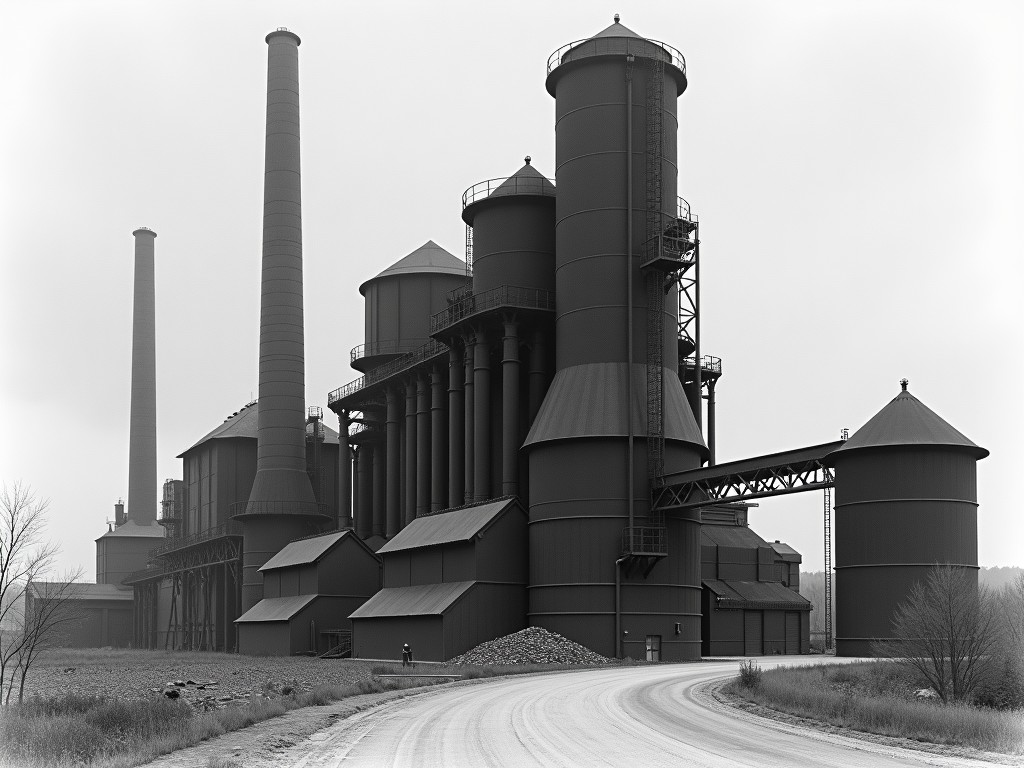
Coke Oven Plant In Steel Industry
Coke Oven Plant for Steel Industry
A coke oven plant converts bituminous coal into metallurgical coke, a critical fuel and reducing agent in blast furnace operations. The plant comprises coal handling, coke ovens, by‑product recovery, and gas cleaning systems designed to meet strict emissions and productivity targets.
Core Process Components
The main units include a coal preparation tower, a series of slot‑type ovens equipped with refractory lining, a coke pushing and quenching system, and a chemical by‑product plant for recovering tar, ammonia, and benzene. Each unit is sized according to the required daily coke output, typically ranging from 500 to 5,000 tonnes.
- Coal crushing and blending to achieve uniform particle size (80% < 6 mm).
- Oven chambers heated to 1,000–1,100 °C for 16–18 h coking cycles.
- Hydraulic pusher pushes hot coke into quenching car.
- By‑product recovery captures volatile hydrocarbons for reuse or sale.
Typical Technical Parameters
| Parameter | Typical Range | Notes |
|---|---|---|
| Daily coke capacity | 500 – 5,000 t/d | Scalable by number of oven batteries |
| Oven chamber width | 400 – 500 mm | Determines coke size distribution |
| Coking time | 16 – 18 h | Adjustable for coal blend |
| Flue gas temperature (stack) | 150 – 250 °C | After heat recovery |
| By‑product yield (tar) | 3 – 5 % of coal weight | Recovered for chemical processing |
Application in Steel Making
Metallurgical coke provides the necessary porosity and mechanical strength to support the burden in a blast furnace while acting as the primary source of carbon monoxide for iron ore reduction. A well‑designed coke oven plant ensures consistent coke quality (CSR > 60 %, CRI < 25 %) which directly influences furnace productivity and fuel rate.
By integrating a coke oven plant, steelmakers can reduce reliance on purchased coke, lower volatile matter in the blast furnace top gas, and recover valuable chemicals that offset operating costs.
Customization Options
Plant layout can be adapted to site constraints, including compact vertical arrangements for limited footprint or linear arrangements for ease of material handling. Refractory specifications, oven heating method (gas‑fired or dual‑fuel), and by‑product recovery depth are selected based on coal characteristics and local environmental regulations.
- Number of ovens per battery (20‑70).
- Oven height (3.5‑5.5 m) affecting coke size.
- Heat recovery steam generator (HRSG) capacity.
- Emission control packages (ESP, SCR, wet scrubbers).
Quality Assurance and Testing
Each oven battery undergoes hot‑function testing to verify temperature uniformity, pressure balance, and sealing integrity before commissioning. Coke produced is sampled for CSR, CRI, ash, sulfur, and volatile matter according to ISO 1928 and ASTM D3174 standards. Documentation includes material test reports, weld inspection records, and performance guarantees.
Frequently Asked Questions
Q: Can the plant capacity be expanded after initial installation?
Yes. Additional oven batteries can be added to the existing coal handling and gas cleaning infrastructure, subject to utility and emissions permit review.
Q: What information is required for a preliminary quotation?Desired daily coke output, coal analysis (ash, volatile matter, sulfur), site layout constraints, and any specific emissions standards applicable to the location.
Q: Which refractory materials are commonly used?High‑alumina (60‑80% Al₂O₃) bricks for the oven walls and silica carbide for the door and seal areas, selected based on predicted temperature cycling.
×