-
Call Now ! +86 18231158869
-
Email Now [email protected]

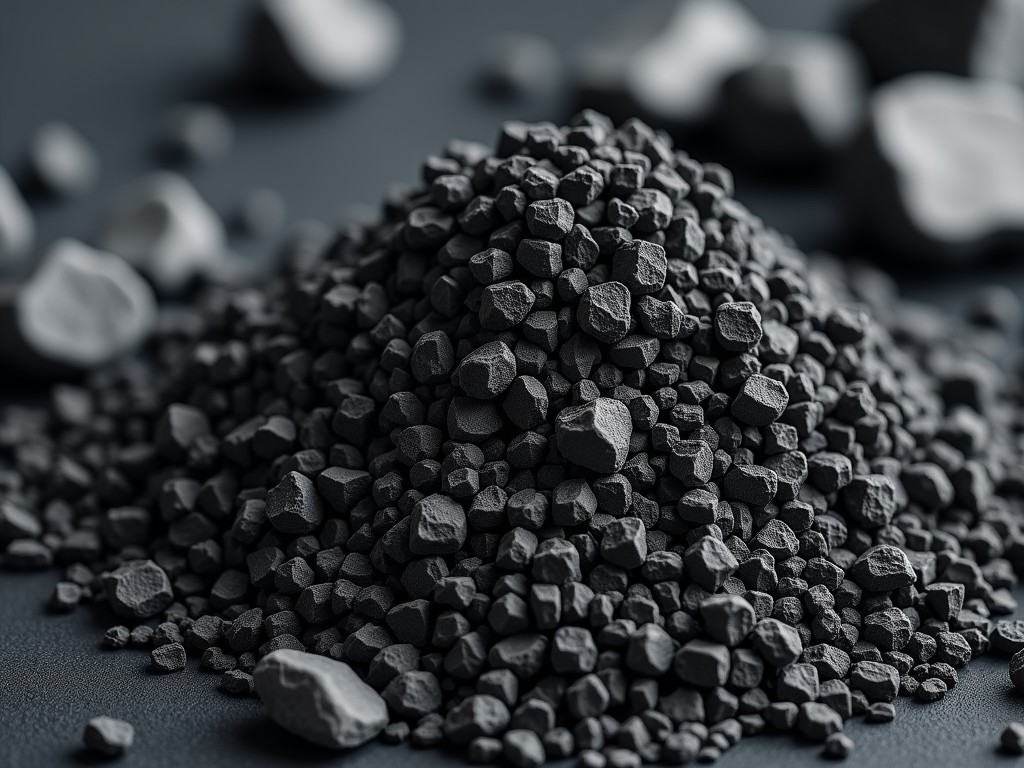
Factory Price Coal Used For Steel Production
Factory Price Coal for Steel Production
This page describes the technical properties of coal supplied directly from mines for use in steelmaking operations. The focus is on measurable characteristics that influence furnace performance, emissions, and cost efficiency.
Technical Characteristics
Composition and Energy Content
The calorific value of coking coal used in steel plants typically ranges from 28 to 32 MJ/kg, providing the heat needed for carbonization. Volatile matter content falls between 20 and 28 % on a dry basis, affecting the yield of coke and gas during pyrolysis. Ash and sulfur are reported as percentages of the dry mass and are critical for slag formation and desulfurization load.
Physical Properties
Moisture content is usually kept below 10 % to avoid handling issues and excess energy consumption during drying. Particle size distribution influences bulk density and permeability in the coke oven charge; common top sizes are 30 mm or 50 mm with a fine fraction under 3 mm kept below 10 % to ensure proper bed porosity. Hardgrove grindability index (HGI) values between 45 and 65 indicate moderate ease of pulverizing for PCI applications.
| Parameter | Typical Range | Unit |
|---|---|---|
| Calorific Value (dry basis) | 28 – 32 | MJ/kg |
| Ash Content | 7 – 12 | % |
| Sulfur Content | 0.5 – 1.0 | % |
| Volatile Matter | 20 – 28 | % |
| Moisture | 5 – 10 | % |
| Top Size | 30 – 50 | mm |
| Hardgrove Grindability Index | 45 – 65 | – |
Role in Steel Production
Coking Process
In a coke oven, coal is heated in the absence of air to temperatures around 1000 °C. The volatile matter drives off as gas, leaving a porous, carbon-rich solid known as coke. The coke’s mechanical strength supports the burden in a blast furnace, while its porosity allows upward flow of reducing gases. Ash content of the coal directly contributes to slag volume, influencing furnace heat balance and refractory wear.
Pulverized Coal Injection (PCI)
Fine coal particles, typically under 0.1 mm, are injected into the tuyeres of a blast furnace. The coal combusts in the hot blast, providing supplementary heat and reducing agents, which allows a reduction in coke consumption of up to 30 %. Key PCI coal specifications include low ash (< 8 %), low sulfur (< 0.6 %), and high volatile matter to ensure rapid ignition and complete burnout. Moisture must be minimized to prevent flame cooling and unstable injection.
Quality Assurance and Testing
Each shipment undergoes systematic sampling according to ISO 18283. Proximate analysis (moisture, ash, volatile matter, fixed carbon) is performed using calibrated thermogravimetric analyzers. Ultimate analysis determines carbon, hydrogen, nitrogen, sulfur, and oxygen content. Additional tests include ash fusion temperature (to predict slag behavior), Hardgrove grindability, and petrographic examination for maceral composition. Results are documented in a material test report available upon request.
- Proximate analysis – ISO 17246
- Ultimate analysis – ISO 29541
- Ash fusion temperature – ISO 540
- Hardgrove grindability – ISO 5074
- Petrography – ISO 7404-2
Customization and Supply Options
Suppliers can adjust size distribution through crushing and screening to match specific coke oven charge or PCI system requirements. Blending of different coal grades allows fine‑tuning of ash and sulfur levels while maintaining target calorific value. Moisture can be reduced via thermal drying or increased for dust suppression in handling. All options are subject to mine‑specific washability characteristics and are confirmed via pilot testing before full‑scale shipment.
- Size fractions: 0‑6 mm, 6‑13 mm, 13‑25 mm, 25‑50 mm
- Moisture content adjustment (5‑12 %)
- Sulfur blending to achieve ≤ 0.8 %
- Ash reduction via selective washing
- Custom packaging: bulk, bagged, or super‑sack
Packaging and Logistics
Coal is shipped in bulk via rail gondolas, ocean vessels, or highway trucks depending on distance and infrastructure. For facilities requiring sealed containment, multi‑wall polypropylene bags (25 kg) or FIBCs (1 ton) are available with optional inner liners for moisture protection. Loading and unloading procedures follow standard safety guidelines for dust mitigation and spontaneous combustion prevention.
| Packaging Type | Typical Capacity | Handling Notes |
|---|---|---|
| Bulk Rail Gondola | 80 – 120 t | Requires covered storage; dust suppression recommended |
| Ocean Vessel (Panamax) | 50 – 70 kt | Shipped in holds; ventilation to prevent self‑heating |
| Polypropylene Bag | 25 kg | Palletized; suitable for small‑scale PCI feed |
| FIBC (Super‑Sack) | 1000 kg | Equipped with lifting loops; moisture barrier liner optional |
Frequently Asked Questions
Can the coal size be customized for our PCI system?
Yes. Crushing and screening can be adjusted to produce a top size of 0.1 mm or any other range required by the injector nozzle and carrier gas pressure. A sample sieve analysis is provided before shipment.
What information is needed to obtain a quotation?
To prepare a quote we need the required annual volume, preferred delivery terms (FOB, CIF, etc.), target specifications (calorific value, ash, sulfur, size), and any packaging or blending constraints. Providing a draft specification sheet speeds up the process.
How is quality verified before acceptance?
Each lot is accompanied by a certificate of analysis showing proximate and ultimate results, ash fusion temperature, and HGI. Buyers may request third‑party inspection at the loading port or at the destination yard.
What is the typical lead time for a bulk order?
Lead time varies with mine production schedule and transportation mode. For rail‑shipped bulk from domestic sources, 4‑6 weeks is common; for overseas vessel shipments, 8‑12 weeks should be allowed. Exact timing is confirmed at order acknowledgement.
Get a Quote
To discuss your specific coal requirements for steel production, please contact our sales team. We will review your specifications, provide a detailed quotation, and arrange sample testing if needed.
Request a Quotation
×