-
Call Now ! +86 18231158869
-
Email Now [email protected]

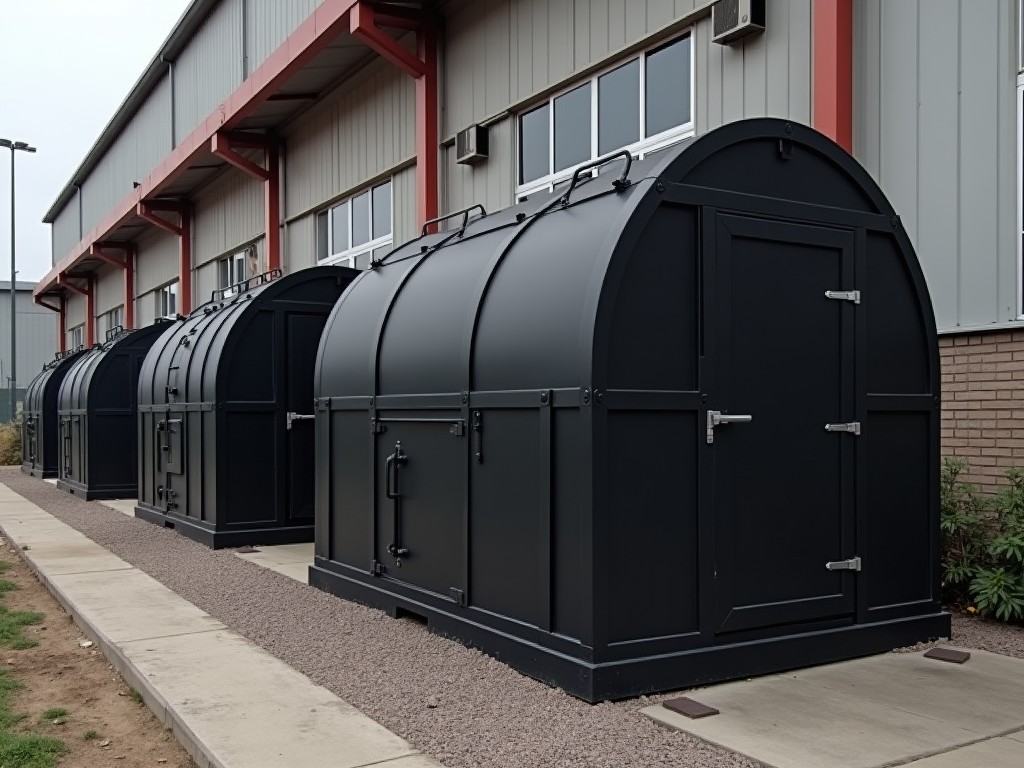
Factory Price East Carbon Coke Ovens
Factory Price East Carbon Coke Ovens
East carbon coke ovens are batch-type units designed for the carbonization of coal to produce metallurgical coke. They operate under a controlled heating schedule that drives volatile matter off while preserving the fixed carbon structure needed for blast furnace feed.
Design and Construction
The oven consists of a rectangular steel chamber lined with high‑alumina refractory bricks. Typical internal dimensions range from 2.0 m × 1.5 m × 1.2 m (L×W×H) for a 5‑tonne batch to 3.5 m × 2.5 m × 1.8 m for a 20‑tonne batch, with wall thicknesses of 230 mm to 300 mm depending on the selected refractory grade.
Heating is provided by gas‑fired burners positioned along the long walls, delivering a uniform heat flux that can be adjusted from 30 kW/m² to 80 kW/m². The chamber is sealed with water‑cooled steel doors that maintain a slight positive pressure to prevent air ingress during the carbonization cycle.
| Parameter | Typical Range |
|---|---|
| Internal Volume (m³) | 3.6 – 15.8 |
| Refractory Thickness (mm) | 230 – 300 |
| Burner Heat Flux (kW/m²) | 30 – 80 |
| Door Seal Pressure (kPa) | 0.5 – 1.5 |
Operational Parameters
A standard carbonization cycle begins with a ramp‑up phase where the chamber temperature increases from ambient to 800 °C at a rate of 2 °C/min. The temperature is then held between 900 °C and 1050 °C for 12‑18 hours, allowing volatile matter to escape and the coke matrix to develop.
Coke yield typically ranges from 68 % to 74 % of the dry coal feed, depending on coal rank and the final soak temperature. The resulting coke exhibits a mean pore size of 0.5 mm to 1.2 mm and a compressive strength exceeding 25 MPa, suitable for blast furnace burden.
Cooling is performed by natural convection followed by forced air fans, reducing the chamber to below 150 °C within 4‑6 hours to enable safe discharge. The total cycle time, including charging, heating, soaking, cooling, and dumping, averages 24‑30 hours for a 10‑tonne batch.
Material Options
The structural frame is fabricated from carbon steel grades ASTM A36 or S275JR, with thickness selected to support the refractory load and resist thermal deformation. For corrosive environments, optional cladding with stainless steel grade 304L can be applied to the outer shell.
Refractory linings are available in three standard compositions: (1) 70 % Al₂O₃ – 30 % SiO₂ high‑density brick, (2) 80 % Al₂O₃ – 20 % SiO₂ low‑iron brick for reduced slag penetration, and (3) 60 % Al₂O₃ – 40 % SiO₂ insulating brick for lower heat loss in the outer backup layer. Each option is quoted with its typical thermal conductivity (W/m·K) and maximum service temperature.
| Refractory Type | Thermal Conductivity (W/m·K) @ 800 °C | Maximum Service Temperature (°C) |
|---|---|---|
| 70 % Al₂O₃ Brick | 1.45 | 1350 |
| 80 % Al₂O₃ Brick | 1.20 | 1450 |
| 60 % Al₂O₃ Insulating Brick | 0.85 | 1200 |
Applications in the Steel Industry
Metallurgical coke produced in east carbon ovens serves as the primary fuel and reducing agent in blast furnaces. Its low ash content and high carbon purity reduce slag volume and improve hot metal quality. The ovens are therefore integrated into coke‑making plants that supply integrated steel mills, foundries, and ferroalloy producers.
Because the oven operates in a batch mode, it allows flexible switching between different coal blends without extensive purging, which is advantageous for plants that need to adjust coke quality in response to varying blast furnace operating conditions or coal price fluctuations.
The robust refractory design tolerates frequent thermal cycling, enabling a typical campaign life of 8‑10 years before major relining is required, thus lowering the annualized capital cost for continuous coke supply.
Quality Assurance and Testing
Each oven undergoes dimensional verification of the chamber interior using laser scanning to confirm tolerances within ±5 mm. Refractory brick joints are inspected with ultrasonic thickness gauges to ensure minimum thickness compliance before firing.
After initial heat‑up, a thermocouple array maps the temperature distribution across the chamber; acceptance criteria require a variance of less than ±25 °C at the 900 °C set point. Gas burner performance is verified by measuring excess oxygen in the flue gas, targeting 1.5 %‑2.5 % for optimal combustion efficiency.
Coke produced from trial batches is subjected to standard ASTM D3175 (volatile matter), ASTM D4239 (ash), and ISO 10083 (coke strength after reaction) tests. Results are documented and supplied to the purchaser as part of the factory acceptance package.
Customization Options
Capacity can be scaled by adjusting the chamber length and width while keeping the heating zone geometry proportional. Standard offerings cover 5‑tonne, 10‑tonne, and 20‑tonne batches; intermediate sizes are available upon request.
Automation level ranges from manual charging and door operation to fully PLC‑controlled systems with programmable temperature recipes, automated screw feeders for coal, and remote monitoring via SCADA. The control panel can be supplied with IEC 61850 compatibility for integration into plant‑wide networks.
Additional options include waste heat recovery units that capture exhaust gases to pre‑heat combustion air, reducing fuel consumption by up to 12 %, and emissions control modules such as low‑NOx burners or flue gas desulfurization units to meet local environmental regulations.
Packaging and Shipping
The oven is shipped disassembled into modular components: steel frame panels, refractory pallets, burner assemblies, door mechanisms, and control cabinets. Each component is wrapped in corrosion‑inhibiting film and secured within ISO‑standard 20‑ft or 40‑ft containers.
Heavy‑lift lugs are welded to the frame sections to facilitate crane handling at the destination site. A detailed packing list, including part numbers and weight per package, accompanies the shipment to streamline customs clearance and on‑site reassembly.
For destinations with limited inland transport, optional skid‑mounted sub‑assemblies can be provided, allowing direct off‑loading onto standard flatbed trucks.
Frequently Asked Questions
Can the oven dimensions be customized to match an existing coal feed system?
Yes. The internal length, width, and height can be adjusted in increments of 100 mm to align with specific charging car dimensions or conveyor layouts, subject to structural and thermal calculations.
What information is required to obtain a firm quotation?
We need the desired batch size (tonnes per cycle), coal type (volatile matter, ash, sulfur content), target coke quality specifications, and any site constraints such as maximum headroom or foundation load limits.
Which refractory grades are available for high‑alkali coal?
For coal with elevated alkali oxides, we recommend the 80 % Al₂O₃ low‑iron brick, which offers improved resistance to alkali penetration and spalling. Alternative high‑chrome linings are available upon request.
How is quality inspected before shipment?
All welds are examined by magnetic particle testing, refractory linings undergo ultrasonic thickness checks, and a hydrostatic test is performed on the door sealing system. Final dimensional verification is carried out with a laser tracker.
What packaging methods protect the units during ocean transport?
Components are coated with a vapor‑phase corrosion inhibitor, placed in wooden crates or steel frames, and secured with steel strapping inside sealed containers. Desiccant bags are included to control humidity.
What is the typical production lead time?
Lead time varies with size and customization level, generally ranging from 14 weeks for a standard 10‑tonne manual unit to 22 weeks for a fully automated 20‑tonne oven with waste heat recovery.
Request a Quote
To discuss your coke‑making requirements and receive a detailed technical proposal, please provide your project specifications using the inquiry form linked below. Our engineering team will respond with a customized layout, performance estimates, and delivery schedule within two business days.
Submit Inquiry
×