-
Call Now ! +86 18231158869
-
Email Now [email protected]

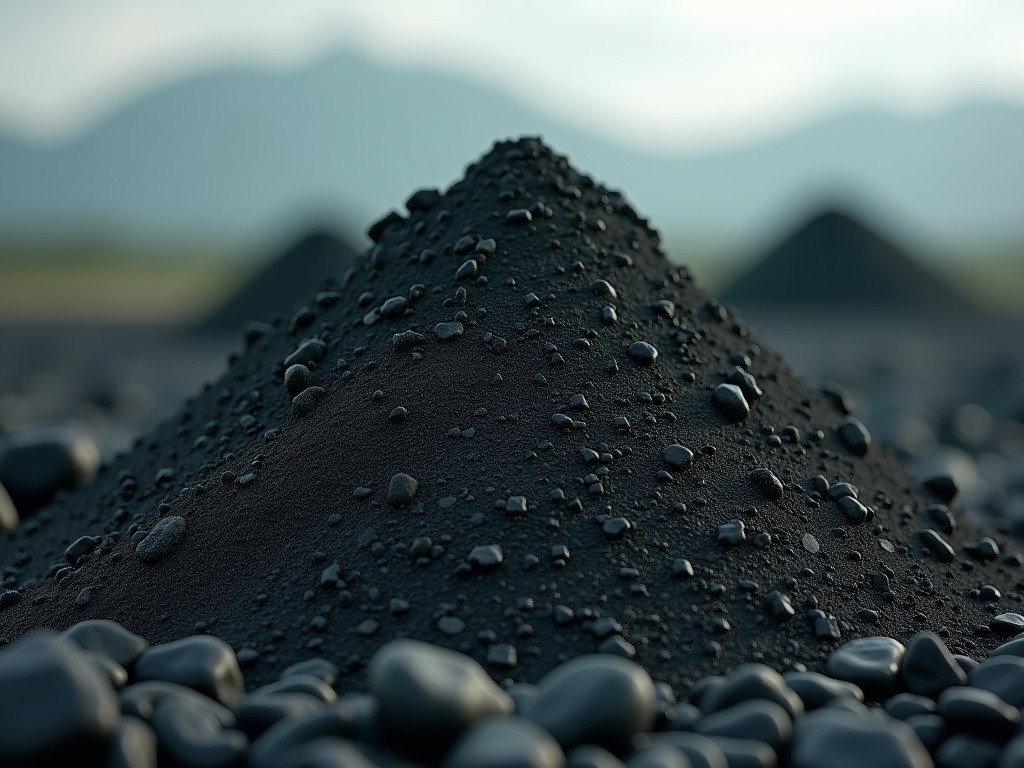
Green Delayed Petroleum Coke
Green Delayed Petroleum Coke – Technical Overview
Green delayed petroleum coke is the solid carbonaceous material produced directly from the delayed coking unit before any calcination. It retains a higher volatile matter content and a more porous structure compared to calcined coke, which influences its reactivity in downstream processes.
Chemical Composition and Key Properties
The typical composition includes carbon ranging from 85 to 90 percent by weight, hydrogen 2–4 percent, sulfur 0.5–2.5 percent depending on feedstock, and nitrogen up to 0.8 percent. Volatile matter usually falls between 8 and 15 percent, providing the reactivity needed for certain anode and fuel applications.
Real density measures 1.30–1.45 g/cm³, while bulk density varies from 0.40 to 0.55 g/cm³ due to its porous nature. The true specific surface area, as determined by BET analysis, can reach 1.5–3.0 m²/g, which affects adsorption and catalytic behavior.
Production via Delayed Coking
In the delayed coking process, residual feedstock is heated in a furnace to approximately 480–500 °C and then transferred to large coke drums where it resides for 18–24 hours. During this period, thermal cracking produces liquid products and leaves behind a solid coke matrix.
Removal of the coke is performed hydraulically or mechanically while still hot (around 200 °C), preserving its green state.
Typical Applications and Process Fit
Application of green delayed petroleum coke as a precursor in the manufacture of anodes for aluminum smelting when a controlled calcination step follows, allowing producers to tailor the final density and electrical conductivity.
| Property | Typical Range | Test Method |
|---|---|---|
| Fixed Carbon (wt%) | 85–90 | ASTM D3172 |
| Volatile Matter (wt%) | 8–15 | ASTM D3172 |
| Sulfur (wt%) | 0.5–2.5 | ASTM D4239 |
| Bulk Density (g/cm³) | 0.40–0.55 | ASTM D291 |
| True Density (g/cm³) | 1.30–1.45 | ASTM D4373 |
Steel industry utilization employs the coke as a carbon raiser in electric arc furnaces, where its reactivity aids in temperature control and slag formation. Additionally, its porous structure supports use as an adsorbent in environmental remediation, particularly for capturing heavy metals from aqueous streams.
Quality Assurance and Testing
Each batch undergoes proximate analysis per ASTM D3172 (moisture, ash, volatile matter, fixed carbon) and ultimate analysis per ASTM D5291 for elemental composition. Sulfur content is measured by ASTM D4239, and nitrogen by ASTM D4629.
Physical testing includes bulk density (ASTM D291), true density (ASTM D4373), and particle size distribution via sieve analysis (ASTM D1921). For customers requiring specific reactivity, the volatile matter index can be correlated with the Hardgrove grindability index (HGI) to predict milling behavior.
Customization Options
Particle size can be adjusted through crushing and screening to meet specifications such as 0–5 mm, 5–10 mm, or custom graded blends. Moisture content is typically kept below 0.5 percent by weight through controlled storage, but can be specified lower for certain anode applications.
Sulfur levels are primarily dictated by the feedstock; however, blending with low‑sulfur residual streams enables targeting of sulfur under 1.0 percent when required for low‑emission fuels. Additives are not introduced; any modification relies solely on feed selection and process timing.
Packaging and Logistics
Bulk shipments move via rail gondolas or ocean-going vessels, with typical load capacities of 80–100 metric tons per car. For smaller consignments, the product is packed in 25‑kg multi‑wall polypropylene bags placed on pallets, each pallet holding 40 bags (1 metric ton).
To prevent moisture uptake during transit, bags are lined with a polyethylene inner layer, and bulk shipments utilize weather‑proof hatch covers. All packages are marked with lot numbers, production date, and a QR code linking to the certificate of analysis.
Frequently Asked Questions
- Can the particle size be customized? Yes, crushing and screening allow production of specific size ranges per customer drawing.
- What information is needed for a quotation? Required details include desired quantity, delivery destination, preferred particle size, maximum sulfur and moisture limits, and any applicable certification standards.
- Is calcination available as a secondary service? While our facility focuses on green coke, we can arrange third‑party calcination upon request and provide coordinated logistics.
- How is quality consistency ensured across batches? By maintaining strict control of feedstock properties, drum residence time, and quench temperature, and by performing full analytical testing on every lot before release.
Request Technical Details
For inquiries regarding specifications, custom sizing, or to obtain a certificate of analysis, please contact our technical sales team.
Contact Sales
×