-
Call Now ! +86 18231158869
-
Email Now [email protected]

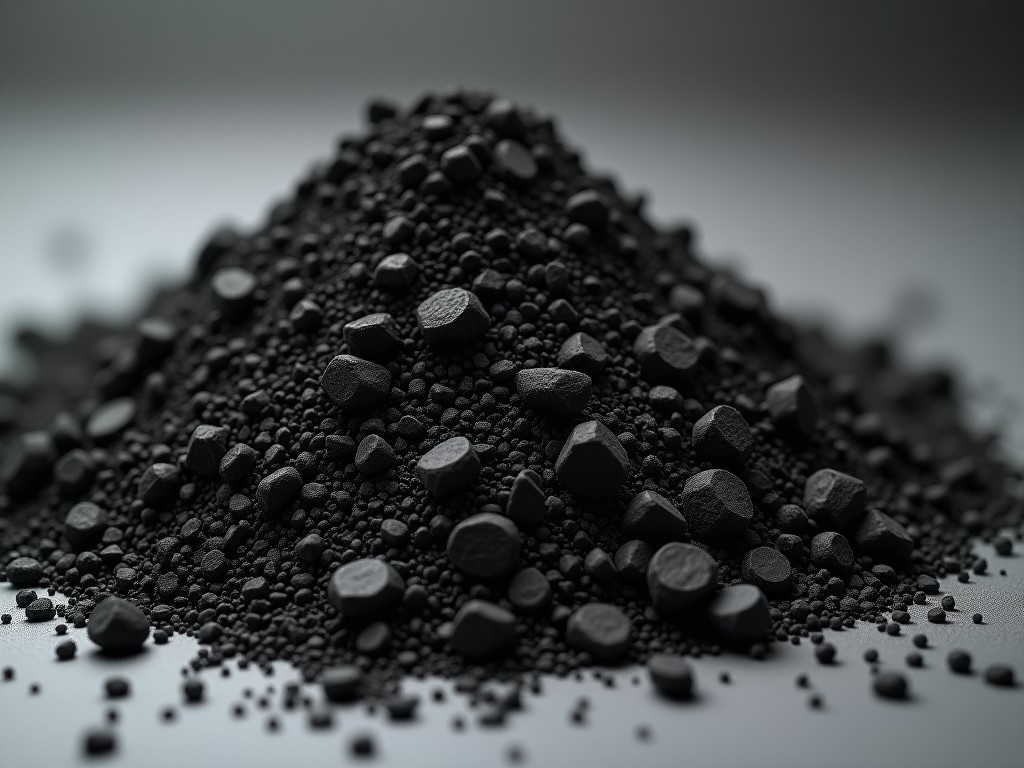
Use Of Raw Petroleum Coke
Use of Raw Petroleum Coke in Industrial Applications
Overview
Raw petroleum coke (RPC) is a solid carbon product formed during the delayed coking of heavy petroleum fractions. It is characterized by high fixed carbon, low hydrogen, and a porous structure that influences its reactivity.
Because of its carbon richness, RPC serves as a fuel in power boilers, a reductant in metal smelting, and a precursor for anode manufacturing after calcination.
Chemical and Physical Properties
Typical values for commercial grades are shown below. Actual values depend on crude source and coking conditions.
| Property | Typical Range | Units |
|---|---|---|
| Fixed Carbon | 85 – 92 | wt% |
| Volatile Matter | 2 – 6 | wt% |
| Ash | 0.5 – 2.0 | wt% |
| Sulfur | 0.5 – 4.0 | wt% |
| Moisture | 0.1 – 0.5 | wt% |
| True Density | 1.8 – 2.0 | g/cm³ |
Typical Applications
The high carbon content and low volatility of RPC allow it to act as a stable fuel source in industrial furnaces where consistent heat release is required.
In aluminum smelting, calcined petroleum coke (derived from RPC after heat treatment) forms the anode blocks that conduct electricity during electrolysis.
Additional uses include as a carbon raiser in steelmaking, a feedstock for graphite electrode production, and a reducing agent in the production of titanium dioxide via the chloride route.
Power generation boilers – fuel blending to reduce reliance on coal.
Cement kilns – alternative fuel providing high calorific value.
Foundry cupolas – carbon addition to improve melt temperature.
Chemical industry – source of carbon black precursors after pyrolysis.
Processing Considerations
Before use, RPC often undergoes crushing and screening to achieve the desired particle size distribution, which affects combustion efficiency and reactivity.
For anode production, the coke is calcined at temperatures between 1200 °C and 1350 °C in a rotary kiln to drive off residual volatiles and increase electrical conductivity.
Storage should be in a dry, covered area to prevent moisture uptake, which can lower the heating value and cause handling issues.
Quality Assurance
Suppliers typically provide a material data sheet that includes proximate analysis (fixed carbon, volatile matter, ash, moisture) and ultimate analysis (carbon, hydrogen, sulfur, nitrogen).
Particle size distribution is measured by laser diffraction or sieve analysis, with common specifications such as 85 % passing 6 mm and ≤10 % passing 0.5 mm for boiler fuel grades.
Third‑party inspection may verify compliance with ASTM D3172 (for coke) or ISO 1171 (for sulfur content) depending on the end‑use sector.
Frequently Asked Questions
Q: Can the particle size be customized for specific furnace designs?
Yes. Crushing and screening operations can be adjusted to meet top‑size, bottom‑size, and distribution requirements defined by the client.
Q: What information is needed to obtain a quotation?
Required details include desired quantity, delivery destination, required specifications (fixed carbon, sulfur, ash, size), and any pretreatment such as calcination.
Q: How is the product protected during export shipment?
RPC is typically shipped in bulk containers or covered railcars with waterproof liners to prevent moisture ingress and contamination.
For technical assistance or to request a material data sheet, please contact our sales engineering team.


×