-
Call Now ! +86 18231158869
-
Email Now [email protected]

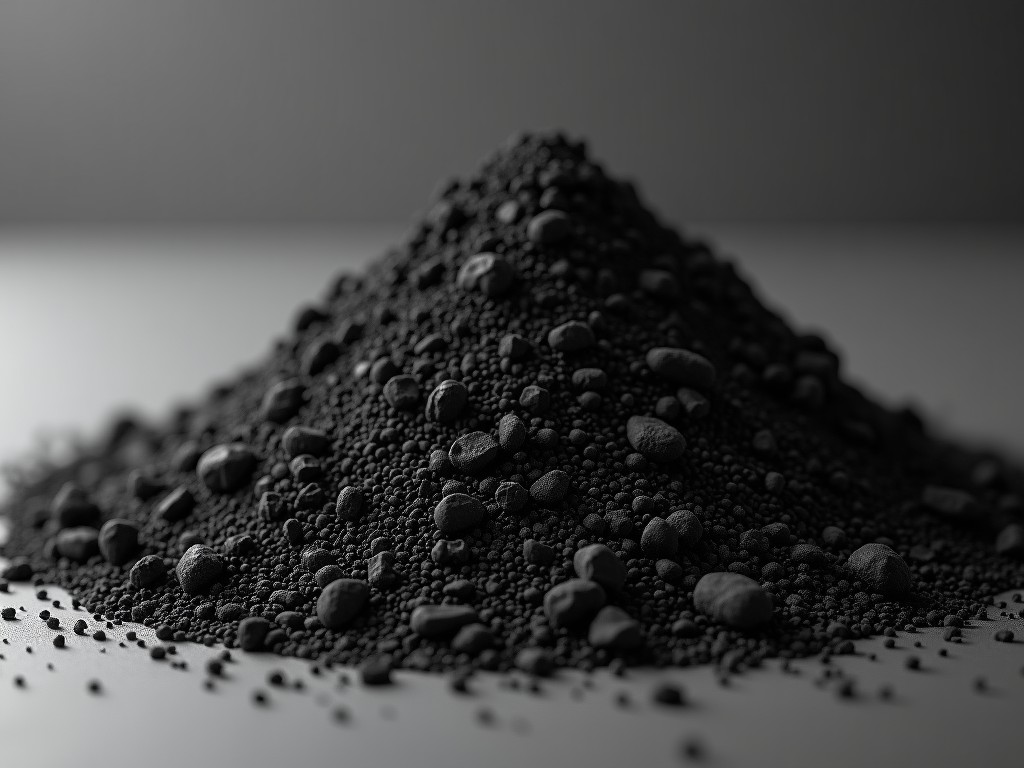
Wholesale Graphite Petroleum Coke Manufacturer
Wholesale Graphite Petroleum Coke Manufacturer
Graphite petroleum coke (GPC) is a carbonaceous solid derived from the delayed coking of petroleum residue, subsequently heat‑treated to develop a crystalline graphite structure. The material combines high fixed carbon content with low volatile matter, making it suitable as a recarburizer and anode precursor in metallurgical and electrochemical processes.
Material Composition and Properties
Typical GPC grades exhibit fixed carbon between 98.5 % and 99.5 %, volatile matter below 0.5 %, ash content ranging from 0.2 % to 0.6 %, and sulfur content usually under 0.05 %. Real density falls in the 2.05–2.15 g/cm³ interval, while electrical resistivity measures approximately 5–8 µΩ·m at room temperature. These values depend on the feedstock quality and the final heat‑treatment temperature.
Production Process Overview
The manufacturing sequence begins with delayed coking units that convert heavy petroleum fractions into green coke. The green coke is then calcined in rotary kilns at temperatures between 1,200 °C and 1,350 °C to drive off residual volatiles and develop the desired crystalline order. Subsequent graphitization, performed at 2,500 °C to 3,000 °C in an inert atmosphere, further aligns the carbon lattice, reducing resistivity and increasing thermal conductivity.
Typical Applications
In aluminum smelting, GPC serves as a cathode block additive, improving electrical conductivity and resisting chemical attack from molten cryolite. In steelmaking, it functions as a recarburizer that adjusts melt carbon levels with minimal sulfur introduction, thereby enhancing product consistency. The material also finds use in the production of graphite electrodes for electric arc furnaces, where low resistivity and high thermal shock resistance are critical.
Aluminum anode manufacturing – provides stable electrical pathways and corrosion resistance.
Steel recarburization – enables precise carbon adjustment with low impurity pickup.
Graphite electrode fabrication – delivers low resistivity and high thermal conductivity.
Specialty carbon products – serves as a precursor for advanced carbon‑based components.
Quality Control and Testing
Each batch undergoes systematic sampling according to ASTM D3172 for proximate analysis and ASTM D4239 for sulfur determination. Fixed carbon, volatile matter, ash, and sulfur are verified using calibrated combustion analyzers. Density is measured by helium pycnometry, while resistivity is assessed via a four‑point probe method. Results are recorded and compared against internal specification limits before release.
Customization Options
Particle size distribution can be tailored to meet specific downstream processing requirements, ranging from fine powders (< 0.1 mm) for anode paste to coarse granules (5–20 mm) for direct recarburization. Moisture content is controlled through drying protocols, and packaging formats are adjustable to suit bulk handling or containerized shipment.
Typical Specifications
| Property | Typical Range | Test Method |
|---|---|---|
| Fixed Carbon (%) | 98.5 – 99.5 | ASTM D3172 |
| Volatile Matter (%) | < 0.5 | ASTM D3172 |
| Ash (%) | 0.2 – 0.6 | ASTM D3172 |
| Sulfur (%) | < 0.05 | ASTM D4239 |
| Moisture (%) | < 0.2 (dry basis) | ASTM E871 |
| Real Density (g/cm³) | 2.05 – 2.15 | Helium Pycnometry |
| Electrical Resistivity (µΩ·m) | 5 – 8 | Four‑Point Probe |
Packaging and Logistics
Standard packaging includes 25 kg multi‑wall paper bags with inner polyethylene liners, stacked on pallets and stretch‑wrapped for stability. For bulk shipments, 1‑metric‑ton flexible intermediate bulk containers (FIBCs) or loose containerized loading in 20‑ft dry vans are available. All packages are marked with lot numbers, handling instructions, and compliance symbols to facilitate traceability and safe handling.
Frequently Asked Questions
Can the particle size be customized? Yes, size distribution is adjusted according to client specifications using crushing and screening stages.
What information is needed for a quotation? Required details include desired grade, quantity, preferred particle size, packaging type, and delivery destination.
How is product quality verified before shipment? Each lot undergoes full proximate and sulfur analysis, with certificates of analysis provided upon request.
What are the typical lead times? Production lead times range from 2 to 4 weeks, depending on order size and current plant load.
Are samples available for evaluation? Representative samples can be arranged after technical discussion and mutual agreement on evaluation parameters.
Contact for Inquiry
To discuss your specific requirements or request a formal quotation, please reach out via the contact form. Our technical team will respond with detailed specifications, pricing, and logistics options.
Request Quotation


×