-
Call Now ! +86 18231158869
-
Email Now [email protected]

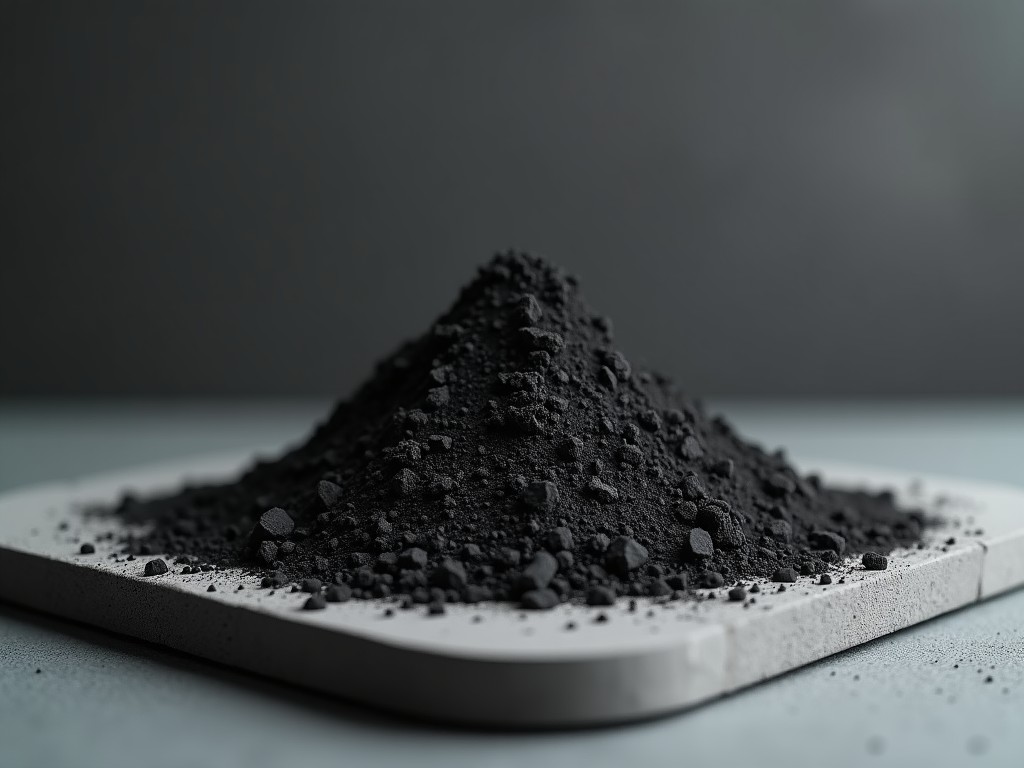
Artificial Graphite Powder
Artificial graphite powder manufacturing process
The production of artificial graphite powder is a sophisticated chemical engineering process designed to transform carbonaceous feedstocks into highly crystalline graphite structures. Unlike natural graphite, which is mined and often contains varying mineral impurities and inconsistent crystal orientations, artificial graphite allows for precise control over chemical purity, density, and particle morphology. This consistency is critical for industrial applications where thermal stability and electrical conductivity are non-negotiable parameters.
Manufacturing typically begins with high-quality raw materials, primarily petroleum coke or coal tar pitch. These materials are selected based on their carbon content and their ability to undergo structural transformation under extreme heat. Through a series of controlled thermal stages, the amorphous carbon atoms are rearranged into the hexagonal lattice structure that defines true graphite.
The Core Synthesis Process: Aitization and Graphitization
The most critical stage in the manufacturing sequence is graphitization. This occurs in electric arc furnaces where the calcined carbon material is subjected to temperatures ranging from 2,500°C to 3,000°C. This intense thermal energy provides the necessary activation for carbon atoms to migrate from a disordered state into an ordered, layered structure.
During this phase, volatile impurities such as sulfur, nitrogen, and metallic elements are vaporized or reduced. The duration of the "soak time" at peak temperature directly correlates with the final product's thermal conductivity and electrical resistance. Engineers monitor the heating rates meticulously to ensure the crystal growth is uniform, which prevents internal stresses within the resulting graphite blocks.
Key synthesis variables:
Feedstock purity: High-carbon petroleum coke yields a lower final-ash content.
Peak temperature: Temperatures above 2,800°C are required for high crystallinity (d002 spacing in X-ray diffraction).
Atmosphere control: Inert nitrogen or argon environments are maintained to prevent oxidation during high-heat phases.
Refining and Particle Size Control
Once the bulk graphite blocks are formed, they must be reduced into powder to meet specific industrial requirements. This refining process is not merely mechanical crushing; it is precision engineering designed to preserve the integrity of the graphite flakes. The method of milling depends on the required particle size distribution (PSD) and surface area.
Jet milling is frequently employed for producing ultra-fine powders. In this process, high-velocity air streams collide graphite particles against each other, resulting in a narrow size distribution without the metallic contamination often associated with mechanical ball mills. For coarser applications or those requiring specific micron ranges, ball milling or hammer milling are utilized, though these require careful monitoring of the media wear.
Technical Specifications and Properties
The following table outlines the typical performance characteristics of artificial graphite powder produced through standard industrial protocols. These values can vary based on the specific graphitization parameters and milling techniques.
| Property | Typical Value (Standard) | Customizable |
|---|---|---|
| Purity (Carbon Content) | 94.5% - 99.9% | Yes |
| Specific Density | 1.7 - 2.2 g/cm³ | Yes |
| Thermal Conductivity | 20 - 150 W/m·K | Yes |
| Electrical Resistivity | 10 - 50 μΩ·cm | Yes |
| Particle Size (D50) | 0.5µm - 100µm | Yes |
Industrial Applications and Requirements
The versatility of artificial graphite powder stems from its thermal stability and chemical inertness. In the steel industry, it is a vital component in manufacturing electrode electrodes, where thermal shock resistance and high electrical conductivity are essential. The lubricant industry relies on the powder for formulated high-temperature greases, where organic oils fail under extreme friction.
The energy storage sector increasingly utilizes high-purity artificial graphite for lithium-ion battery anodes. The controlled manufacturing ensures that no unintended metallic impurities could lead to cell failure or inconsistent discharge rates. Furthermore, in the foundry industry, the powder is used in resin-bonded molds to ensure precise dimensional stability and surface finish on castings.
Quality Control and Testing
To ensure technical compliance, every batch of powder undergoes rigorous testing. X-Ray Diffraction (XRD) is used to measure the degree of crystallinity and the d002 interlayer spacing, which indicates the quality of graphitization. Scanning Electron Microscopy (SEM) allows for inspecting particle morphology to ensure the milling process has not caused excessive deformation.
Particle size distribution is verified via laser diffraction, providing a statistical curve that matches the customer's specific formulation density requirements. Additionally, chemical analysis is performed to quantify ash content and trace elements, ensuring the material meets the purity thresholds required for sensitive electronic applications.
Frequently Asked Questions
Can the particle size be customized for specific formulations?
Yes, through specialized jet or ball milling techniques, we provide particle distributions ranging from sub-micron levels to several hundred microns, depending on the application needs.
What is the primary difference between natural and artificial graphite powder?
Artificial graphite offers significantly higher purity and a more consistent crystal structure because it is synthesized to avoid the mineral impurities found in natural deposits.
How is the oxidation resistance determined?
It is measured through Thermogravimetric Analysis (TGA), which identifies the temperature at which the graphite begins to lose mass in an oxidative atmosphere.
Request technical data sheets or a sample for your specific project requirements.
Inquire for Technical Consultation


×