-
Call Now ! +86 18231158869
-
Email Now [email protected]

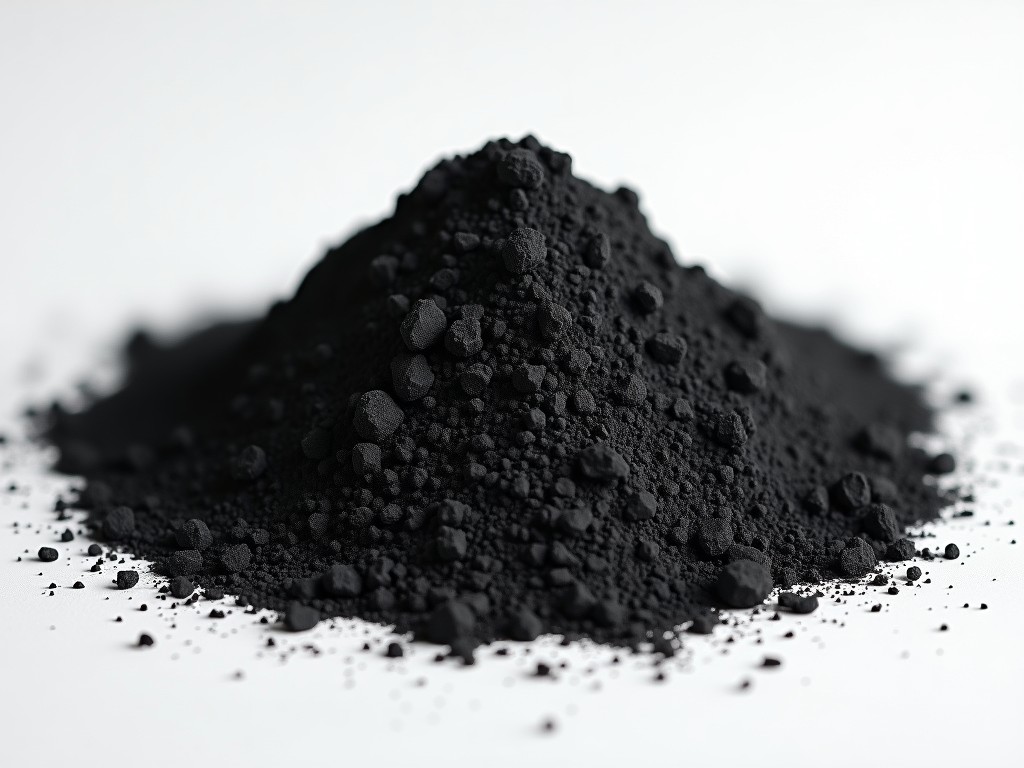
B2B Graphite Powder 200 Mesh
b2b graphite powder 200 mesh
200 mesh graphite powder represents a specific particle size distribution, typically measuring in at approximately 74 to 75 microns. This level of fineness is engineered for industrial applications where a high surface-area-to-volume ratio is required to enhance thermal dissipation or electrical conductivity within a composite matrix. Unlike coarser graphite grades, the 200 mesh specification allows for better integration into resins, polymers, and lubricants, ensuring uniform properties throughout the finished material.
Selecting the correct mesh size depends on the rheological requirements of the final product. While finer powders improve conductivity percolation thresholds, they also increase the viscosity of liquid-based formulations. The 200 mesh grade serves as a balance point for engineers requiring significant performance gains while maintaining processability in large-scale manufacturing environments such as injection molding, extrusion, or dry-film application.
Technical Specifications
| Property | Typical Value / Range |
|---|---|
| Particle Size (Mesh) | 200 Mesh (~75μm) |
| Specific Density | 2.1 - 2.2 g/cm³ |
| Thermal Conductivity | 20 - 150 W/m·K (varies purity) |
| Electrical Conductivity | 10 - 500 S/m |
| Ash Content | < 1% |
| Moisture Content | < 0.5% |
Industrial Applications
Thermal management is a primary driver for 200 mesh graphite in the production of thermal interface materials (TIMs). Because the particles are fine, they can fill microscopic voids between larger conductive fillers, creating a continuous thermal path for heat transfer. This is essential in power electronics and aerospace-grade battery modules where localized hotspots can lead to component failure.
In the lubricant industry, this powder grade is utilized as a dry lubricant for high-temperature environments where traditional organic oils would oxidize or evaporate. Graphite maintains a stable coefficient of friction under extreme mechanical loads. The 200 mesh size ensures that the powder adheres evenly to metallic surfaces, providing a protective lubricious layer that prevents galling.
Conductive Additives: Providing electrostatic discharge (ESD) protection in plastic housings and rubber components.
Foundry Practices: Acting as a coating agent in precision casting to improve surface finish and mold release.
Electrode Manufacturing: Enhancing the structural integrity and electrical resistance of specialized industrial molding electrodes.
Manufacturing and Quality Control
The production of 200 mesh graphite involves rigorous mechanical milling processes to achieve the required particle distribution. Jet milling is often employed because it utilizes particle-particle impact, preserving the crystalline integrity of the graphite flakes. Following milling, the material undergoes multi-stage air sieving to ensure that particles exceeding the 200-mesh threshold are removed and recirculated.
Quality assurance is centered on laser diffraction analysis to verify the particle size distribution (PSD) curve. This ensures that every batch provides consistent performance, which is critical for automated industrial dosing systems. Additionally, chemical analysis for ash content and sulfur is performed to ensure the material meets the purity requirements of sensitive electronic or aerospace applications.
Customization and Packaging
B2B buyers often require specific customizations to fit their existing manufacturing workflows. We offer various purity levels ranging from natural graphite to highly synthetic variants, depending on the required thermal or electrical performance. Furthermore, the powder can be pre-treated with specific coupling agents to improve compatibility with different polymer matrices or solvent carriers.
Packaging is designed to prevent moisture absorption and maintain powder purity during transit. Standard options include 25kg moisture-proof bags or 500kg bulk drums for large-scale operations. For R&D or pilot-scale testing, smaller vacuum-sealed samples are available to facilitate material validation before full-scale procurement.
Frequently Asked Questions
Can the particle size be adjusted beyond 200 mesh?
Yes, while 200 mesh is a standard, we can provide grades ranging from 100 mesh to 500 mesh based on your specific engineering requirements and viscosity constraints.
What information is required before a formal technical quotation?
To provide an accurate quote, please specify the required purity level, target thermal/electrical conductivity, annual volume, and the primary application.
What is the typical production lead time for bulk orders?
Lead times typically range from 2 to 6 weeks depending on current inventory levels and the specific customization requirements of the graphite grade.
Need a technical data sheet (TDS) or to discuss how to integrate 200 mesh graphite into your production line?
Request Technical Consultation


×