-
Call Now ! +86 18231158869
-
Email Now [email protected]

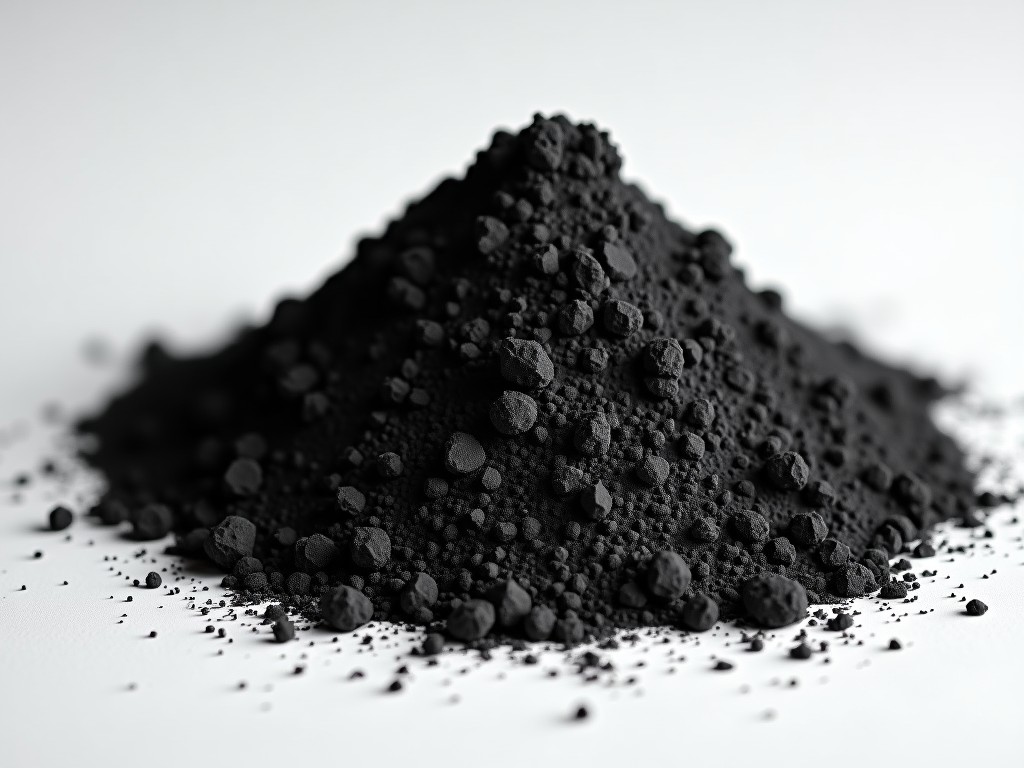
B2B Graphite Powder Dry Lubricant
B2B Graphite Powder Dry Lubricant
Graphite powder functions as a critical dry lubricant in industrial environments where liquid lubricants fail due to thermal degradation, outassing, or contamination risks. Unlike oils or greases, this carbon-based material provides a solid film that reduces friction by preventing adhesion between surfaces. This makes it essential for high-pressure applications and high-temperature operations where viscosity changes would lead to mechanical failure.
The performance of graphite is derived from its unique hexagonal crystalline structure. Carbon atoms within each layer are held together by strong covalent bonds, while the layers themselves are linked by weak van der Waals forces. This configuration allows the layers to slide over one another with minimal resistance, maintaining a low coefficient of friction even under significant mechanical loads.
Technical Properties and Performance Metrics
Thermal stability is the primary advantage of graphite powder lubricants. It remains structurally effective at temperatures up to 2000°C in air environments and can exceed 3000°C in inert atmospheres or vacuum conditions. This range far exceeds the capabilities of aerospace components and heavy forging operations where organic lubricants would vaporize or oxidize.
Chemical inertness ensures that the powder does not react with most metals, alloys, or polymers. This property is particularly vital in the semiconductor and electronics industries, where chemical contamination can result in catastrophic batch failures. Furthermore, the coefficient of friction typically ranges from 0.1 to 0.15 in drylublubric conditions, providing consistent mechanical performance across varying load cycles.
| Lubricant Type | Coefficient of Friction | Max Operating Temp (Air)", | Primary Advantage |
|---|---|---|---|
| Graphite Powder | 0.1 - 0.15 | 2000°C | Thermal stability & vacuum |
| Molybdenum Disulfide (MoS2) | 0.05 - 0.1 | 350°C | Extreme low load capacity |
| PTFE (Teflon) | 0.04 - 0.1 | 260°C | Chemical resistance |
| Synthetic Oils | 0.05 - 0.2 | 200°C | Fluidity & cooling |
Industrial Applications
Engineering teams utilize graphite powder in metal forming processes like extrusion, forging, and rolling. In these environments, the lubricant acts as a barrier that prevents cold welding between the workpiece and the die. This significantly reduces the required forming force and improves the surface finish of the finished metal components.
Aerospace & Defense: Moving parts in vacuum chambers where oil outassing would contaminate sensors.
Automotive Manufacturing: Lubricating high-temperature engine components and exhaust-related assemblies.
Electronics: Dry lubrication for sliding connectors and switches to prevent buildup of residue.
Glass Production: Release agents for glass molds to prevent mechanical sticking during cooling cycles.
Customization and Material Specifications
Procurement requirements often dictate specific particle size distributions to ensure uniform coating on surfaces. We provide flake-type graphite for superior load-bearing capacity and synthetic graphite for applications requiring high purity and specific electrical conductivity profiles.
Purity levels are adjustable from standard industrial-grade carbon up to 99.99% for specialized laboratory or semiconductor applications. This control over carbon content minimizes metallic impurities that could otherwise interfere with the dielectric properties of the lubricant.
Frequently Asked Questions
What are the typical particle sizes available for graphite?
Particle sizes typically range from 1 micron to 100 microns. Finer powders are preferred for spray coating and thin film applications, while larger flakes are used in heavy-duty industrial forming processes.
How does graphite react to humidity?
Graphite is generally hydrophobic, but its lubrication properties actually improve in moderate humidity. Water molecules act as an additional lubricant between the graphite layers, further facilitating the shearing action.
What packaging methods are used for bulk orders?
Bulk orders are typically shipped in moisture-barrier 25kg fiber bags or 500kg totes to prevent clumping and contamination during transit.
Requires specific technical data or a custom formulation for your project?
Request Technical Specification and Quote


×