-
Call Now ! +86 18231158869
-
Email Now [email protected]

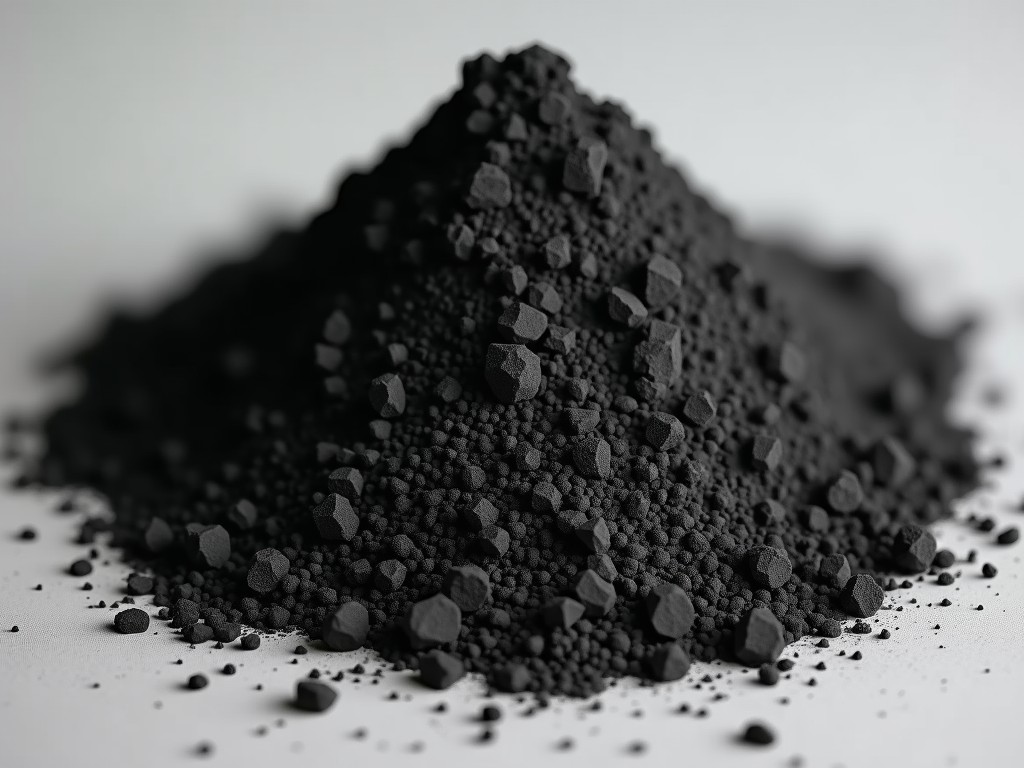
B2B Graphite Powder Lock Lubricant
B2B Graphite Powder Lock Lubricant
Graphite powder serves as a critical dry-lubricant solution designed specifically for high-precision locking mechanisms where traditional lubricants fail due to contamination. Unlike liquid-phase lubricants that rely on fluid film, graphite operates through a unique crystalline structure composed of hexagonal carbon layers. These layers allow for easy sliding over one another, significantly reducing the friction between pins, springs, and cylinders without leaving the residue that causes mechanical binding.
In industrial and high-security environments, the integrity of a lock is often compromised by the accumulation of atmospheric dust, moisture, and grit. Graphite provides a non-polar barrier that does not attract these particulates, ensuring that the internal components of the lock remain mobile even after thousands of actuation cycles in exposure to harsh conditions.
Technical Properties of Graphite Lubricants
The tribological performance of a graphite-based lubricant is dictated by its particle size distribution and purity levels. High-grade industrial graphite typically maintains a purity of 99% or higher, minimizing metallic impurities that could lead to galvanic corrosion or unexpected wear. The molecular structure allows for low van der Waals forces between the planes, resulting in a coefficient of friction that is among the lowest for solid lubricants.
Thermal stability is another primary characteristic, as graphite remains effective across a wide temperature range, typically -50°C to over 400°C. This range makes it suitable for outdoor hardware subjected to extreme seasonal fluctuations where oil-based greases would thicken in cold or thin out in high heat.
Advantages Over Oil-Based Lubricants
The primary failure mode for oil or grease-based lubricants in locks is "gunking"—the process where the lubricant medium captures environmental debris to form an abrasive paste. This paste increases the torque required to turn the key, eventually leading to seizure. Graphite powder avoids this risk entirely by maintaining a dry surface that does not bond with airborne silicate particles.
Furthermore, graphite is non-conductive and non-corrosive, which is vital for applications involving electronic security components or sensitive alloys where chemical reactions might be a concern. Its inherent resistance to water ensures that the lubrication properties do not degrade in marine or high-humidity industrial environments where oxidation would rapidly degrade standard oils.
Industrial Applications and Use Cases
Engineers specify graphite powder in scenarios where reliability and low-maintenance intervals are paramount. This includes high-security cylinders where the tolerances are so tight that any buildup of grease would cause immediate mechanical failure.
High-Security Padlocks: Maintaining smooth operation in environments exposed to rain and salt.
Automotive Security: Lubricating door locks and trunk mechanisms that face extreme temperature swings.
Industrial Control Panels: Ensuring the functionality of mechanical locking switches where dust ingress is prohibited.
Marine Hardware: Protecting exterior locks from rapid corrosion in salt-air environments.
Technical Specifications
| Property | Typical Values | Notes |
|---|---|---|
| Material Purity | ≥ 99.0% Carbon | Customizable upon request |
| Particle Size (D50) | 5 - 20 microns | Sieve-analysis available |
| Coefficient of Friction | 0.05 - 0.15 | Tested on stainless steel |
| Operating Temperature | -50°C to +400°C | Stable under vacuum |
Storage and Quality Control Standards
Graphite powder is hygroscopic, meaning it can absorb moisture from the air, which leads to clumping and loss of flowability in application mechanisms. To maintain technical integrity, the product is supplied in moisture-barrier-sealed polyethylene bags or airtight drums with desiccant packs.
Quality control protocols involve particle size distribution testing to ensure the powder is fine enough to penetrate tight lock tolerances without causing abrasion. We also perform periodic elemental analysis to verify the absence of metallic contaminants that could interfere with the lubricating performance.
Frequently Asked Questions
Is this graphite lubricant compatible with all lock metals?
Yes, graphite is chemically inert and safe for use with brass, stainless steel, and aluminum. It does not cause galvanic reactions between common lock alloys.
How should the powder be applied for optimal results?
For best performance, the powder should be applied via a precision applicator or by lightly coating the key. This ensures an even distribution across the internal pins and shear lines.
What is the typical shelf life of the product?
When stored in a cool, dry environment in original packaging, the graphite powder remains chemically stable indefinitely, as it does not oxidize or degrade over time.
Requires specific technical data sheets or bulk pricing for your production line?
Request Technical Consultation


×