-
Call Now ! +86 18231158869
-
Email Now [email protected]

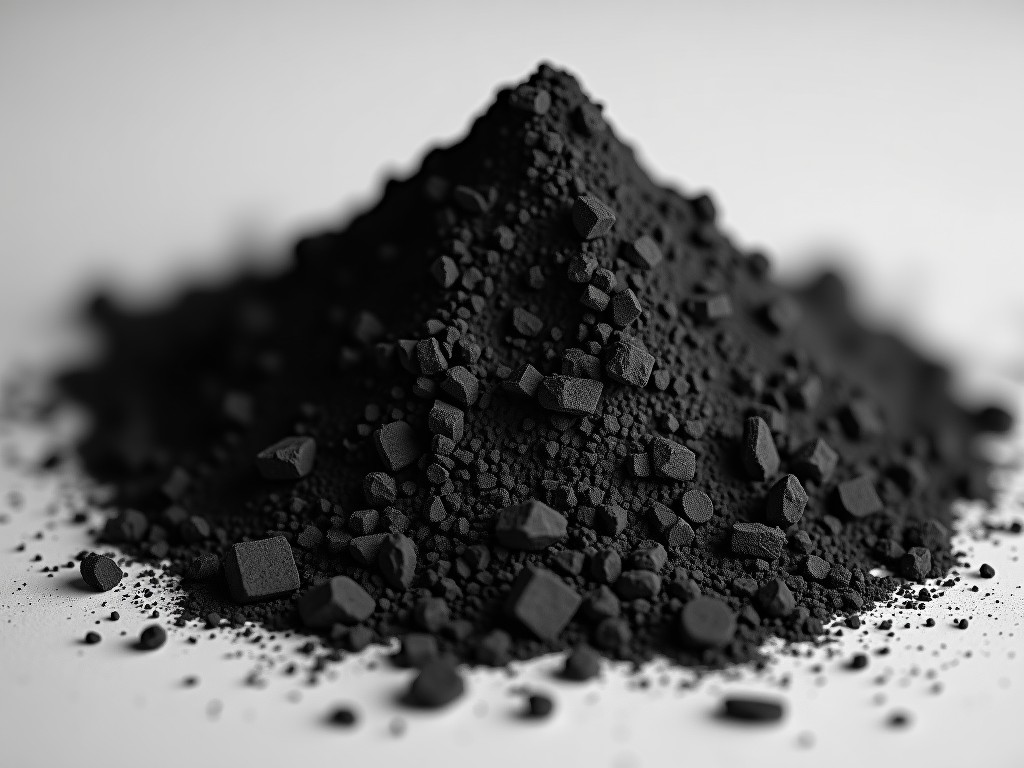
Buy Extra Fine Graphite Powder
Buy Extra Fine Graphite Powder for Precision Engineering Applications
Extra fine graphite powder is defined by its narrow particle size distribution, typically ranging from sub-micron to 10 microns. Unlike standard flake graphite, these finer particles offer a significantly higher surface area, which is critical for applications requiring high-density packing or uniform electrical conductivity in composite matrices. By controlling the particle diameter, engineers can precisely dictate the rheological and thermal properties of the final manufactured product.
The production process for this grade involves advanced mechanical milling and purification techniques to ensure the crystalline structure remains intact. This ensures that the material retains its inherent high thermal conductivity and chemical resistance despite the reduced particle size. Procurement teams must specify purity levels to prevent unwanted reactions in sensitive electronic or aerospace components.
Technical Properties of Extra Fine Graphite Particle Distribution
The performance of graphite in industrial settings is largely linked to its surface-to-volume ratio. As particle size decreases, the specific surface area increases, allowing for better interaction with polymer binders or metallic matrices. This characteristic is particularly vital in the production of conductive additives where aggregation would lead to mechanical failure or thermal hotspots.
Crystallinity: High-degree graphite order ensures optimal electron mobility and thermal stability.
Purity: Typically available at 99% or higher to minimize metallic ash content.
Morphology: Often features spherical or irregular flake shapes which influence flowability in formulations.
Moisture Content: Controlled below 0.5% to prevent clumping during processing.
Industrial Applications and Performance Drivers
Extra fine graphite serves as a primary dry lubricant in high-vacuum environments where traditional oils would evaporate. Because the small particles penetrate microscopic irregularities in metal surfaces, they reduce the coefficient of friction without leaving visible residue. This makes them essential for precision instruments and space-grade hardware.
In the realm of energy storage, this material is utilized in the formulation of electrode coatings. The fine particle size facilitates a more uniform distribution of the conductive network, which enhances the rate capability and cycle life of battery cells. Furthermore, it is integrated into specialized conductive inks and thermal pastes where heat dissipation is required to prevent electronic component throttling.
Technical Specification Table
| Property | Standard Flake Graphite | Extra Fine Graphite |
|---|---|---|
| Particle Size (D50) | 20 - 50 µm | < 5 µm |
| Surface Area (BET) | 5-15 m²/g | 30-80 m²/g |
| Electrical Resistivity (10⁻⁶ Ω·cm) | 20-50 | 10-30 |
| Ash Content (%) | < 1% | < 0.5% |
Customization and Packaging Options
Project requirements often demand specific mesh sizes or chemical surface treatments. We provide various mesh options from 1000 to over 4000 mesh to match the tolerance of your manufacturing equipment. Additionally, surface modification can be performed to improve the compatibility of the graphite with specific resins or polymer-ceramic composites.
Packaging is designed to prevent moisture absorption and particle loss. For small-scale R&D, vacuum-sealed anti-static bags are utilized. Large-scale industrial orders typically ship in 25kg fiber drums or bags with moisture-barrier liners to ensure material integrity during long-term storage.
Quality Control and Testing Protocols
Quality assurance is maintained through rigorous analytical testing of every batch. Particle size is verified using laser diffraction to provide a distribution curve, ensuring the material meets the specified D50 and D90 values. Purity is assessed via thermogravimetric analysis to confirm that impurities remain within the required thresholds.
Thermal conductivity and electrical resistivity are tested under standardized conditions to validate the functional performance of the graphite. This data-driven approach allows engineers to integrate the material into their simulations with high confidence in repeatability.
Frequently Asked Questions
What is the typical production lead time for bulk orders?
Standard grades are typically available within 2 to 4 weeks, while custom particle sizes or high purity levels may require 6 to 8 weeks.
How is particle size measured for this powder?
We utilize laser diffraction analysis to provide a comprehensive particle size distribution report, moving beyond simple sieve analysis.
Are samples available for technical testing?
Yes, laboratory-scale samples are provided upon request to allow for material validation within your specific application environment.
Requires technical specifications or a quote for a specific project? Our engineering support team can assist with material selection and particle distribution analysis.
Contact us for a Technical Inquiry →


×