-
Call Now ! +86 18231158869
-
Email Now [email protected]

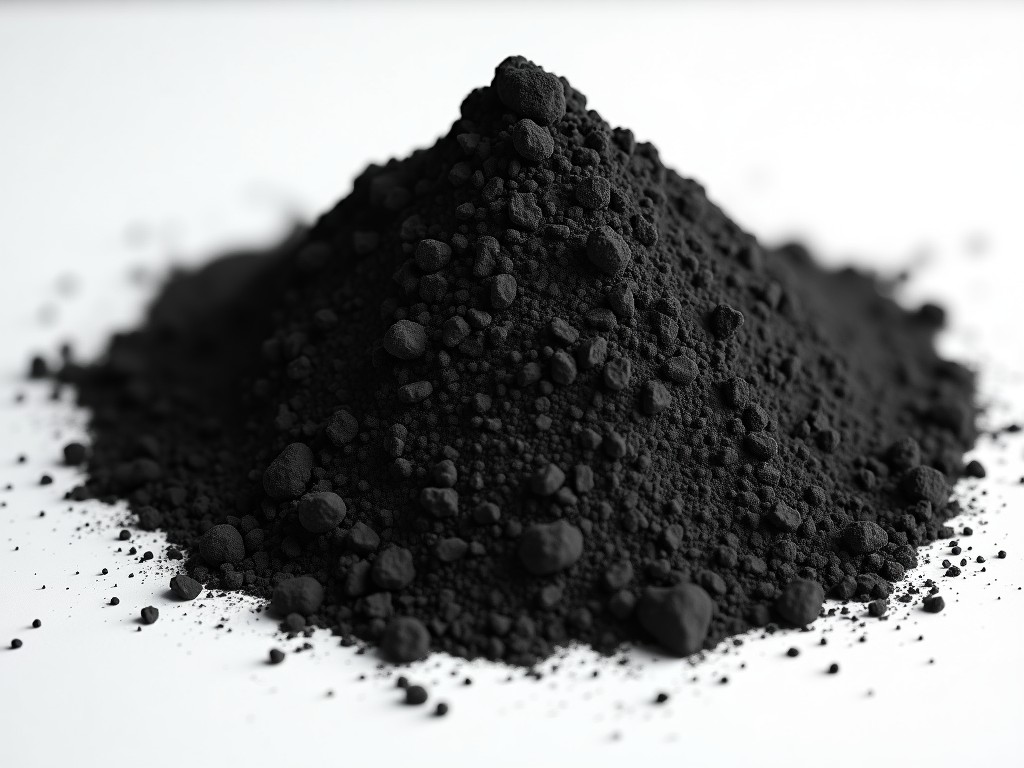
Buy Graphite Powder Epoxy Resin
Graphite Powder Epoxy Resin Technical Specifications and Applications
Graphite-filled epoxy resin represents a specialized composite material engineered for environments requiring both structural stability and functional conductivity. By integrating conductive graphite particles into a thermosetting epoxy matrix, the resulting material achieves a balance of mechanical properties that pure resins cannot provide alone. This composite is frequently utilized in industrial settings where electrical grounding, thermal dissipation, or wear resistance are critical requirements.
The performance of the material is dictated by the interaction between the polymer matrix and the graphite filler. While the epoxy provides the necessary adhesive strength and chemical resistance, the graphite flakes create a pathway for electron flow and heat transfer. Engineers must specify the filler concentration and particle size to meet specific conductivity thresholds or mechanical tolerances required for the end application.
Technical Properties of Graphite-Filled Epoxy
The electrical conductivity of the composite depends heavily on the percolation threshold—the critical concentration of graphite filler required to form a continuous network. As filler loading increases, this conductive path establishes, allowing for measurable electrical resistance through the material. Simultaneously, the epoxy matrix ensures the component remains resistant to chemical solvents and maintains mechanical toughness under structural stress.
Beyond conductivity, graphite introduces significant lubricious properties to the epoxy system. The layered crystalline structure of graphite allows layers to slide over one another, making the composite ideal for components subject to friction or sliding-wear environments. This inherent lubrication also helps reduce the Coefficient of Thermal Expansion (CTE), leading to better dimensional stability during temperature fluctuations.
| Property | Typical Value | Testing Condition |
|---|---|---|
| Electrical Conductivity | 10 to 1000 S/cm | Variable based on filler loading |
| Thermal Conductivity | 0.5 to 15 W/mK | Standard ASTM method |
| Tensile Strength | 40 to 80 MPa | ASTM D638 |
| Shore Hardness | 80 to 95 D | ASTM D2240 |
| Service Temperature | Up to 150°C | Dependent on curing agent type |
Industrial Applications
EMI (Electromagnetic Interference) shielding is a primary driver for graphite-filled epoxy. High-frequency electronic assemblies require enclosures that can dissipate static energy and shield sensitive components from internal radiation or external interference. This material is often preferred over metal housings when weight reduction or complex shaping via molding is necessary.
Thermal management systems utilize the material to dissipate heat from power-dense components. Because graphite possesses high thermal conductivity, the composite acts as a heat bridge, moving thermal energy away from hotspots. This is particularly effective in power electronics and LED lighting modules where traditional heat sinks may be too bulky.
In mechanical engineering, the resin is applied as wear-resistant coatings or formulated bushings. The self-lubricating nature of the graphite reduces the friction coefficient between surfaces, extending the operational life of moving parts in dry or chemically corrosive environments without the need for external oil lubrication.
Material Customization Options
Selection of the graphite morphology is critical for achieving the desired performance. Flake graphite is typically chosen for high-conductivity applications because its high aspect ratio facilitates a conductive network at lower volume percentages. Conversely, spherical graphite powder is often utilized when the viscosity of the resin mix must be maintained for injection molding or thin-walled casting processes.
Filler loading levels are measured by weight or volume percentage and significantly impact the final material properties. Higher graphite loading improves electrical and thermal properties but can decrease the tensile strength and flexibility of the epoxy matrix. We provide customizable formulations to balance these mechanical and functional trade-offs based on specific project parameters.
Quality Control and Testing
To ensure batch consistency, every lot of graphite-filled epoxy undergoes rigorous testing. This includes analysis of the particle size distribution to ensure the filler remains within specified tolerances, which directly affects viscosity. Electrical volume resistance is also measured to verify that the material meets the client's conductivity specifications.
Mechanical integrity is verified by testing the bond strength between the graphite and the resin matrix. Tensile and shear strength tests confirm that the composite will not delaminate under operational loads. Furthermore, thermal stability is monitored to ensure the material maintains its structural and functional properties across the intended temperature range.
Require technical data sheets or a custom formulation for your project?
Contact Our Engineering Team


×