-
Call Now ! +86 18231158869
-
Email Now [email protected]

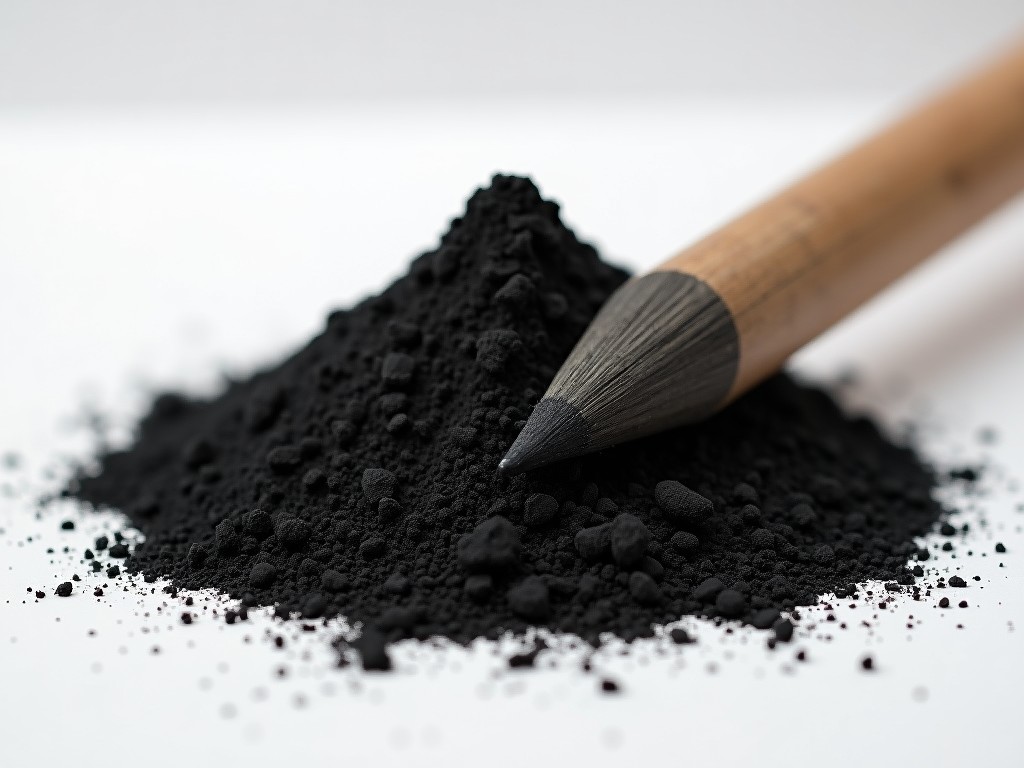
Buy Graphite Powder For Drawing
Buy Graphite Powder for Drawing - Industrial Specifications
Graphite powder utilized in drawing and technical marking is defined by its carbon purity and particle size morphology. Unlike standard consumer-grade pencils, industrial-grade graphite powder for precision requires specific mesh grades to ensure consistent optical density and adhesion across various substrates. Engineers and artists must evaluate the flake structure to determine how the material will behave when mixed with binders or applied directly as a dry media.
Technical Specifications and Performance
The performance of graphite powder depends largely on its crystalline structure and particle size distribution (PSD). For fine-line drawing, a finer particle size ensures a smoother finish and prevents clumping, while larger flakes provide a more metallic luster. High-purity graphite, typically exceeding 98%, ensures electrical conductivity and chemical stability in the resulting marking layer.
| Technical Property | Typical Value Range | Application Relevance |
|---|---|---|
| Carbon Content | 94% - 99.9% | Determines tonal depth and oxidation resistance. |
| Particle Size (Mesh) | Sub-micron to 50 microns | Controls stroke sharpness and surface smoothness. |
| Mohs Hardness | 1.0 - 2.0 | Affects the shear force during application. |
| Bulk Density | 0.8 - 1.6 g/cm³ | Impact volumetric mixing in binder formulations. |
Industrial and Artistic Applications
Application of graphite powder extends beyond traditional artistic sketching. In industrial contexts, it is often used as a base for conductive inks or as a dry-film lubricant where oils are prohibited. The low friction coefficient of graphite flakes allows them to slide easily, making them ideal for marking templates on metal surfaces.
Technical Drafting: Used for high-gradient shading in architectural illustrations where standard pencil lines are insufficient.
Conductive Coatings: Integrated into polymer resins to create ESD-safe surfaces for electronic components.
Precision Lubrication: Applied as a dry powder to reduce friction in sensitive mechanical assemblies.
Ceramic Casting: Used as a pigment to achieve specific metallic finishes in-fired glazes.
Material Selection: Natural vs. Synthetic
Choosing between natural and synthetic graphite depends on the required level of structural consistency. Natural graphite is harvested from mineral deposits and possesses a varied flake structure that many artists prefer for organic textures. Synthetic graphite is produced through high-temperature carbonization, resulting in a more uniform particle size and higher chemical purity levels.
For industrial processes requiring predictable electrical resistance, synthetic variants are often preferred due to the lack of mineral impurities. However, for purely aesthetic applications where visual depth is the priority, the inherent variations in natural graphite provide a unique aesthetic advantage.
Quality Control and Inspection Protocols
To ensure batch consistency, graphite powder undergoes rigorous analytical testing. Laser diffraction is the standard method used to measure the particle size distribution, ensuring that the powder meets the specified mesh grade. Additionally, ash content is tested via muffle furnace to detect any inorganic impurities that could affect the optical properties of the drawing.
Frequently Asked Questions
Can the particle sizes be customized for specific mesh requirements?
Yes, we offer custom milling and screening to achieve specific micron-level particle sizes based on your technical data-sheet or artistic requirements.
What is the standard packaging for bulk shipments?
Bulk orders are typically packed in 25kg anti-static bags or moisture-proof drums to prevent contamination and degradation during transport.
How are export shipments protected?
Shipments are vacuum-sealed in multi-layered polyethylene liners and placed in reinforced crates to maintain purity and structural integrity during international transit.
Requesting a technical data sheet or a formal quote for bulk graphite powder? Our engineering team can provide the necessary specifications to support your specific application.
Inquire for Technical Specifications


×