-
Call Now ! +86 18231158869
-
Email Now [email protected]

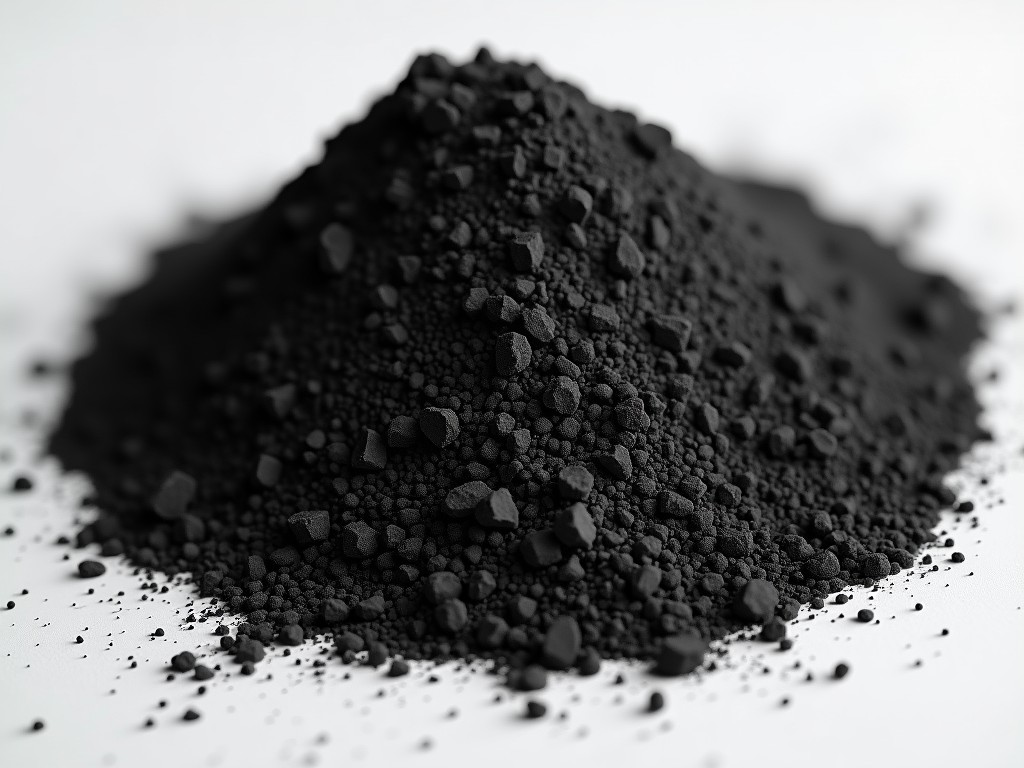
China Graphite Dust Manufacturer
China Graphite Dust Manufacturer and Supplier
Graphite dust is a critical component in high-performance industrial processes where thermal stability, electrical conductivity, and lubricious properties are required simultaneously. As a specialized manufacturer and supplier, we focus on providing finely milled graphite powders derived from both natural flake graphite and synthetic sources to meet specific engineering tolerances. The material performance of graphite dust depends heavily on its particle size distribution and purity levels, which directly dictate its behavior in composites, conductive inks, and metallurgical applications.
Selection of the correct graphite grade requires an understanding of how particle morphology interacts with the host matrix. For instance, sub-micron particles are often necessary for enhancing the electrical conductivity of polymer composites, whereas coarser powders are more effective as dry lubricants in heavy machinery or as anti-coating agents in high-temperature environments.
Technical Specifications and Material Properties
| Property | Typical Values | Testing Method |
|---|---|---|
| Carbon Purity (C) | 94.0% - 99.99% | LECO / Combustion Analysis |
| Particle Size (D50) | 0.5µm - 45µm | Laser Diffraction |
| Ash Content | < 0.1% (High purity) | Gravimetric Analysis |
| Electrical Resistivity | 10⁻⁵ - 10⁻³ S/cm | Four-point Probe |
| Thermal Conductivity | 20 - 150 W/m·K | Laser Flash Method |
Industrial Applications and Engineering Logic
Metallurgy and Casting
In metal founding, graphite dust is utilized as a mold coating to prevent molten metal from bonding with the mold surface. Its high thermal shock resistance allows it to withstand extreme temperatures while its lubricity ensures a smooth release of the cast part. This reduces surface defects and improves the dimensional accuracy of complex geometries.
Electronics and EMI Shielding
The conductive nature of graphite dust makes it an ideal filler for electromagnetic interference (EMI) shielding paints and plastics. By controlling the concentration and size, engineers can tune the percolation threshold required to achieve electrical continuity, effectively blocking or dissipating electromagnetic waves in high-frequency electronic environments.
Energy Storage Systems
In lithium-ion battery manufacturing, specialized graphite powder serves as the primary material for anode production. The surface area-to-volume ratio of the particles influences the lithium ion intercalation rate, which impacts the charging speed and cycle life of the cell.
Manufacturing and Quality Control Process
Production of graphite dust begins with the selection of raw material, either natural flake graphite for higher crystallinity or synthetic graphite for uniform morphology. The milling process involves multiple stages of grinding to achieve the desired particle size distribution. For sub-micron requirements, jet milling is employed, which uses high-pressure air streams to collide particles against each other, minimizing contamination from grinding media.
Quality assurance is integrated at every stage. We perform sieve analysis and laser diffraction to ensure the size distribution remains consistent with the technical datasheet. Furthermore, Inductively Coupled Plasma (ICP-OES) testing is used to detect trace metal impurities that could adversely affect the electrical or chemical properties of the final product.
Frequently Asked Questions
Can the particle size be customized for a specific application?
Yes, we can provide customized mesh sizes from sub-micron up to 400 microns based on your formulation's rheological requirements.
What is the difference between natural and synthetic graphite dust?
Natural graphite typically offers better thermal conductivity due to its crystalline structure, while synthetic graphite provides a more uniform particle shape and higher purity levels for sensitive chemical applications.
How is the product packed for international shipping?
Bulk orders are typically packed in 25kg moisture-proof paper bags or anti-static drums to prevent contamination and material loss during transit.
Need a technical consultation or a sample for your specific engineering requirements?
Request a Technical Quote


×