-
Call Now ! +86 18231158869
-
Email Now [email protected]

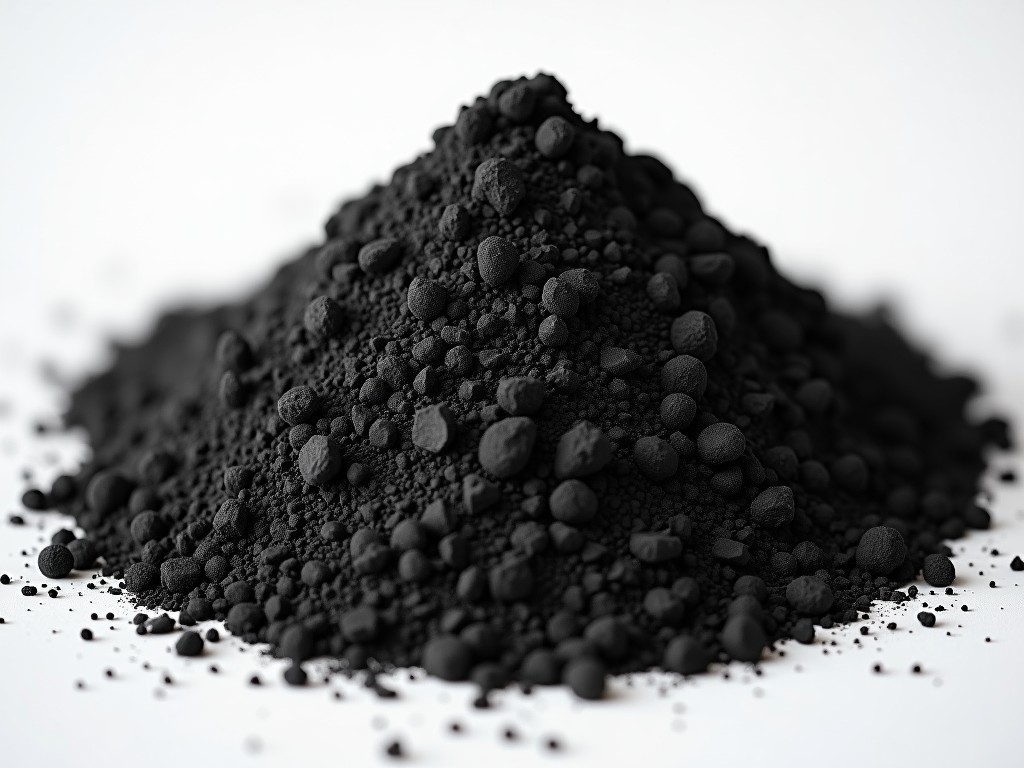
China Graphite Powder For Sale
China Graphite Powder Technical Specifications and Applications
The production of graphite powder in China leverages extensive high-purity mineral deposits and advanced synthetic manufacturing processes. Procurement engineers often require a deep understanding of how crystalline structure and particle size distribution influence thermal and electrical performance in end-use applications. Selecting the correct grade involves evaluating the ash content, moisture levels, and the specific morphology required for the manufacturing process.
Technical Classification of Graphite Powder
Graphite powder is primarily categorized by its origin and its physical form. Natural flake graphite is valued for its inherent lubricity and excellent thermal conductivity, making it ideal for lubricants and thermal management. Conversely, synthetic graphite, produced from petroleum coke or coal tar, offers higher purity and more consistent particle morphology for specialized electronic applications where impurity resistance is critical.
| Property | Typical Value | Impact on Performance |
|---|---|---|
| Ash Content (Purity) | 94.0% - 99.99% | Determines electrical resistance and chemical stability. |
| Particle Size (Mesh) | 200 - 2000 mesh | Affects packing density and surface area. |
| Electrical Conductivity | 10^4 - 10^6 S/m | Crucial for heat dissipation and electrodes. |
| Specific Gravity | 2.1 - 2.3 g/cm³ | Influences volume-based formulations. |
Industrial Applications and Logic
The application of graphite powder is dictated by the specific physical requirements of the industrial environment. Engineers select grades based on the need to withstand high thermal stress, reduce friction coefficients, or facilitate electrical flow.
Metallurgy and Refractories: Used in the production of casting molds and cruc to provide thermal shock resistance and prevent molten metal from adhering.
Dry Lubrication: The layered crystalline structure provides a low coefficient of friction in high-temperature environments where liquid lubricants would oxidize or evaporate.
Battery Manufacturing: High-purity graphite powders serve as the precursor for anode materials in lithium-ion batteries, determining energy density.
Electronic Components: Utilized as conductive fillers in polymers and composites to manage electrostatic discharge and internal heat dissipation.
Manufacturing and Customization Options
Standardized grades rarely meet the exacting constraints of high-precision engineering. Manufacturing facilities offer various customization paths to achieve specific particle size distributions (PSD). This is achieved through jet milling or ball milling processes to reach sub-micron levels when necessary.
Beyond sizing, graphite powder can undergo heat treatment to remove volatile impurities or to increase the crystalline order. Surface treatments, such as metallic coatings, are sometimes applied to improve the compatibility of the powder with resin matrices or metallic binders in composite manufacturing.
Quality Control and Testing Standards
To ensure batch consistency, rigorous analytical testing is employed before shipment. Inductively Coupled Plasma (ICP) spectroscopy is used to quantify trace elements like iron, silicon, and aluminum, which can impact electrical properties. X-ray diffraction (XRD) confirms the degree of graphite crystallinity, which directly correlates to the thermal conductivity of the material.
Particle size analysis is performed via laser diffraction to ensure the powder fits within the specified mesh range. This prevents unexpected behavior in automated mixing or injection molding production lines.
Frequently Asked Questions
What information is required before a technical quotation?
An accurate quote requires the target particle size (mesh or microns), minimum purity (ash content), the intended application, and the annual volume requirement.
How are samples arranged for testing?
Small samples, typically 500g to 2kg, can be provided for laboratory validation before a full-scale industrial order is placed.
What packaging methods are available?
Graphite is typically packed in moisture-proof PE bags within 25kg fiber drums to prevent contamination and degradation during transit.
Require specific technical specifications or a custom grade for your project?
Request a Technical Consultation


×