-
Call Now ! +86 18231158869
-
Email Now [email protected]

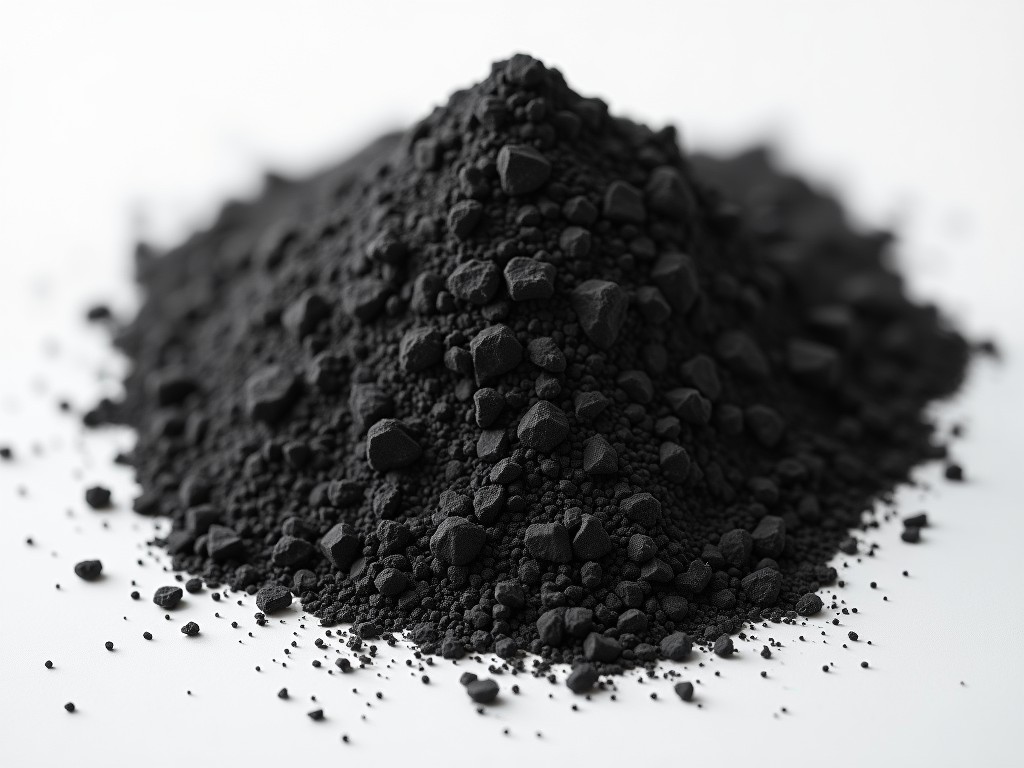
China Synthetic Graphite Manufacturers Price
China Synthetic Graphite Manufacturers Price & Technical Guide
The global supply of synthetic graphite is heavily concentrated in Chinese manufacturing hubs, where advanced processing of petroleum pitch and phenolic resins occurs. Synthetic graphite is produced through the carbonization of organic precursors followed by graphitization at temperatures often exceeding 2500°C. Understanding the pricing structure of these materials requires a technical dive into density levels, grain orientation, and the specific thermal-mechanical requirements of the end application. Rather than looking at unit cost alone, engineers must evaluate the correlation between material density and performance to ensure cost-effectiveness in industrial environments.
Factors Influencing Synthetic Graphite Pricing
The primary driver of cost is the density of the finished component. Higher density graphite requires multiple cycles of impregnation and high-pressure hot pressing, which significantly increases production time and energy consumption. A material with a density of 1.7 g/cm³ is suitable for basic structural insulation, whereas a high-density grade reaching 2.2 g/cm³ is necessary for high-stress environments like semiconductor manufacturing.
Purity and ash content also play a critical role in the final price. Low-ash grades (typically below 0.5%) require specialized raw materials and longer graphitization cycles to eliminate metallic impurities. Furthermore, the manufacturing method—whether it is traditional pressing or modern isostatic pressing—dictates the structural uniformity of the part and, consequently, the price per kilogram.
Density Levels: Higher density correlates with better thermal conductivity and higher oxidation resistance.
Graphitization Temperature: Higher temperature graphitization (up to 3000°C) improves electrical conductivity and structural stability.
Customization: Complex geometries requiring precision CNC machining increase labor and tool-wear costs.
Precursor Source: Petroleum pitch-based graphite offers different properties than resin-based variants.
Common Types of Synthetic Graphite Available
Manufacturers generally categorize synthetic graphite into two structural groups: isotropic and anisotropic. Isotropic graphite is produced using isostatic pressing, resulting in uniform physical properties in all directions. This makes it the preferred choice for components where thermal expansion must be consistent regardless of the orientation of the stress.
Anisotropic graphite is created through uniaxial pressing, which aligns the graphite flakes in a specific direction. This orientation allows for exceptionally high thermal and electrical conductivity along the pressing axis, while maintaining properties in the transverse plane. Engineers select anisotropic grades for heat sinks and electrode components where directional heat management is the primary functional requirement.
Technical Comparison of Synthetic Graphite Types
| Property | Isotropic Graphite (Standard) | Anisotropic Graphite (High Conductivity) |
|---|---|---|
| Density (g/cm³) | 1.75 - 1.95 | 1.80 - 2.25 |
| Thermal Conductivity (W/m·K) | 20 - 100 | 50 - 200+ (directional) |
| Electrical Resistance (Ω·cm) | 10⁻⁴ - 10⁻⁵ | 10⁻⁵ - 10⁻⁶ |
| Compressive Strength (MPa) | 20 - 60 | 10 - 80 |
| Ash Content (%) | < 1.0% | < 0.5% |
Industrial Applications and Material Selection Logic
Material selection begins with identifying the thermal load and chemical environment. In the steel industry, synthetic graphite blocks are used for crucibles and linings because they can withstand extreme thermal shock and resist molten slag. Here, a medium-density isotropic grade is often sufficient to prevent cracking during the rapid cycling of the furnace.
For the semiconductor and solar industries, the requirements shift toward ultra-high purity. Graphite components used in wafer processing must have extremely low metallic impurity levels to prevent contamination of the silicon wafers. These applications justify the higher price point due to the rigorous purification processes and the use of high-purity resin-based precursors.
Quality Control and Standards in Chinese Manufacturing
Reputable manufacturers employ rigorous testing protocols to ensure components meet engineering specifications. Ultrasonic testing is frequently used to detect internal voids or cracks that could lead to structural failure under load. Dimensional accuracy is verified using high-precision CMM machines to ensure parts fit perfectly within complex industrial assemblies.
Chemical analysis is also performed to verify the composition of the material. Techniques like X-ray fluorescence (XRF) or Inductively Coupled Plasma (ICP) spectroscopy allow buyers to confirm that the ash content and trace elements are within the specified limits required for their project's technical environment.
Procurement Considerations and Lead Time Expectations
When sourcing synthetic graphite from China, procurement managers should account for varying lead times. Standard-sized blocks may be available in stock for immediate shipment, but custom-machined components typically require 4 to 12 weeks depending on the complexity and the current schedule of the graphitization kilns.
Shipping logistics are also a factor, as graphite is brittle and sensitive to impact. Ensuring the manufacturer uses specialized packaging, such as reinforced wooden crates with shock-absorbing materials, is essential to maintaining the dimensional integrity during international transit.
Frequently Asked Questions
Can dimensions be customized for specific projects?
Yes, most manufacturers provide CNC machining services based on technical drawings or CAD files. Precision tolerances can be negotiated based on the specific application requirements.
What information is required before a quotation?
To provide an accurate quote, manufacturers need to know the required density, thermal conductivity targets, electrical resistance limits, dimensions, and the order volume.
How is quality inspected?
Quality is typically verified through dimensional inspection, ultrasonic testing for internal defects, and chemical analysis for ash and impurity levels.
Are you seeking specific technical specifications or a quote for custom graphite components?
Request Technical Inquiry


×