-
Call Now ! +86 18231158869
-
Email Now [email protected]

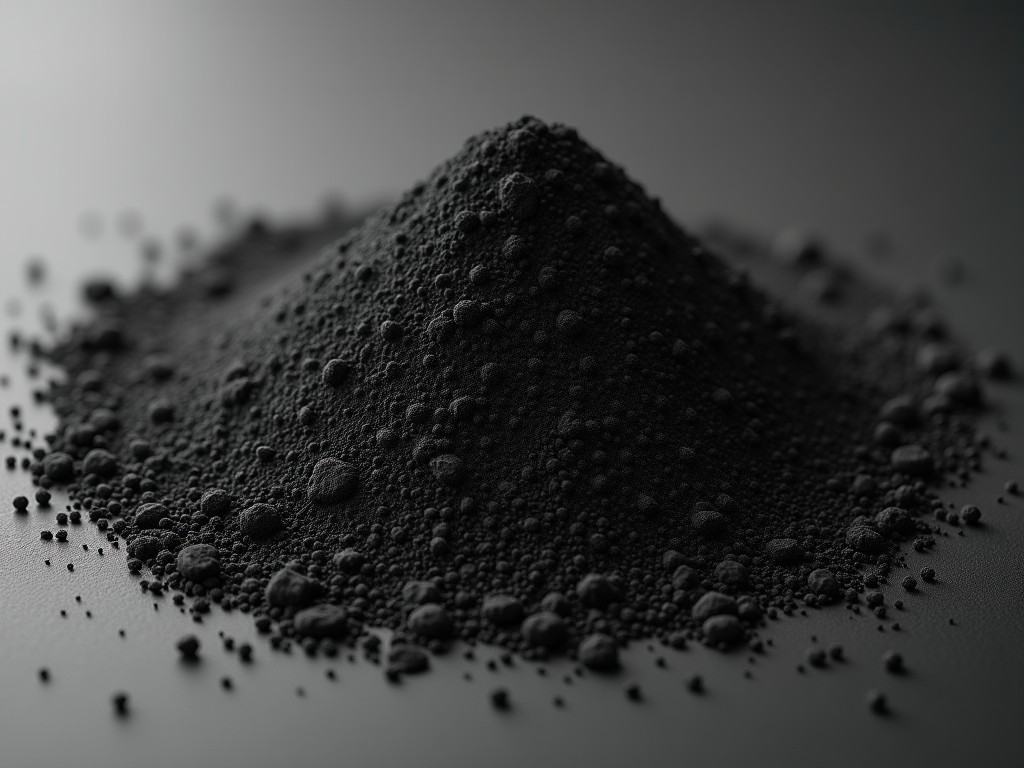
Colloidal Graphite In Isopropanol
Colloidal Graphite in Isopropanol: Technical Specifications and Applications
Colloidal graphite in isopropanol represents a high-performance suspension where finely milled graphite particles are stabilized within an alcohol solvent matrix. This formulation is engineered for applications requiring thin-film deposition, electrical conductivity, or thermal dissipation on sensitive substrates where water-based systems are unsuitable. By utilizing isopropanol as the carrier, the suspension achieves low surface tension and rapid evaporation rates, facilitating uniform coverage in precision coating and printing processes.
The stability of the colloidal state is primarily governed by the particle size distribution and the surface chemistry of the graphite flakes. Sub-micron particles offer a higher surface area-to-volume ratio, which enhances the uniformity of the resulting film but requires careful control over viscosity to prevent agglomeration. Engineers must balance the graphite concentration with the rheological requirements of the specific application method, such as inkjet printing, screen printing, or spray coating.
Technical Characteristics and Dispersion Stability
The morphology of the graphite within the isopropanol carrier determines the final performance properties. Flake-type graphite provides superior planar conductivity due to the layered structure of the carbon atoms, which aligns during the drying process to create continuous conductive pathways. Conversely, spherical graphite particles may be utilized when isotropic thermal properties or lower viscosity are prioritized over maximum directional conductivity.
Dispersion stability is maintained through specialized surfactants or steric stabilization that prevents particle settling and bridging. In an isopropanol environment, the solvent's polarity ensures that the treated graphite remains in a homogeneous state even over extended storage periods. Monitoring the zeta potential or dynamic light scattering is standard quality control practice to ensure the suspension does not clog nozzles or equipment during the production line.
| Application | Key Technical Requirement | Expected Engineering Benefit |
|---|---|---|
| EMI Shielding | High graphite loading (weight %) | Attenuation of electromagnetic interference in sensitive electronic housings. |
| Conductive Inks | Low viscosity & high stability | Precision deposition via inkjet or screen-printing on flexible substrates. |
| Thermal Interface Materials | High thermal conductivity particles | Efficient heat transfer across mechanical interfaces in power electronics. |
| Dry Lubrication | Non-string film residue | Reduction of friction in precision mechanical assemblies without optical interference. |
Solvent Dynamics: Why Isopropanol
Selecting isopropanol (IPA) as the solvent is a strategic choice based on its physical properties. Its low surface tension allows the colloidal suspension to wet low-surface energy materials, including polymers and certain metals, which might resist water-based dispersions. This ensures that the graphite particles adhere effectively to the substrate without forming voids or droplets that would compromise electrical or thermal integrity.
The evaporation rate of IPA is also critical for controlling the morphology of the dried film. As the solvent departs, the graphite particles are forced into a fixed configuration before they can migrate or aggregate significantly. This "fast-set" characteristic is particularly vital in micro-electronics where the thickness of the conductive layer is often measured in microns.
Customization and Material Selection
Standard formulations are often modified to meet specific performance thresholds required by OEMs. The weight percentage of graphite can range from 1% to over 50%, depending on whether the goal is a thin-film conductive coating or a heavy-load thermal shielding compound. Furthermore, the particle size distribution can be narrowed to optimize for specific filtration requirements or compatibility with existing manufacturing equipment.
Technical specifications also include the purity of the isopropanol carrier. For high-end electronic applications, electronic-purity grade IPA is used to prevent ionic contamination, which could lead to corrosion or electrical failure in the final assembly. We provide detailed data sheets covering moisture content and metal ion levels to ensure the material integrates seamlessly into your quality control protocols.
Need a custom graphite formulation?
If your project requires specific particle morphology or concentration levels not covered in our standard catalog, our engineering team can assist in developing a tailored suspension.
Contact technical department for technical consultation and sample requests.


×