-
Call Now ! +86 18231158869
-
Email Now [email protected]

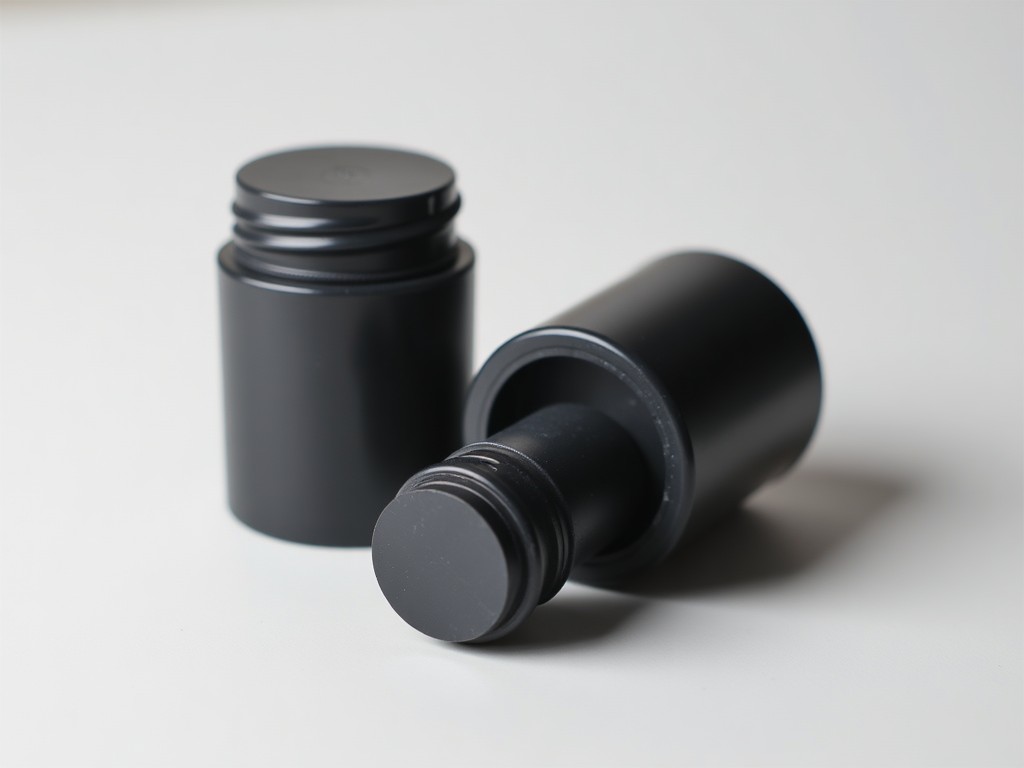
Dry Graphite Lock Lubricant Factory Direct
Dry Graphite Lock Lubricant Factory Direct
Solid-state lubrication serves as a critical solution for precision mechanisms where liquid lubricants fail or fail due to environmental contamination or thermal degradation. Graphite consists of hexagonal layers of carbon atoms held together by weak van der Waals forces, allowing the layers to slide over one another with minimal resistance. In lock-cylinder applications, this mechanism ensures consistent operation without attracting particulate matter, grit, or metallic debris, which typically lead to mechanical binding over time.
Unlike petroleum-based alternatives, a dry graphite formulation provides a non-polar film that remains stable across extreme temperatures. This stability is vital for high-security locks and outdoor hardware exposed to moisture and temperature fluctuations, where oils would oxidize or freeze the internal pins and springs.
Technical Mechanism of Graphite-Based Lubrication
The efficacy of graphite is derived from its crystalline structure and particle morphology. When applied to a lockway, the graphite particles fill microscopic surface irregularities on metal components, creating a low-friction interface. This barrier prevents metal-to-metal contact, significantly reducing the coefficient of friction and extending the mechanical life of the brass pins and steel springs.
Environmental factors often dictate the choice of dry lubricants over greases. In industrial or maritime environments, grease acts as a dust trap, creating an abrasive paste that accelerates wear. The dry graphite lubricant remains inert, resisting chemical attack and ensuring that the low-torque requirements of precision cylinders are met regardless of atmospheric quality.
Performance Specifications
| Property | Typical Value / Specification |
|---|---|
| Material Composition | High-purity crystalline graphite (98%+) |
| Coefficient of Friction | 0.05 - 0.12 (Dry) |
| Operating Temperature Range | -50°C to +400°C |
| Volatility | Non-volatile (Dry film-forming) |
| Compatibility | Brass, Steel, Aluminum, Zinc, Polymer |
Industrial Applications
Security-grade locking systems require lubricants that do not migrate or thicken over time. Graphite is the industry standard for padlocks, door cylinders, and automotive-related tumbler mechanisms where tight tolerances are measured in microns.
High-Security Locks: Prevents sticking in complex pin-and-tumbler systems.
Automotive Hardware: Protects door locks and ignition cylinders exposed to road salt and grime.
Industrial Machinery: Lubricates slides and hinges where oil spray is prohibited.
Aerospace Components: Used in low-vacuum environments where outgassing is avoided.
Manufacturing & Quality Control
The manufacturing of dry graphite lubricants focuses on particle size distribution and purity. Large graphite particles can clog narrow keyways, while overly fine particles may fail to provide a sufficient protective film. Our production process utilizes precision milling to ensure a consistent particle size range, ensuring uniform application across the mechanical surface.
Quality control protocols involve batch testing for moisture content and chemical purity. This ensures the lubricant does not react with the metal alloys of the lock components, which could cause galvanic corrosion. Each shipment is verified against the technical datasheet to guarantee that the friction coefficient remains within the specified tolerance.
Factory Direct Advantages & Customization
Sourcing directly from the manufacturer allows OEMs and distributors to access specific formulations tailored to their assembly line requirements. We provide graphite in various formats, including bulk powder for manual application and aerosolized dry sprays for automated delivery systems. This vertical integration reduces supply chain complexity and ensures technical consistency between production batches.
Customization is available based on specific engineering parameters. Whether a project requires a specific carrier solvent for spray application or a modified graphite concentration for extreme resistance, the formulation can be adjusted to meet the technical demands of the end product.
Technical FAQ
Can graphite lubricant be used with all metal locks?
Yes, graphite is chemically inert and does not react with brass or zinc alloys, making it safe for most standard lock hardware.
What is the advantage of dry graphite over silicone spray?
Silicone leaves a tacky residue that can attract dust and dirt. Graphite leaves a dry film that prevents the buildup of these contaminants in dirty environments.
How is the product packaged for bulk orders?
Bulk powder is typically supplied in moisture-resistant bags or industrial drums to maintain the integrity of the material during transit.
Request technical data sheets or bulk pricing for your manufacturing requirements.
Inquire for Technical Specifications


×