-
Call Now ! +86 18231158869
-
Email Now [email protected]

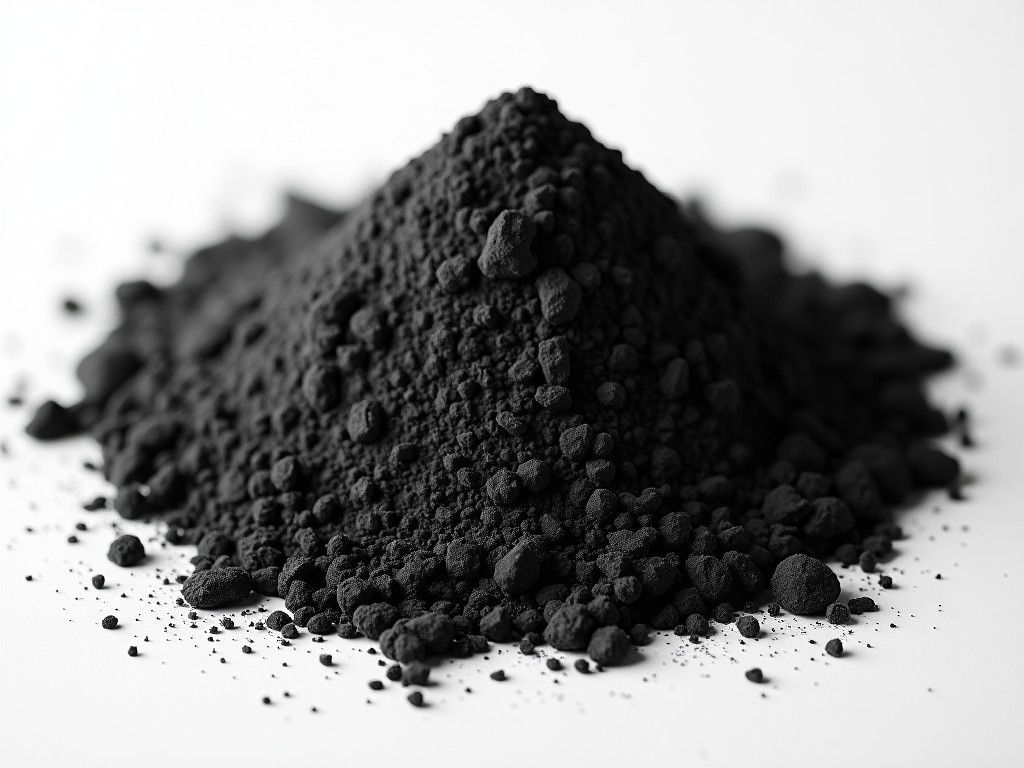
Dry Graphite Powder Lubricant Factory Direct
Dry Graphite Powder Lubricant Factory Direct
Graphite functions as a solid-state lubricant due to its unique hexagonal crystal structure, where carbon layers are held together by weak van der Waals forces. This molecular arrangement allows layers to slide over one another with minimal resistance, providing a low coefficient of friction without the need for liquid carriers or greases. Dry graphite does not migrate, evaporate, or attract abrasive dust particles, maintaining the mechanical integrity of sensitive industrial components.
In environments where thermal fluctuations cause traditional oils to decompose or thicken, graphite remains structurally stable. It provides a resilient protective film on metal surfaces, preventing galling and seizing even under high-load conditions. This stability is particularly critical in high-temperature furnaces and vacuum chambers where lubricant failure would lead to catastrophic system downtime.
Technical Specifications
| Property | Typical Value / Range |
|---|---|
| Coefficient of Friction (Dry) | 0.05 - 0.15 |
| Operating Temperature | -500°C to +600°C |
| Particle Size Distribution | 1 micron to 50 microns (Customizable) |
| Chemical Purity | ≥ 98% Carbon |
| Thermal Conductivity | High (up to 150 W/m·K) |
Industrial Applications
Engineering teams select dry graphite for scenarios where liquid lubricants are physically or chemically incompatible. Because the powder is non-conductive, it excels in precision electronics manufacturing where electrical contamination is strictly prohibited.
High-Temperature Furnaces: Prevents welding of moving parts and rollers at temperatures where organic greases carbonize.
Vacuum Environments: Offers zero outgassing properties, making it essential for semiconductor manufacturing and optical equipment assembly.
Heavy Machinery: Reduces friction in open-air slides, gears, and chains where dust accumulation would create abrasive paste.
Automotive Components: Utilized in locking mechanisms and valve stems where lubrication must remain dry and consistent.
Manufacturing and Quality Control
Production begins with high-purity synthetic or natural flake graphite, which undergoes rigorous milling processes. Precision milling ensures that the particle size distribution is uniform, a factor vital for achieving even lubricant film coverage across surfaces. Consistency in particle size prevents uneven wear patterns across the mechanical interface.
Thermal treatment is employed to remove residual volatile impurities and enhance the structural integrity of the carbon. Each batch is tested for moisture content and bulk density to verify compliance with technical data sheets. This analytical approach ensures that the lubricant performs predictably under the most demanding industrial stresses.
Customization for OEM Requirements
Industrial buyers often require specific formulations to meet unique environmental constraints. We provide several levels of customization to ensure the graphite integrates seamlessly into your existing production lines.
Particle Size Tuning
We can adjust the mesh size from sub-micron powders for fine coatings to coarser granules for heavy-duty load-bearing applications.
Additive Blending
Graphite can be blended with Molybdenum disulfide (MoS2) or PTFE to enhance performance in specific chemical or temperature ranges.
Frequently Asked Questions
Can graphite powder be provided for pilot testing?
Yes, small-scale samples are available upon request to allow engineering teams to verify performance within their specific hardware environment prior to bulk procurement.
What is the typical lead time for factory orders?
Lead times depend on the volume and specific particle size requirements, typically ranging from 2 to 4 weeks for standard-grade powders.
How is the product packaged for international shipping?
Graphite is packed in moisture-barrier bags within industrial-grade fiber drums or reinforced totes to prevent contamination and moisture absorption during transit.
Need a specific technical specification?
Contact our technical sales team for detailed data sheets or a custom quote based on your requirements.
Request Technical Documentation


×