-
Call Now ! +86 18231158869
-
Email Now [email protected]

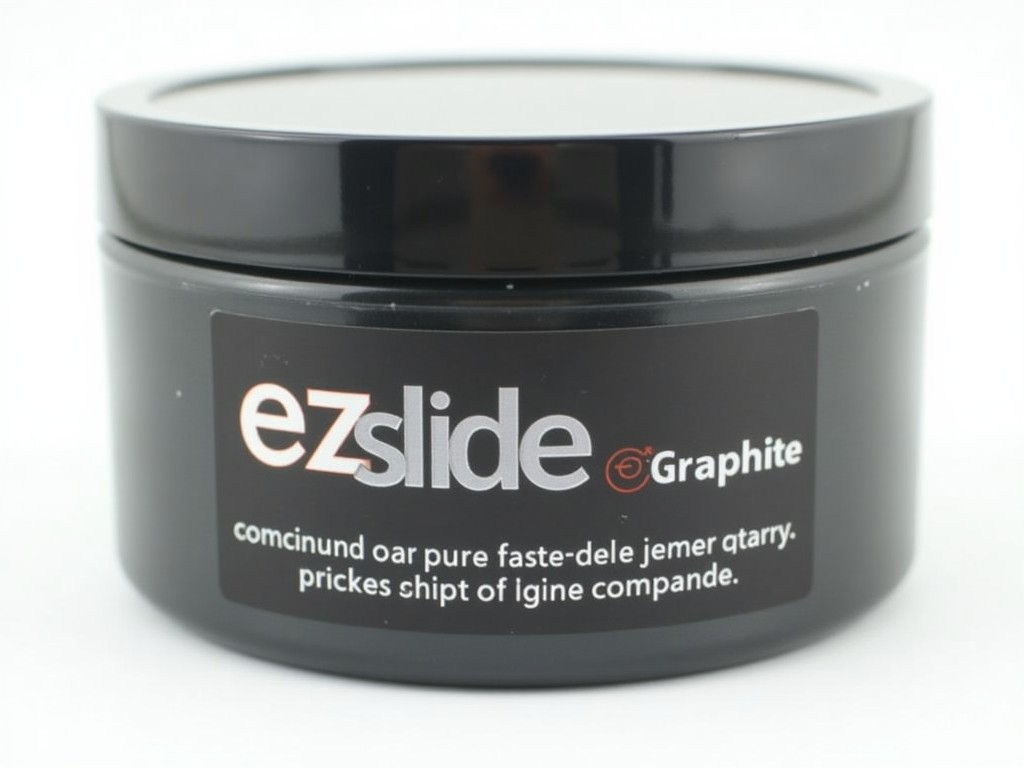
Ez Slide Graphite Powder Factory Direct
ez slide graphite powder Factory Direct Specifications and Applications
Graphite powder serves as a critical dry lubricant in industrial environments where liquid lubricants fail due to thermal stress, vacuum, or contamination. Unlike oils, the hexagonal crystalline structure of graphite allows atomic layers to slide over one another with minimal resistance, significantly reducing friction coefficients. This factory-direct powder is engineered for high-precision applications requiring stable chemical properties and consistent performance in mechanical systems subjected to high-temperature cycles.
Engineering teams select graphite powder based on particle size distribution and purity levels to ensure uniform coating on surfaces. A finely milled powder allows for deeper penetration into microscopic irregularities, reducing wear and tear on moving components. By sourcing directly from the manufacturer, buyers gain control over the technical parameters, ensuring batch consistency across large-scale production runs.
Technical Performance Specifications
| Property | Typical Values | Testing Method |
|---|---|---|
| Chemical Purity (Carbon) | 94% - 99.9% | LECO / Combustion Analysis |
| Particle Size (Mesh) | -32 to -1000+ (Custom) | Laser Diffraction Analysis |
| Bulk Density | 0.8 - 1.4 g/cm³ | Pycnometer Method |
| Thermal Conductivity | 20 - 150 W/m·K | Laser Flash Analysis |
| Coefficient of Friction | 0.05 - 0.15 | Pin and Block Test |
Industrial Application Logic
In aerospace and semiconductor manufacturing, graphite powder is utilized because traditional lubricants would outgas in vacuum environments, contaminating sensitive optical components. The material remains stable at temperatures exceeding 500°C, where organic greases would oxidize and carbonize. This thermal stability ensures mechanical assemblies remain operational under extreme heat loads.
The metalworking industry employs ez slide graphite as a release agent in die casting and extrusion processes. Because graphite does not bond with most molten metals, it prevents material buildup, extending the life of expensive tooling and improving the finish of cast parts. Using a dry-powder approach minimizes downtime for cleaning cycles in high-volume production lines.
High-Temperature Bearings: Provides lubrication where thermal limits cause oil to evaporate.
Vacuum Systems: Eliminates the risk of vapor contamination in clean chamber environments.
Plastic Molding: Acts as a conductive filler to improve thermal dissipation in polymers.
Electrical Components: Utilized in conductive brushes and EMI-shielding applications.
Manufacturing and Customization Capabilities
Manufacturing high-grade graphite powder requires precise milling controls to achieve specific particle size distributions. Our facility utilizes energy-efficient milling to maintain a uniform morphology, which is vital for consistent flow rates in automated applications. Each batch is analyzed for moisture content and ash residue to ensure the final product meets the specified engineering tolerances.
Customization is available to meet the specific mechanical requirements of various OEM projects. For instance, the powder can be blended with carrier materials for spray applications or treated with specific additives to enhance conductivity or oxidation resistance. Providing custom-sized mesh sizes allows engineers to integrate the powder directly into their existing manufacturing workflows without requiring secondary re-processing.
Frequently Asked Questions
What mesh sizes are available for bulk orders?
Standard production ranges from -32 mesh (coarse) to -1000 mesh (ultra-fine). Specific distribution curves can be manufactured based on the particle size requirements of your mechanical system.
Is the graphite powder suitable for vacuum environments?
Yes, graphite is chemically inert and does not outgas, making it the preferred dry lubricant for high-vacuum chamber applications where liquid lubricants are prohibited.
How is the powder protected during international export?
Shipments are packed in moisture-barrier multi-layer bags within industrial fiber drums or reinforced totes to prevent contamination and physical damage during maritime transit.
Need technical data sheets or a custom quote for your specific application?
Request Technical Consultation & Quote


×