-
Call Now ! +86 18231158869
-
Email Now [email protected]

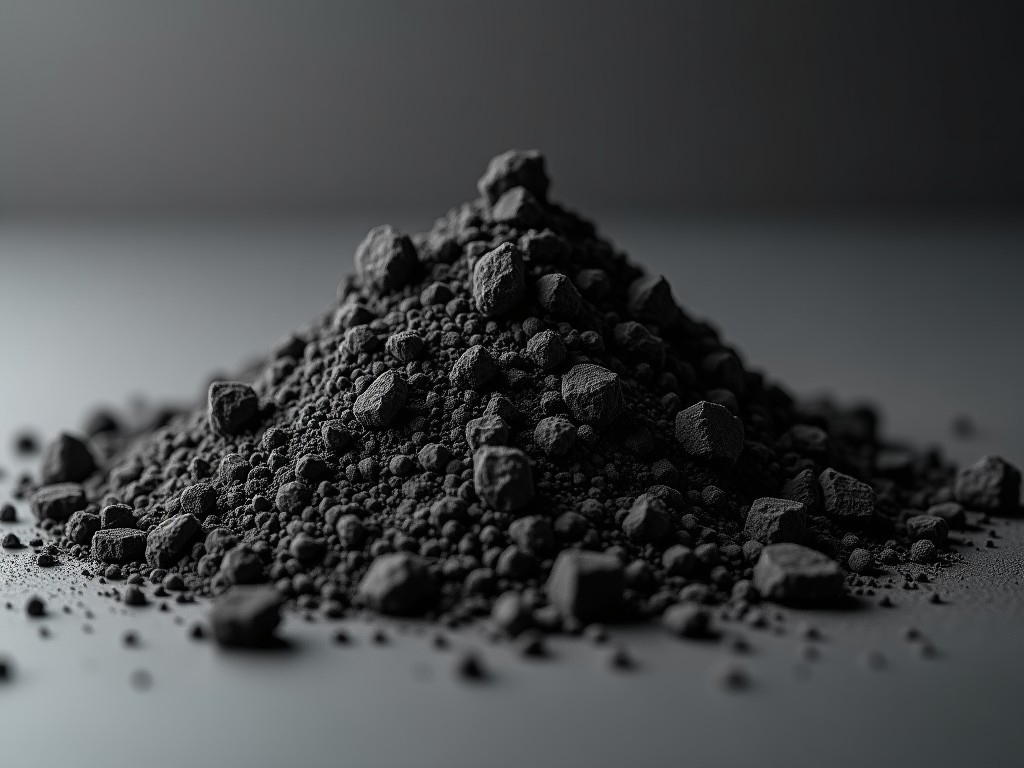
Flake Graphite Powder Price
Flake Graphite Powder Price: Factors and Technical Specifications
Understanding the market price of flake graphite powder requires an analysis of material physics and chemical properties beyond simple weight. Unlike commodity carbon, industrial flake graphite value fluctuates based on its crystalline structure, carbon content percentage, and the specific precision of the particle milling process. Procurement teams must balance the cost of high purity against the performance requirements of the final composite or application.
Factors Influencing Flake Graphite Pricing
The primary driver of cost is the chemical carbon purity level. Standard-grade flake graphite typically ranges from 94% to 96% carbon, while ultra-high purity variants exceeding 99% require intensive chemical leaching and thermal purification that significantly increase production costs. These processes remove metallic impurities and ash content that would otherwise affect the electrical and thermal conductivity of the material.
Particle size distribution, often measured by D50 and D90 values, also impacts the manufacturing overhead. Achieving finer powders requires prolonged milling cycles and specialized classification equipment, which reduces the yield of the target particle size range. Conversely, coarser flakes are often utilized in applications where bulk lubricity is the priority over high-surface area density.
Morphology, or the physical shape of the flake, determines the aspect ratio and thickness. High-aspect-ratio flakes—thin and wide structures—provide better reinforcement in polymer matrices and superior thermal pathing. Maintaining this structural integrity during the grinding and transport process requires sophisticated mechanical handling, justifying a premium over irregular or crushed particles.
| Graphite Grade | Carbon Purity (%) | Typical Particle Size | Primary Application |
|---|---|---|---|
| Industrial Grade | 94% - 96% | 20 - 150µm | Dry lubricants, casting mold agents |
| High-Purity Grade | 97% - 99.5% | 5 - 40µm | Thermal interface materials, conductive plastics |
| Ultra-High Purity | 99.9%+ | <5µm<> | Battery anodes, specialty coatings |
Industrial Applications and Cost-Benefit Analysis
Selecting the correct graphite grade depends on the specific failure mode the engineer is addressing. In thermal management systems, high-purity flakes are selected to create a continuous phonon network for heat dissipation. Using a lower-grade material might reduce initial material costs but could lead to thermal throttling due to higher thermal resistance caused by metallic inclusions.
For mechanical lubrication applications, the focus shifts to the flake's ability to shear under load. Large, structurally sound flakes provide a protective barrier that reduces friction coefficients between metal surfaces. In these scenarios, the cost-benefit is maximized by selecting flakes with a specific thickness-to-width ratio rather than for extreme chemical purity.
Quality Control and Procurement Logistics
Quality assurance for flake graphite involves rigorous testing to ensure technical compliance. X-ray diffraction (XRD) is used to determine the crystallinity index, while thermogravimetric analysis confirms the ash content and moisture levels. Moisture content is another critical metric, as excess water can cause porosity in high-temperature sintering or powder-coating processes.
Logistics and packaging also influence the final landed price. Bulk orders are typically shipped in 25kg moisture-proof bags or 500kg IBC totes to prevent contamination. For large-scale OEM production, vacuum-sealed packaging may be required to maintain the integrity of fine particle powders throughout the global supply chain.
Frequently Asked Questions about Pricing
What is the typical lead time for bulk flake graphite?
Standard grades are usually available within 2 to 4 weeks. Custom-milled particle size distributions or ultra-high purity levels may require 8 to 12 weeks depending on current purification capacity.
Can the particle size be customized for specific resins?
Yes, manufacturers can adjust milling parameters to meet specific D50 or D90 requirements. This often involves a pilot run to ensure batch consistency across subsequent production orders.
How are samples arranged for testing?
Technical samples, typically ranging 500g to 2kg, are provided for engineering validation before a full-scale purchase agreement is finalized.
Technical specifications and volume pricing vary based on project requirements. Contact our engineering sales team to receive a detailed data sheet and a formal quotation.
Request a Technical Quote →


×