-
Call Now ! +86 18231158869
-
Email Now [email protected]

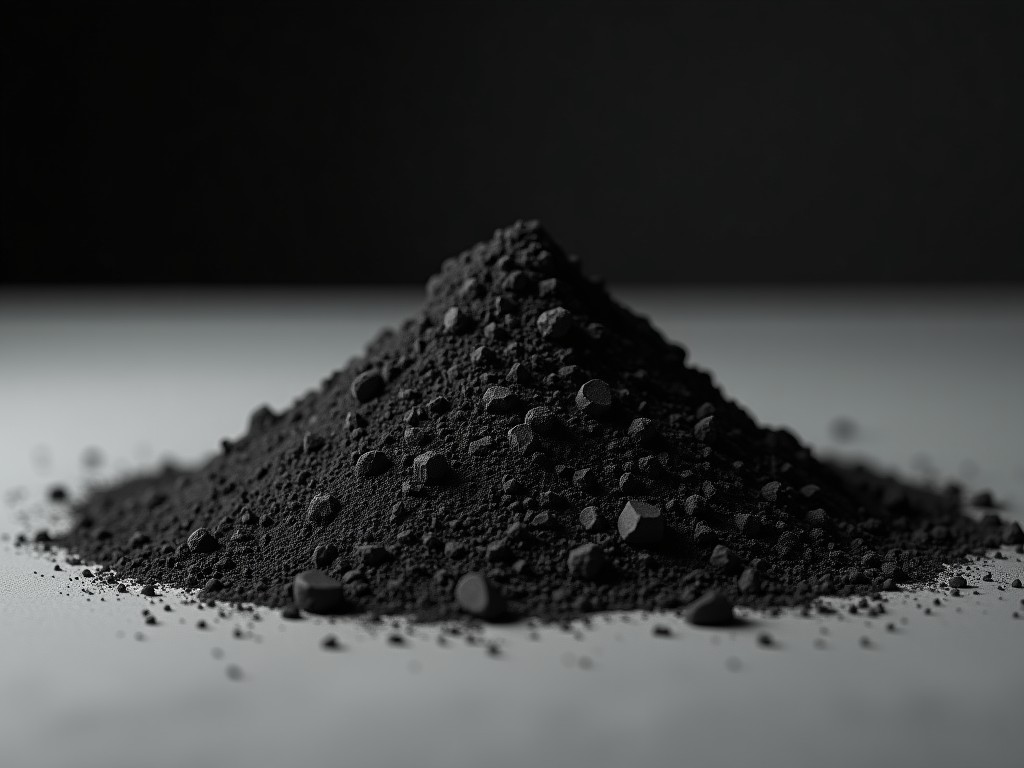
Graphite Fine Powder Extra Pure
Graphite Fine Powder Extra Pure
High-purity graphite fine powder is a critical component in industries where trace impurities like silicon, free metals, and oxygen content can compromise system performance. Unlike standard grade graphite, the extra-pure variant is processed to maintain a purity level exceeding 99.9%, ensuring that the thermal and electrical properties remain stable under extreme high-temperature conditions.
The crystalline structure of this material is optimized to minimize thermal expansion and provide exceptional chemical resistance. For engineers designing refractory components or conductive composites, this consistency translates to a reduced risk of material degradation or failure in corrosive or oxidative environments.
Technical Specifications
| Parameter | Typical Values / Range |
|---|---|
| Purity (Carbon Content) | >99.9% |
| Ash Content | <0.05%<> |
| Particle Size (D50) | 1μm - 45μm (Customizable) |
| Specific Gravity | 2.1 - 2.3 g/cm³ |
| Thermal Conductivity | >100 W/m·K (Room temperature) |
| Electrical Conductivity | >10^5 S/cm |
Key Material Properties and Engineering Advantages
The performance of extra-pure graphite is primarily dictated by its degree of crystallinity and the absence of metallic oxides. In high-temperature applications, even trace amounts of impurities can act as catalysts for oxidation, leading to premature structural failure of components. By maintaining ultra-low ash content, this powder preserves mechanical integrity at temperatures exceeding 3000°C in inert atmospheres.
Thermal stability is another hallmark of this material grade. The uniform particle size distribution allows for precise packing within polymer or ceramic matrices, resulting in composites with predictable thermal expansion coefficients. This predictability is vital for manufacturing thermal management solutions where localized hotspots must be avoided to protect electronic components.
Lubricity remains inherent to the graphite structure, but the extra purity ensures that the coefficient of friction remains constant unaffected by abrasive particles. This makes the powder particularly suitable for high-precision vacuum environments where wear-and-tear debris is strictly prohibited.
Industrial Applications
Semi-Metallurgy: Used as a mold release and crucible coating to prevent metallic contamination in high-purity alloys and specialty metals.
Electronics Manufacturing: Serves as a filler in thermally conductive interface materials (TIMs) to dissipate heat without creating electrical short circuits.
Battery Storage Technology: Utilized in the production of anode materials where purity is essential to maximize cycle life and maintain electrochemical efficiency.
Refractory Engineering: Integrated into specialized bricks and heating elements that must withstand extreme thermal shock and chemical erosion.
Manufacturing and Quality Control Philosophy
To achieve the specified 99.9% purity, the manufacturing process involves multi-stage chemical purification followed by thermal leaching. The raw graphite is subjected to controlled milling processes to achieve the desired particle size distribution without introducing metallic contamination from the equipment. This ensures that the final powder remains consistent across different batches.
Quality assurance is conducted through rigorous analytical testing protocols. We utilize Inductively Coupled Plasma (ICP) spectroscopy to quantify trace element levels, while laser diffraction analysis is used to verify the particle size distribution (PSD). This technical data-driven approach ensures that every shipment meets the strict tolerances required by sensitive OEM and research-grade applications.
Frequently Asked Questions
Can the particle size be customized for specific resin formulations?
Yes, we provide a range of D50 values from sub-micron levels up to 45 microns, depending on the viscosity and loading requirements of your specific composite or coating matrix.
How is the powder protected against moisture ingress?
Extra-pure graphite is typically packed in moisture-barrier, anti-static bags or vacuum-sealed drums to prevent absorption of atmospheric moisture during storage and international transit.
What is the typical lead time for bulk industrial orders?
Standard grades are often available for immediate shipment, while custom particle sizes or specific purity certifications require a 4-6 week lead time depending on production volume.
Require technical data sheets or a sample for your specific application testing?
Request a Technical Quotation


×