-
Call Now ! +86 18231158869
-
Email Now [email protected]


Graphite In Lithium Ion Batteries
Graphite in Lithium-Ion Batteries: Technical Specifications and Applications
Graphite serves as the primary anode material in the vast majority of commercial lithium-ion cells. Its unique hexagonal crystalline structure allows for the reversible storage of lithium ions during charge and discharge cycles, providing high energy density and structural stability. In battery engineering, the selection of graphite dictates the overall capacity, power delivery, and cycle life of the entire cell assembly.
The electrochemical process relies on intercalation, where lithium ions migrate between the graphene layers of the anode. This process forms a graphitic structure, typically represented as C₆, where six carbon atoms host one lithium ion. Maintaining the mechanical integrity of these layers is critical for ensuring the battery survives thousands of cycles without significant material degradation.
The Mechanism of Lithium Intercalation
During the charging phase, lithium ions move from the cathode through the electrolyte and insert into the interlayer spaces of the graphite anode. This insertion causes a slight expansion of the graphite lattice, which must be managed through precise electrode design to prevent fracturing of the Solid Electrolyte Interphase (SEI). Efficiency in this process is measured by the theoretical specific capacity, which for pure graphite is approximately 372 mAh/g.
Discharging reverses this movement, pulling lithium ions out of the graphite layers to return to the cathode. The speed of this ion-intercalation determines the rate capability of the battery, or how much current the cell can deliver without a significant drop in operating voltage.
Natural Graphite vs. Synthetic Graphite
Engineers must choose between natural and synthetic graphite based on the specific requirements of the application. Natural graphite is mined from mineral deposits and offers a higher theoretical energy density due to its inherent structure. However, it often contains higher levels of impurities and structural defects that can affect long-term stability.
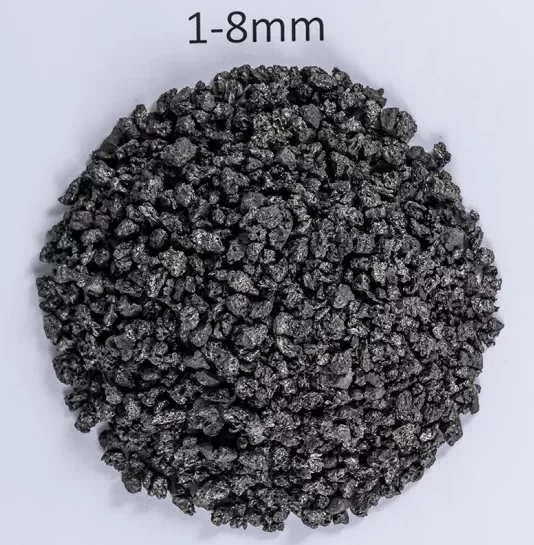
Synthetic graphite is manufactured from petroleum pitch or coal tar pitch through high-temperature graphitization. This process results in a material with much more consistent particle size distribution and superior performance under high-rate conditions. While it has a slightly lower theoretical capacity than natural graphite, its reliability makes it the preferred choice for high-performance electric vehicle batteries.
| Property | Natural Graphite | Synthetic Graphite |
|---|---|---|
| Theoretical Capacity | ~372 mAh/g | ~350-360 mAh/g |
| Purity Level | Moderate (Variable) | High (>99.9%) |
| Cycle Life | Good | Excellent |
| Rate Capability | Moderate | High |
Key Performance Parameters
Coulombic efficiency is another critical metric, representing the ratio of discharge capacity to charge capacity. A high first-cycle efficiency ensures that less lithium is consumed during the formation of the SEI layer, which preserves active material for the functional life of the battery.
Particle size distribution (PSD) is optimized to maximize the packing density of the anode slurry. A well-graded distribution allows smaller particles to fill the voids between larger ones, increasing the volumetric energy density of the final cell.
Industrial Applications
Electric Vehicles (EVs) demand graphite with high cycle life and thermal stability to support frequent fast charging and long range.
Grid-scale Energy Storage Systems (ESS) prioritize cost-effectiveness and long-term structural stability over a decade of operation.
Consumer electronics utilize high-purity synthetic graphite to maintain compact form factors in thin smartphones and laptops.
Quality Control and Selection
Quality control for industrial graphite involves rigorous testing of surface area via BET (Brunauer-Emmett-Teller) methods. Excessive surface area can lead to high electrolyte consumption, which reduces the battery's overall energy capacity.
Metal impurity analysis, such as iron or copper, is strictly monitored because even trace amounts can cause internal side reactions that lead to thermal runaway or internal short circuits.
Selecting the correct graphite grade requires a deep understanding of cell chemistry and performance targets. We provide technical datasheets and material consultation for specific OEM manufacturing requirements.
Request Technical Specifications and Quotation


×