-
Call Now ! +86 18231158869
-
Email Now [email protected]

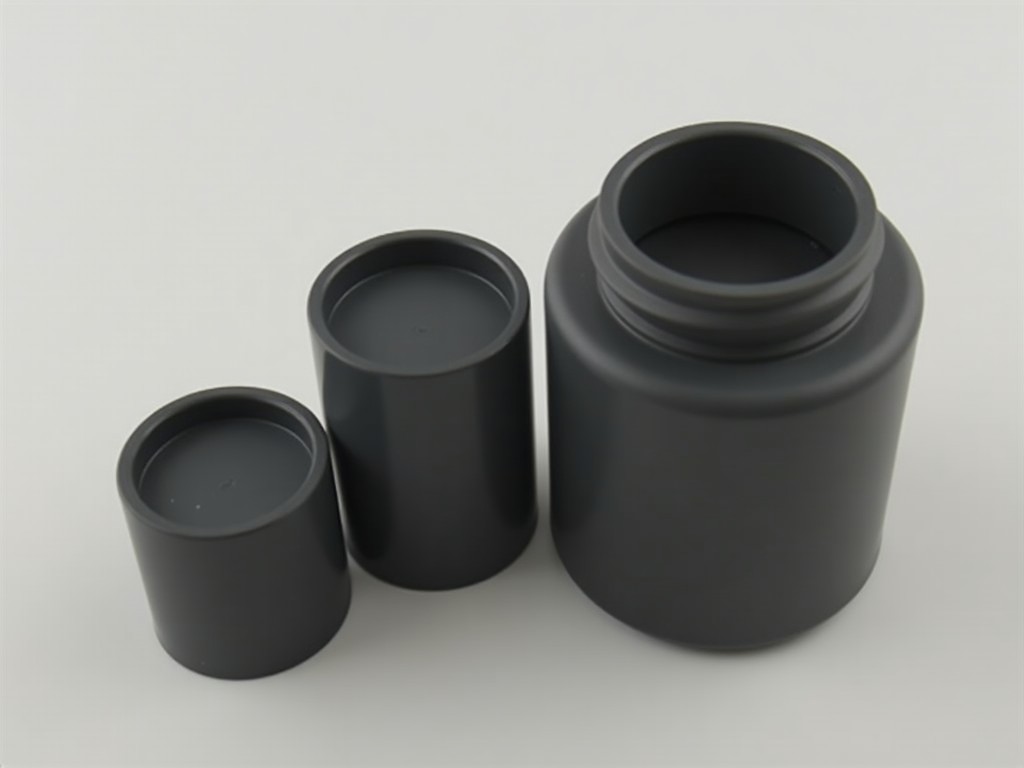
Graphite Lube For Locks Source Factory
Industrial Graphite Lubricant for Locks Source Factory
Mechanical reliability in high-security locking systems depends on the minimization of friction between internal pins and springs. Traditional liquid lubricants often attract atmospheric particulates, dust, and moisture, creating an abrasive paste that leads to mechanical binding over time. Graphite lubrication functions as a dry-film alternative, utilizing a crystalline carbon structure to provide a protective barrier on metal surfaces. This ensures smooth operation without the risks associated with particulate buildup common in wet-based lubricants.
The performance of graphite is derived from its hexagonal molecular structure. The carbon layers are held together by weak van der Waals forces, allowing them to slide over one another with minimal shear force. This molecular behavior results in a low coefficient of friction under dry conditions, making it ideal for environments where oil-based or greas-based lubricants would degrade or lead to component failure.
Technical Specifications and Performance Characteristics
Engineering-grade graphite lubricants require specific purity levels and particle size distributions to ensure even coverage within lock cylinders. Smaller particle sizes allow for better penetration into tight-tolerance mechanisms, while the concentration of the graphite determines the ultimate wear resistance. Our manufacturing process focuses on maintaining a consistent mesh size to prevent clumping in spray applications or powder forms.
Material Purity: Minimum 98% graphite content to prevent chemical corrosion.
Thermal Stability: Effective from -40°C to +300°C.
Viscosity: Non-viscous dry-film application that prevents adhesion.
Chemical Compatibility: Safe for brass, stainless steel, and aluminum components.
Lubricant Comparison Matrix
| Property | Graphite (Dry) | Oil-Based Lubricant | Silicone Grease |
|---|---|---|---|
| Friction Coefficient | Very Low | Low to Medium | Medium |
| Dust Accumulation | None | High (Attractive) | Moderate |
| Cold Weather | Excellent | Poor (Freezing) | Good |
| Maintenance Interval | Long | Short | Medium |
Industrial Application Logic
Graphite lubricant is specified for industrial environments where environmental contaminants are prevalent. In manufacturing plants with high sawdust dust or metallic shavings, a standard oil would fail within weeks. The dry-film nature of graphite ensures that the lock mechanism does not seize, maintaining security perimeter integrity regardless of the surrounding air quality.
Outdoor security hardware also benefits from graphite due to thermal stability. Liquid-based lubricants thicken in sub-zero temperatures, making keys difficult to turn in locks. Graphite remains stable across a wide temperature range, ensuring that emergency access points and perimeter gates remain functional during extreme winter conditions.
Manufacturing and Quality Control
Production at the factory involves rigorous testing of raw material purity to ensure consistency. We utilize particle size analysis to verify that the graphite is fine enough to penetrate the narrow channels of high-security cylinders. Quality control protocols include testing for moisture content to ensure the lubricant does not introduce oxidation to the lock components.
Batch consistency is maintained to provide predictability for OEM partners who integrate these lubricants into assembly lines. Each shipment of spray-applied graphite or bulk powder undergoes inspection to ensure the delivery system and lubricant properties remain uniform across the entire order.
Frequently Asked Questions
Can the particle size be customized for specific lock types?
Yes, particle size can be adjusted based on the tolerances of the lock mechanism and the specific environmental conditions.
What are the available packaging options for bulk orders?
We provide bulk powder for industrial application, as well as pressurized aerosol spray canisters for ready-to-use maintenance teams.
How are export shipments protected against moisture?
All export orders are packed in moisture-barrier containers with vacuum-sealed pallets to prevent graphite clumping during international transit.
Request technical data sheets or bulk pricing for your industrial locking project.
Inquire for Technical Specifications


×