-
Call Now ! +86 18231158869
-
Email Now [email protected]

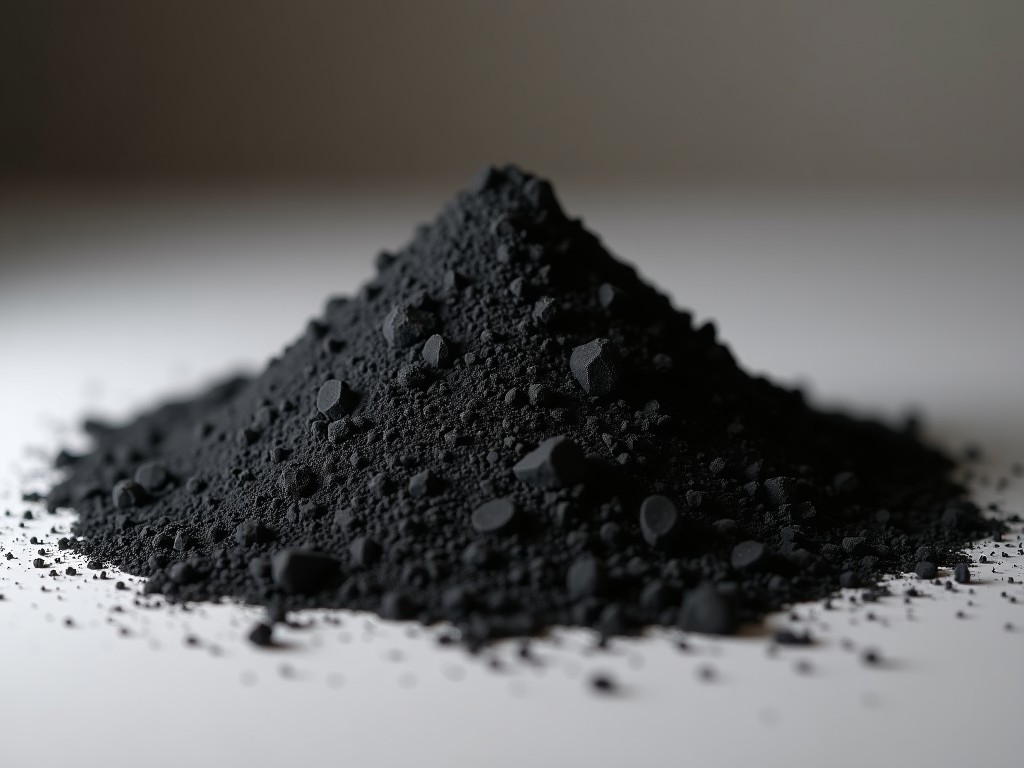
Graphite Powder 5 Micron Factory
Graphite powder 5 micron Factory
The manufacturing of 5-micron graphite powder requires precise control over mechanical milling energy to maintain the crystalline structure of the natural graphite flakes. At this specific particle scale, the surface-area-to-volume ratio increases significantly, which fundamentally alters the material's behavior in thermal-matrix composites and chemical formulations. Industrial-grade production focuses on achieving narrow particle size distribution (PSD) to ensure uniformity in final applications, preventing aggregation or structural weaknesses in high-performance engineering components.
Achieving a consistent D50 of 5 microns involves advanced jet milling techniques rather than traditional ball milling, which often leads to excessive fracturing and amorphous carbon formation. By utilizing high-velocity air collisions, the factory can preserve the aspect ratio of the graphite flakes, a critical factor for maximizing lateral thermal conductivity and lubricity properties.
Technical Specifications
| Parameter | Typical Value / Range | Measurement Method |
|---|---|---|
| Purity (Carbon Content) | 98.5% - 99.99% | Elemental Analysis |
| Particle Size (D50) | 5.0 microns (±0.5) | Laser Diffraction |
| Specific Surface Area | 15 - 35 m²/g | BET Method |
| Electrical Conductivity | lt; 50 μΩ·cm | Four-Point Probe |
| Moisture Content | lt; 0.5% | Thermogravimetric Analysis |
Manufacturing Process
The production cycle begins with the selection of high-grade natural crystalline graphite. Through jet milling, particles collide with each other at high speeds within a controlled atmosphere, reducing size without the introduction of grinding media. This process is vital for preventing metallic contamination, which can otherwise degrade the electrical resistivity of the final powder.
Following the primary milling, the powder undergoes a multi-stage sieving process. This ensures that only particles within the 5-micron tolerance are collected, while larger fractions are recycled for further processing. The final stage involves deagglomeration treatment to break up van der Waals forces, ensuring the powder remains free-flowing for dispersion in resins or polymers.
Industrial Applications
Thermal Interface Materials (TIMs): The 5-micron particles effectively fill-voids in epoxy or silicone matrices, creating a continuous thermal path for heat dissipation components.
Conductive Inks and Coatings: Fine particle size allows for high-resolution printing and smoother surface finishes while maintaining electrical shielding capabilities for electronic components.
High-Temperature Lubricants: Used in dry greases where the fine graphite provides a stable friction coefficient under extreme temperatures where organic oils would volatilize.
Quality Control and Inspection
Quality assurance is maintained through rigorous analytical testing of every batch. We utilize laser diffraction analysis to map the particle size distribution curve, ensuring the D90 value remains within specified limits. Furthermore, Scanning Electron Microscopy (SEM) is used periodically to inspect flake morphology, confirming that the milling process has not degraded the graphite into amorphous particles.
Moisture levels are strictly monitored, as residual water can cause gas voiding during the curing process of composite materials. All industrial shipments are accompanied by a Certificate of Analysis (CoA) detailing these performance metrics.
Customization Options
While the 5-micron specification is a standard offering, the factory provides several modifications to meet specific engineering requirements. This includes adjusting the purity level for chemical resistance applications or modifying the surface chemistry to improve bonding with specific polymer matrices.
Available Customizations:
Surface treatment (oxidation or functionalization for bonding).
Customization of electrical conductivity via blending.
Specific flake-to-sphere particle ratios.
Bulk packaging (1kg vacuum bags, 25kg drums, or bulk jumbo bags).
Require technical data sheets or a sample for your material-specific testing?
Request Technical Consultation


×