-
Call Now ! +86 18231158869
-
Email Now [email protected]

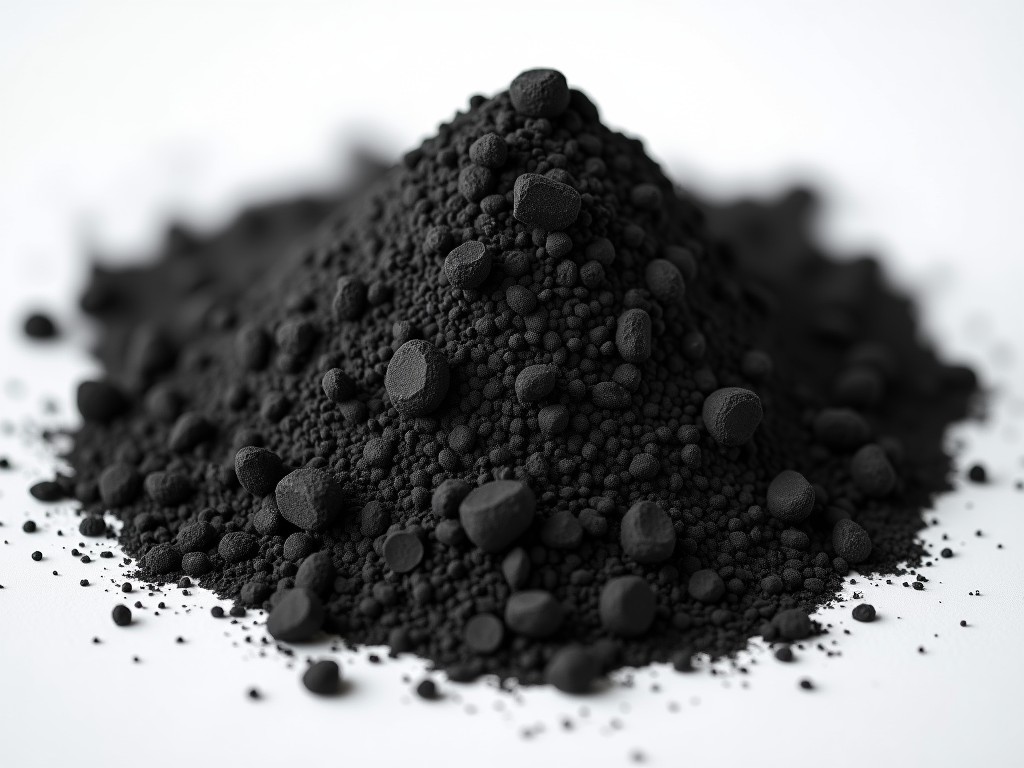
Graphite Powder As Lubricant Source Factory
Graphite Powder as Lubricant Source Factory
Graphite powder functions as a critical solid lubricant in industrial environments where liquid lubricants fail due to extreme temperatures, vacuum conditions, or chemical incompatibility. Its effectiveness stems from a hexagonal crystalline structure where carbon layers are held together by weak van der Waals forces. This molecular arrangement allows the layers to slide over one another with minimal resistance, providing a low coefficient of friction even under high-pressure contact.
As a source factory, the focus remains on maintaining the structural integrity and particle size distribution of the graphite. Unlike synthetic alternatives, natural-grade flake graphite offers superior lubricity, which is essential for maintaining consistent performance in mechanical and high-speed manufacturing processes.
Technical Properties of Industrial Graphite Powder
The thermal stability of graphite is one of its primary engineering advantages, remaining stable up to 3,600°C in inert atmospheres and approximately 450°C in open air. This high temperature threshold makes it the preferred choice for high-temperature bearings and metal forming processes where oils would oxidize or vaporize.
Beyond lubricity, graphite exhibits high electrical and thermal conductivity, allowing it to function in applications requiring heat dissipation alongside friction reduction. Its chemical resistance to most acids and bases ensures that the lubricant does not react with the substrate in corrosive industrial environments.
| Property | Typical Values / Technical Range |
|---|---|
| Particle Size (Mesh) | 20 mesh to 1000 mesh (Customizable) |
| Carbon Content (Purity) | 94% to 99.9% |
| Bulk Density | 0.4 - 0.8 g/cm³ |
| Moisture Content | lt; 0.5% |
| Ash Content | lt; 0.1% |
Industrial Applications and Selection Logic
Selection of the correct graphite grade depends on the specific mechanical load and environmental constraints. In metal extrusion and forging, graphite powder is integrated into dies to prevent the metal from bonding to the surface, significantly extending tool life and improving surface finish.
In the plastic and rubber molding industry, graphite is used as a masterbatch additive to reduce release forces and minimize wear on injection molding components. Because graphite does not outgas like silicone lubricants, it is the only viable option for aerospace and vacuum applications where contamination would be catastrophic.
High-Temperature Bearings: Provides dry lubrication where greases degrade.
Plastic Molding: Enhances flow properties and reduces internal friction during polymer processing.
Electrical Components: Acts as a conductive lubricant in brushes and contact switches.
Metal Forming: Prevents sticking in extrusion dies for aluminum and steel.
Manufacturing Process and Quality Control
The manufacturing process begins with the selection of high-grade natural graphite, which is then subjected to precision milling. Milling is preferred over grinding to preserve the flake morphology, as the surface area-to-volume ratio directly impacts the powder's lubricity performance.
Quality control is maintained through laser particle size distribution (PSD) analysis to ensure every batch meets the client's mesh requirements. We also perform tests for ash content and moisture levels to ensure that the lubricant does not interfere with the final product's chemical integrity or mechanical stability.
Customization and Packaging Options
Engineers often require specific modifications to integrate into existing formulations. We offer surface treatments, such as oxidation or reduction, to alter the compatibility of the graphite with specific resins, polymers, or metals.
Packaging is designed to prevent moisture absorption and contamination during transit. Standard options include 25kg vacuum-sealed bags, moisture-proof fiber drums, or bulk intermediate containers (IBCs) for large-scale industrial integration.
Frequently Asked Questions
Can the particle size be customized for specific molding processes?
Yes, we provide particle sizes ranging from 20 mesh to 1000 mesh based on the technical requirements of your manufacturing process.
What is the difference between flake graphite and synthetic graphite for lubrication?
Flake graphite offers superior lubricity due to its layered structure, whereas synthetic graphite is often used for applications requiring high purity or specific spherical shapes.
How are samples handled for technical testing?
Technical samples are available upon request to allow your engineers to verify performance metrics within your specific production environment.
Ensuring the right graphite grade requires precise technical data. Our engineering team is available to assist with your specific application requirements.
Request Technical Data and Quotation


×