-
Call Now ! +86 18231158869
-
Email Now [email protected]

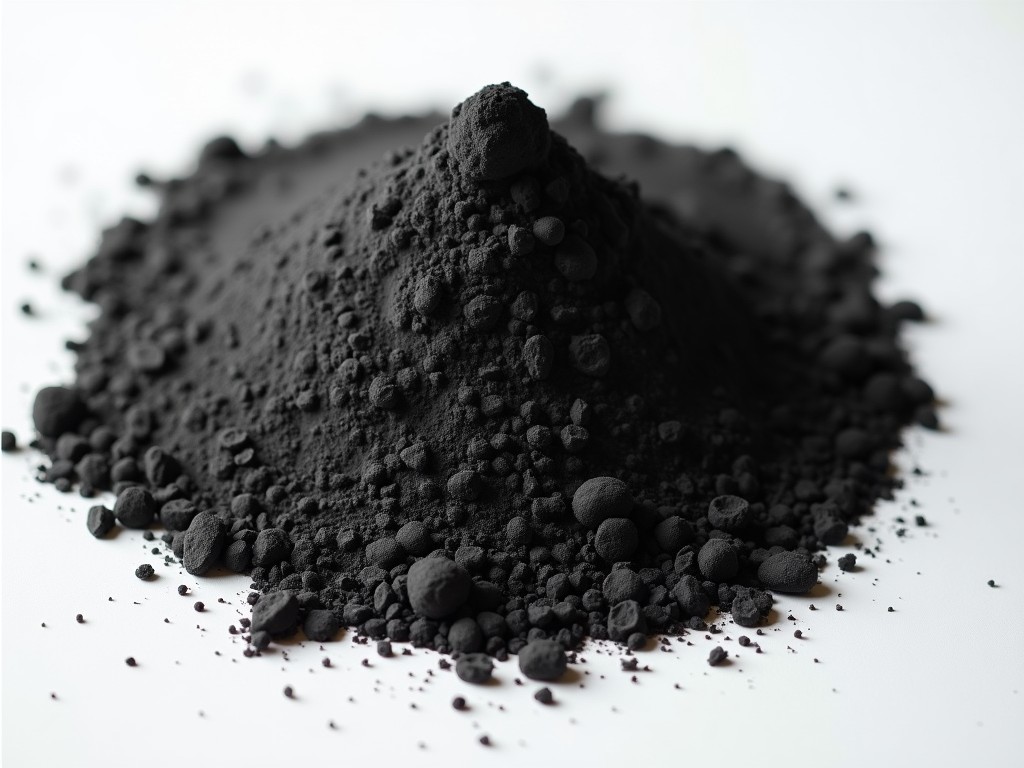
Graphite Powder Melting Point Source Factory
Graphite Powder Melting Point Source Factory
Graphite is distinguished in high-temperature industrial applications by its extraordinary thermal stability. While most industrial metals transition to a liquid state at relatively low temperatures, graphite does not melt under standard atmospheric pressure. Instead, it undergoes sublimation, transitioning directly from a solid to a gas at approximately 3,600°C (6500°F). This property makes graphite powder an essential material for crucibles, heat shields, and metallurgical environments where structural integrity must be maintained.
The thermal performance of graphite powder is heavily influenced by its crystalline structure and the presence of residual impurities. High-purity graphite grades minimize ash content, which can otherwise lower the effective thermal threshold or lead to unexpected structural failure under extreme thermal stress. Engineers selecting this material must evaluate the specific thermal expansion coefficient and thermal conductivity requirements to ensure compatibility with surrounding alloys or mechanical components.
Thermal Properties and Melting Point Analysis
Understanding the "melting point" of graphite requires a distinction between sublimation and pressurized phase changes. In a vacuum environment, graphite will remain solid until it reaches its sublimation point, but under extremely high pressures, a liquid phase can theoretically exist. However, for the vast majority of industrial manufacturing, the focus remains on the material's resistance to oxidation and its dimensional stability.
Purity levels are the primary determinant of thermal behavior. Metallic impurities, such as iron, silicon, or aluminum, can form eutectic mixtures with carbon, effectively lowering the temperature at which the material matrix weakens. Factory-level purification utilizes chemical leaching and thermal treatment to reduce these elements, ensuring that the powder maintains its performance properties up to the theoretical thermal limits.
| Material Type | Purity Level (%) | Particle Size (μm) | Thermal Conductivity (W/m·K) |
|---|---|---|---|
| Natural Flake Graphite | 94% - 99% | 5 - 100 | 100 - 150 |
| Synthetic Graphite | 99.9% - 99.99% | < 10 | 150 - 200 |
| Amorphous Graphite | 80% - 95% | Sub-micron | 10 - 50 |
Industrial Applications
Graphite powder is utilized in sectors where traditional materials would fail due to thermal shock. In metallurgy, it serves as the base for casting crucibles because its non-reactive nature with molten metals prevents contamination of the melt-. The high thermal conductivity ensures even heat distribution, reducing localized stress points during the pouring process.
In the aerospace industry, graphite-based composites are critical for thermal protection systems. Their ability to absorb heat without structural deformation allows components to withstand atmospheric friction during re-entry. Furthermore, the energy sector utilizes high-purity graphite powder as a precursor for lithium-ion battery anodes, where particle size distribution is vital for electrochemical capacity and cycle life.
Manufacturing and Selection Process
Production of graphite powder begins with the mechanical milling of natural or synthetic blocks. Processes such as ball milling or jet milling are employed to achieve specific particle size distributions (PSD). Controlling the PSD is critical because the surface area directly affects the reactivity of the powder and the density of the final pressed component.
Selection of the correct powder grade depends on the intended thermal environment. For lubricant applications, larger flake structures are often preferred to maintain their natural shear properties. Conversely, for high-strength components or fillers, finer, more uniform spherical powders are required to ensure maximum packing density during the sintering process.
Quality Control and Inspection Standards
Quality assurance is maintained through rigorous testing of chemical and physical properties. Laser diffraction is the standard method for verifying particle size, ensuring the powder meets the engineering tolerances specified. Additionally, ash analysis via oxygen combustion is performed to quantify the inorganic impurity levels that could compromise high-temperature performance.
Moisture content is also strictly monitored, as residual water can cause porosity issues during high-temperature processing, leading to cracks in final parts. Each batch is accompanied by a certificate of analysis (COA) detailing these specific metrics to provide transparency for the procurement chain.
Frequently Asked Questions
Can the particle size be customized for specific molds?
Yes, milling processes can be adjusted to provide powders from sub-micron levels to several hundred microns depending on the manufacturing process requirements.
What is the impact of ash content on thermal performance?
Higher ash content indicates metallic impurities that may melt at lower temperatures than graphite, potentially compromising the structural integrity of the material at extreme heats.
How is the powder protected during international shipment?
Material is typically packed in moisture-proof PE bags and placed within reinforced fiber drums to prevent contamination and mechanical damage during transit.
Require specific technical data sheets or a sample for your high-temperature application?
Request Technical Consultation


×