-
Call Now ! +86 18231158869
-
Email Now [email protected]

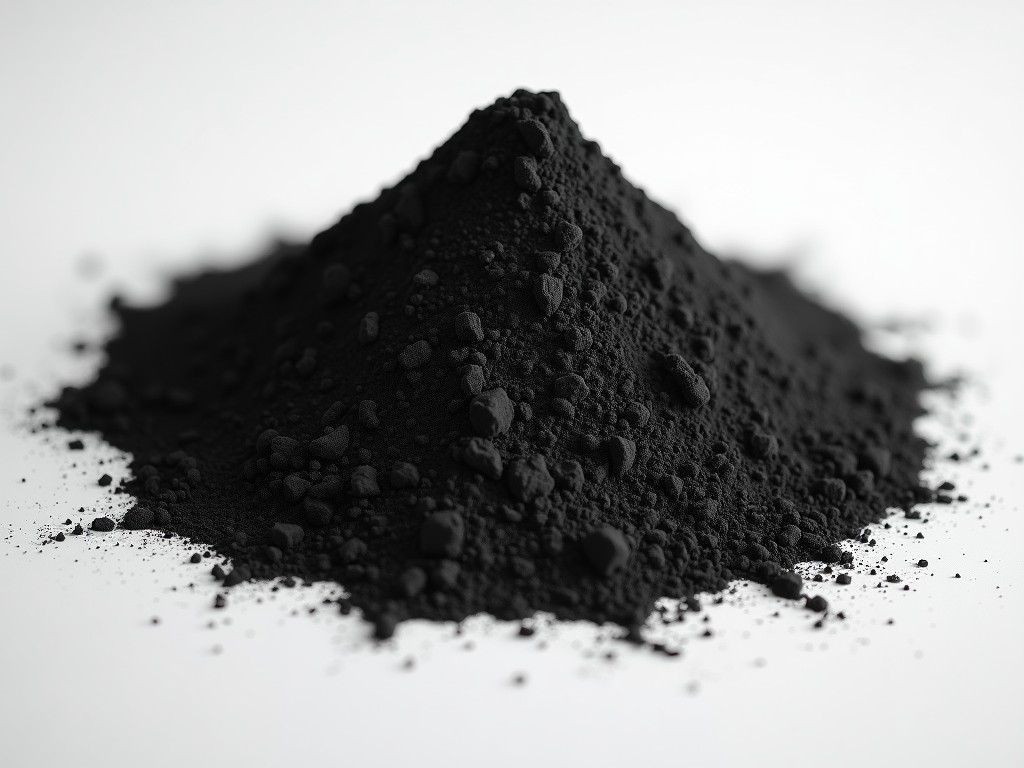
High Purity Graphite Powder Factory
High Purity Graphite Powder Factory & Technical Specifications
High purity graphite powder is a critical component for industries where chemical inertness, thermal stability, and electrical conductivity are required simultaneously. At the manufacturing level, the focus remains on minimizing metallic impurities—such as silicon, iron, and aluminum—which can compromise the performance of the final material in high-temperature or vacuum environments. By achieving a carbon content often exceeding 99.9%, this powder ensures that the crystalline structure remains stable even under extreme thermal stress.
The structural integrity of the graphite is determined during the graphitization process. Subjecting raw material to temperatures reaching 3000°C transforms the amorphous carbon into a highly crystalline structure, significantly reducing volatile impurities. This process results in a material with low resistivity and high thermal conductivity, essential for precision semiconductor and metallurgical applications.
Technical Performance Specifications
| Property Parameter | Typical Value Range | Testing Method |
|---|---|---|
| Carbon Purity (C) | 99.9% - 99.999% | ICP-OES / Combustion Analysis |
| Ash Content | <0.01%<> | Gravimetric Analysis |
| Particle Size (D50) | 1µm - 100µm | Laser Diffraction |
| Electrical Resistivity | 10 - 25 μΩ·cm | Four-Point Probe |
| Moisture Content | <0.05%<> | Drying Oven |
Manufacturing and Refining Process
Production of high-purity graphite begins with the selection of petroleum-based or synthetic petroleum coke. These precursors undergo multiple stages of carbonization to establish the carbon framework. The most critical stage is the graphitization furnace treatment, where the atmosphere is strictly controlled to prevent oxidation while driving off trace metallic elements.
Following graphitization, the material is processed through precision milling equipment. Jet milling is often preferred over mechanical ball milling to maintain the high purity levels and prevent contamination from the grinding media. This ensures that the particle size distribution remains narrow, which is vital for applications requiring uniform density in composites or coatings.
Industrial Applications and Engineering Logic
Lithium-Ion Battery Anodes: High-grade graphite provides the necessary surface area for lithium ion intercalation, ensuring long cycle life and high energy density.
Metallurgy and Casting: Used in crucibles and molds because the low reactivity prevents the contamination of molten alloys with ferrous or other metallic elements.
Semiconductor Manufacturing: Serves as a conductive spray or component in vacuum environments where even trace impurities would lead to wafer failure.
Nuclear Shielding: The high carbon density and thermal stability make purified graphite suitable for structural components in high-radiation environments.
Customization for OEM Requirements
Engineering requirements often demand specific parameters that do not fit standard catalog grades. We offer tailoring of particle size ranges from sub-micron powders to coarse mesh-specific specifications. Furthermore, the surface chemistry of the graphite can be modified to improve bonding with resins, metals, or polymers in composite manufacturing.
Technical Inquiry: If your project project requires a unique purity profile or specific particle size distribution, our technical team can provide detailed data sheets and samples for evaluation.
Request Technical Data & Quotation →


×