-
Call Now ! +86 18231158869
-
Email Now [email protected]

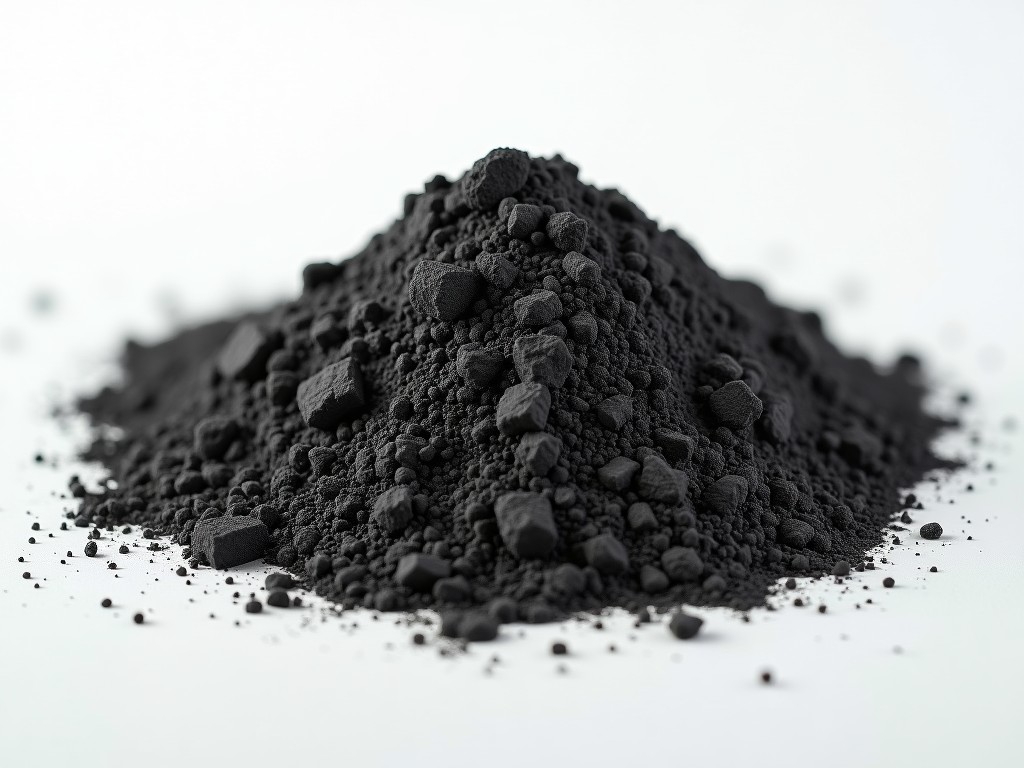
Nickel Coated Molybdenum Graphite Powder
Nickel Coated Molybdenum Graphite Powder
Nickel-coated molybdenum graphite powder represents a specialized solution for environments where dry lubrication and structural integrity must coexist. While pure molybdenum disulfide (MoS2) provides exceptional low friction coefficients, its susceptibility to oxidation at high temperatures and poor adhesion to certain matrices often limit its performance in demanding applications. The nickel coating addresses these vulnerabilities by providing a protective metallic barrier and enhancing chemical compatibility with composite binders.
The integration of a nickel shell onto the graphite core creates a composite particle that maintains lubricating properties while significantly improving mechanical bonding and thermal stability. This synergy is critical for engineers designing components that operate under vacuum or in extreme temperatures where traditional lubricants would fail or degrade.
Technical Properties and Coating Mechanism
The manufacturing process typically utilizes an electroless plating technique to ensure a uniform layer of nickel around each molybdenum graphite particle. This thin metallic shell prevents the atmospheric degradation of the MoS2 core at temperatures exceeding 400°C, where untreated graphite would begin to oxidize. By encapsulating the lubricant, the nickel coating ensures the friction coefficient remains consistent over extended thermal cycles.
Beyond oxidation resistance, the nickel surface increases the surface energy of the powder. This modification facilitates better dispersion within polymer resins or metal matrices, preventing the formation of structural voids that occur when using untreated lubricants. The result is a more homogeneous composite with enhanced tensile strength and wear resistance in the bulk material.
Industrial Applications
Aerospace engineering utilizes this powder in coatings for moving parts where liquid lubricants would evaporate in a vacuum or freeze in cold environments. Because the nickel-coated particles are stable, they provide reliable protection for mechanical joints without the risk of lubricant migration.
In the automotive sector, the material is integrated into high-pressure bearing components to prevent galling under extreme mechanical loads. The nickel layer facilitates a stronger bond between the lubricant and the metal substrate, extending the service life of components subjected to reciprocating friction.
The electronics industry leverages the conductive properties of the nickel layer to create thermal-interface materials that must dissipate heat while maintaining low mechanical resistance. This is vital for micro-components where thermal management is a primary failure factor.
Technical Specifications
| Property | Typical Values / Range |
|---|---|
| Base Material | Molybdenum Disulfide / Graphite |
| Nickel Coating Content | 3% - 15% (Customizable) |
| Particle Size (D50) | 2µm - 45µm |
| Coefficient of Static Friction | 0.05 - 0.15 |
| Thermal Stability | Up to 450°C (Atmospheric) |
| Morphology | Spherical or Flaked |
Customization and Quality Control
Project requirements often dictate specific parameters for the powder's performance. We can adjust the particle size distribution to meet specific manufacturing processes, such as powder injection molding or spray coating. The thickness of the nickel layer is also tunable to balance the need for oxidation protection against the requirement for lubricating volume.
Quality assurance is maintained through rigorous analytical testing. We utilize Scanning Electron Microscopy (SEM) to verify coating uniformity and particle morphology, while X-ray Diffraction (XRD) confirms the phase purity of the molybdenum disulfide. These measures ensure that every batch meets the chemical and mechanical specifications required for industrial integration.
Frequently Asked Questions
Can the particle size be customized for specific resin types?
Yes, we provide various D50 values from sub-micron to micron-scale to ensure optimal dispersion in different polymer matrices without causing filtration.
What is the typical lead time for custom coating specifications?
Custom orders typically range from 3 to 6 weeks, depending on the required nickel weight percentage and particle size precision.
How is the powder protected during shipment?
The powder is packed in moisture-barrier anti-static bags within reinforced fiber drums to prevent contamination or degradation of the coating during transit.
Require technical data sheets or a sample for your project?
Contact Technical Engineering Team


×