-
Call Now ! +86 18231158869
-
Email Now [email protected]

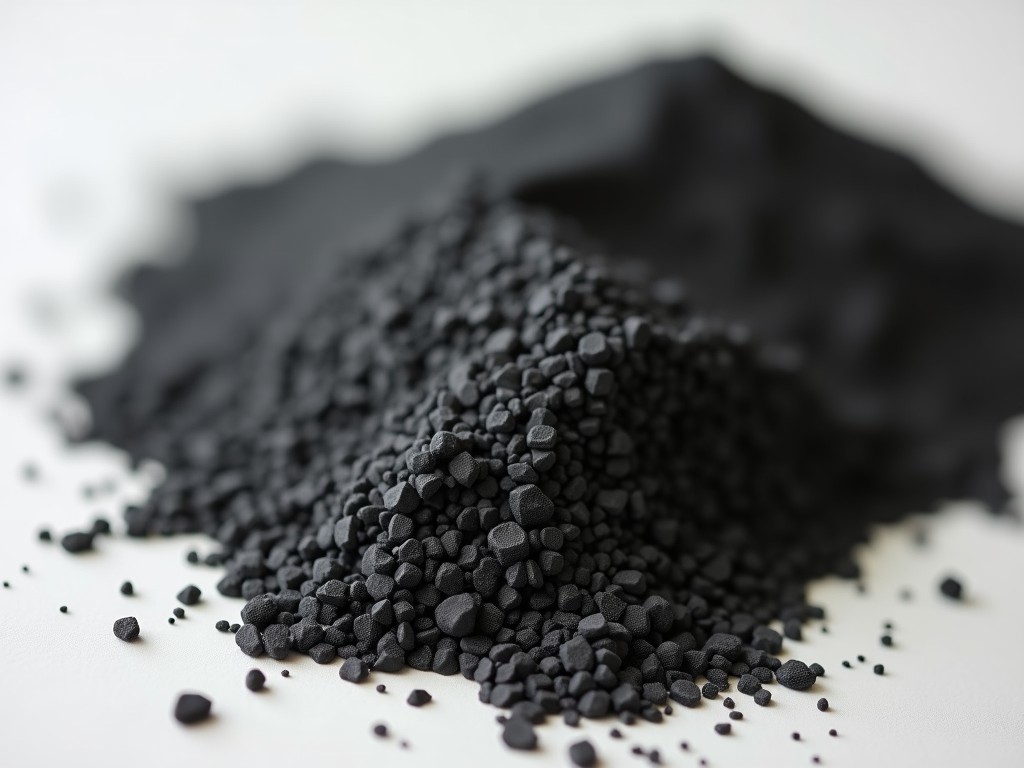
Oem Dry Film Graphite Lubricant
OEM Dry Film Graphite Lubricant
In industrial environments where traditional liquid lubricants fail due to outgassing, thermal degradation, or contamination risks, dry film graphite lubricants provide a stable low-friction alternative. Original Equipment Manufacturers (OEMs) integrate these coatings directly into the assembly process to ensure long-term performance without the need for periodic re-greasing. This technical solution is engineered for components subjected to high mechanical loads and extreme temperatures where viscosity stability is a requirement.
The lubricant relies on the unique molecular structure of graphite to create a resilient barrier between moving surfaces. Unlike oils or greases, the dry film does not attract particulate particles, preventing the formation of abrasive pastes that accelerate wear in precision assemblies and clean-room environments.
Technical Mechanism of Graphite Film Lubrication
The efficacy of graphite is derived from its lamellar structure, consisting of layers of carbon atoms held together by strong covalent bonds within planes but weak Van der Waals forces between planes. When shear stress is applied, these layers slide over one another, significantly reducing the coefficient of friction between the mating substrates.
To facilitate application in OEM manufacturing lines, the graphite particles are suspended in a specialized polymer or resin binder. This binder ensures the film adheres securely to the substrate—whether it be steel, aluminum, or composite materials—while maintaining a uniform thickness that remains intact under high-pressure mechanical contact.
Performance Characteristics
| Property | Typical Values / Performance Range |
|---|---|
| Coefficient of Friction (Dry) | 0.05 - 0.15 |
| Operating Temperature (Air) | -200°C to +450°C |
| Maximum Load Capacity | Up to 500 kg (depending on substrate) |
| Vacuum Compatibility | Excellent (Low outgassing grade) |
| Chemical Resistance | Inert to most organic solvents |
Industrial Applications
OEMs select dry graphite lubricants for sectors where mechanical failure is catastrophic or maintenance is inaccessible. The following applications are common:
Aerospace and Defense: Used in actuators, deployment mechanisms, and vacuum chambers where liquid lubricants would evaporate and contaminate sensors.
Automotive Engineering: Applied to high-temperature components like valve trains and sliding pins that require thermal stability.
Heavy Machinery: Sliding rails, ball screws, and extrusion equipment operating in dusty environments where grease would seize.
Electronics: Precision cooling fans and mechanical switches where dust-free operation is a critical requirement.
OEM Customization and Integration
To ensure seamless integration into existing production workflows, the lubricant formulation is adjustable based on the specific geometry and material requirements of the component.
Engineering teams can specify various application methods, including spray-coating, dipping, or automated powder application for high-volume lines. Furthermore, the binder chemistry can be tailored to enhance adhesion on specific alloys or pre-treated surfaces, ensuring the film does not delaminate under cyclic loading.
Frequently Asked Questions
Can this lubricant be used in vacuum environments?
Yes, low-outgassing formulations are specifically designed for high-vacuum applications to prevent contamination of sensitive optical equipment.
What is the typical film thickness?
Film thickness typically ranges from 2 to 10 microns, depending on the application method and the load requirements of the part.
What substrates are compatible with the graphite film?
Graphite is compatible with most metals, including steel, aluminum, and titanium, as well as various engineering plastics and composite materials.
Need to discuss technical specifications or request material samples for your OEM project?
Contact Technical Engineering Team


×