-
Call Now ! +86 18231158869
-
Email Now [email protected]

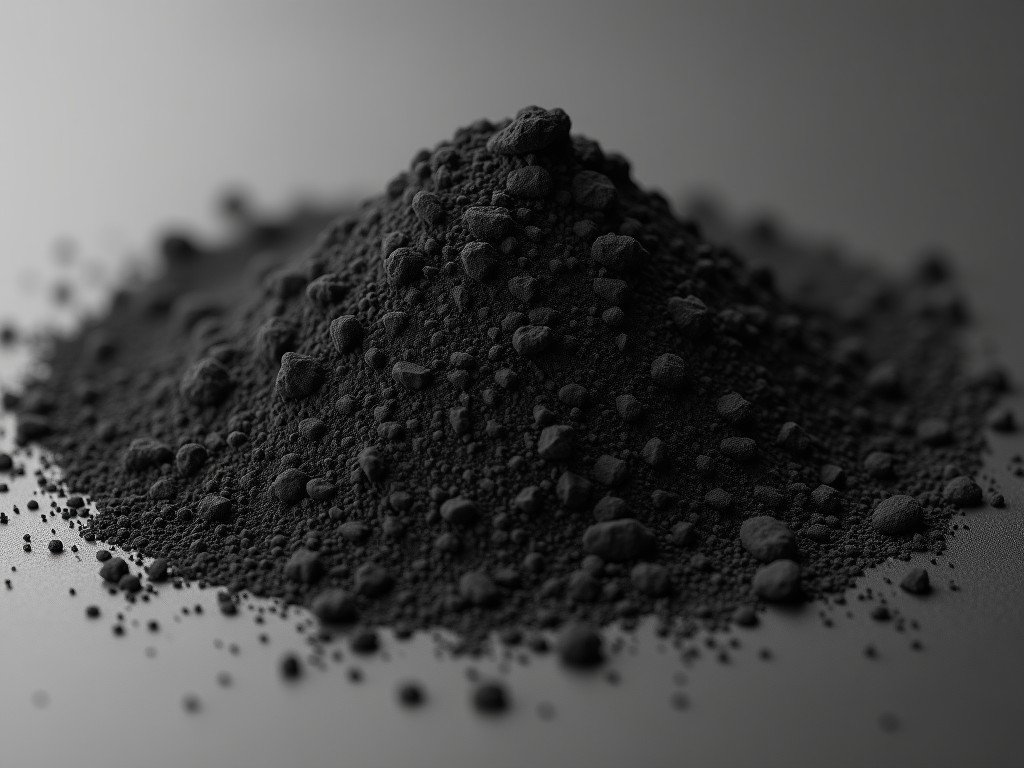
Oem Graphite Powder For Keys
OEM Graphite Powder for Precision Key Mechanisms
Mechanical lock systems rely on low-friction interfaces between pins, springs, and internal chambers. Unlike liquid lubricants, dry graphite powder provides a molecular boundary layer that prevents the accumulation of atmospheric debris and particulate matter. This ensures the mechanism remains responsive over thousands of cycles, even in environments where grease would attract grit and cause mechanical failure.
The hexagonal crystalline structure of synthetic graphite allows atomic layers to slide over one another via weak van der Waals forces, resulting in an exceptionally low coefficient of friction. For OEM manufacturers, the particle size distribution is the most critical factor, ensuring the powder penetrates tight tolerances in pin-tumbler cylinders without causing mechanical binding or abrasive wear.
Technical Properties of High-Purity Graphite Powder
Industrial-grade graphite used for keyway lubrication must maintain high chemical stability and electrical conductivity. High-purity variants, typically exceeding 99% carbon, ensure that the lubricant does not react with metal alloys such as brass, zinc, or stainless steel lock components.
Low Friction Coefficient: Maintains performance across wide temperature ranges where oils would thin or thicken.
Moisture Resistance: Naturally low hygroscopic nature prevents clumping and ensures operation in high-humidity environments.
Particle Size Control: Engineered to specific micron ranges to ensure deep penetration into narrow keyways.
Chemical Inertness: Non-corrosive properties that protect sensitive internal spring mechanisms.
Application Specifications
| Parameter | Typical Values | Customization Options |
|---|---|---|
| Particle Size (D50) | 1 - 15 microns | Customizable per project |
| Carbon Purity | ≥99.0% | Available upon request |
| Moisture Content | ≤ 0.05% | Standard |
| Bulk Density | 0.4 - 0.8 g/cm³ | Standard |
| Electrical Conductivity | 10^3 S/m | Standard |
Why Graphite Outperforms Oils in Lock Applications
Traditional liquid lubricants and greases act as adhesives for environmental contaminants. Over time, dust, salt spray, and metallic shavings bind to the grease, creating an abrasive paste that increases torque requirements and eventually seizes pins. Graphite operates as a dry lubricant, providing a slick coating that does not trap these particles.
Furthermore, graphite does not evaporate or degrade under extreme thermal fluctuations, which is a common failure point for oil-based products. This thermal stability is vital for high-security locks and outdoor hardware where maintenance intervals are long and exposure involves harsh weather cycles.
Customization Options for OEM Integration
OEM integration requires specific material formats to match existing assembly line capabilities. We provide graphite powder in bulk forms for industrial feeders, or pre-dispersed in formulations for automated spray application.
Mesh Size Variation: Fine-mesh for micro-mechanical components or coarser mesh for heavy-duty locks.
Packaging: Anti-static bags, vacuum-sealed containers, or custom drums for bulk production lines.
Surface Treatment: Options for treated graphite to meet specific thermal conductivity requirements.
Quality Control and Material Standards
Every batch undergoes rigorous testing to ensure consistency in particle morphology. Our laboratories utilize X-ray diffraction (XRD) to verify crystalline structure and laser diffraction to confirm particle size distribution curves. This level of control ensures that the powder performs predictably across different production runs for OEM partners.
Technical Consultation for Custom OEM Graphite
Contact our engineering team to discuss technical data sheets, material samples, or custom specifications for your specific lock mechanism requirements.
Request Technical Specifications


×