-
Call Now ! +86 18231158869
-
Email Now [email protected]

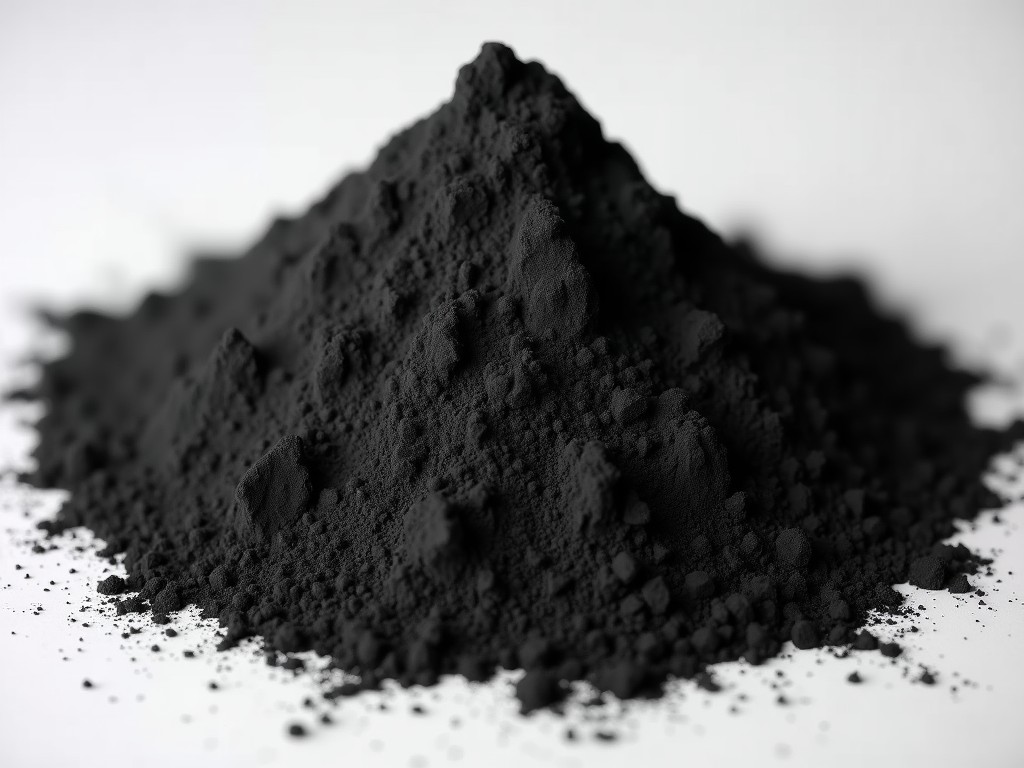
Oem Graphite Powder Price Per Kg
OEM Graphite Powder Price per kg
Determining the OEM graphite powder price per kg requires an understanding of how material properties and manufacturing requirements drive the final unit cost. Unlike commodity chemicals, industrial-grade graphite fluctuates based on carbon purity levels, particle size distribution, and the specific crystalline structure required for the end application. Procurement teams must balance the raw material cost against the performance metrics needed, such as thermal conductivity, electrical resistivity, or lubrication stability.
Factors Influencing Graphite Powder Pricing
Purity serves as the primary driver of cost. Standard natural graphite typically ranges from 94% to 98% carbon, whereas high-purity synthetic variants exceeding 99.9% carbon require intensive chemical leaching or high-temperature thermal processes. These processes increase energy consumption and production time, directly reflecting in the price per kilogram.
Particle size distribution (PSD) also impacts the manufacturing complexity. Achieving a sub-micron or nano-scale powder requires specialized ball milling or jet milling techniques, which have lower yields compared to standard mechanical grinding. Furthermore, a wide particle distribution is often more cost-effective than a narrow, monodisperse distribution required for high-precision electronics or battery-electrode applications.
The morphology of the graphite—whether it is flake, isotropic, or spherical—dictates its structural performance. Flake graphite is frequently preferred for thermal interface materials due to its high anisotropic conductivity, while spherical graphite is often utilized in injection molding to improve flow characteristics without compromising structural matrix matrix excessively.
Technical Specifications and Pricing Comparison
| Material Type | Carbon Purity (%) | Particle Size (μm) | Typical Price Range (USD/kg) |
|---|---|---|---|
| Natural Flake Graphite | 94% - 98% | 5 - 150 | $15 - $45 |
| High-Purity Natural | 99% - 99.5% | 2 - 50 | $50 - $120 |
| Synthetic Graphite | 99.9%+ | 1 - 20 | $80 - $200 |
| Nano-Graphite | 99.9% | < 1 | $250+ |
Application-Specific Cost Considerations
In the lubricant industry, cost is often driven by the surface treatment of the powder. To ensure compatibility with polymer matrices or oils, graphite may be functionalized with stearic acid or surfactants. These chemical modification steps add a layer of cost but prevent agglomeration, ensuring uniform distribution in final products.
Thermal interface materials (TIMs) require high-aspect-ratio flakes to maximize heat dissipation paths. Here, the price is sensitive to the flake size retention during the milling process; aggressive milling that breaks the flakes reduces the thermal performance and consequently the value of the OEM material.
Battery-grade graphite used for anode production focuses on electrochemical stability and surface area control. The requirement for extremely low metal impurity content (specifically iron and copper) necessitates rigorous purification protocols, often making the price per kg significantly higher than standard industrial-casting grades.
Customization Options for OEM Production
Custom PSD Tuning: Tailoring the particle size distribution to meet specific rheological or conductivity requirements.
Surface Functionalization: Applying oxidation or organic coatings to improve bonding with resins and polymers.
Specialized Packaging: Moisture-barrier bags, vacuum-sealed, or bulk-sized totes designed for automated feeding lines.
Private Labeling: Providing technical data sheets and branding tailored for OEM-specific product integration.
Frequently Asked Questions
What is the minimum order quantity for custom purity?
Minimum quantities vary based on the purification method used. High-purity batches often require a minimum of 25kg to offset the setup costs of chemical leaching equipment.
How do shipping costs affect bulk pricing?
Graphite prices are sensitive to global energy costs and logistics fluctuations. Long-term OEM contracts often include price-adjustment clauses to mitigate volatility in raw material markets.
Are samples available for laboratory testing?
Technical samples (typically 500g to 1kg) are usually provided to allow engineers to verify thermal or electrical properties before full-scale procurement.
To obtain a precise quote based on your technical specifications, please contact our engineering team.
Request a Technical Quote


×