-
Call Now ! +86 18231158869
-
Email Now [email protected]

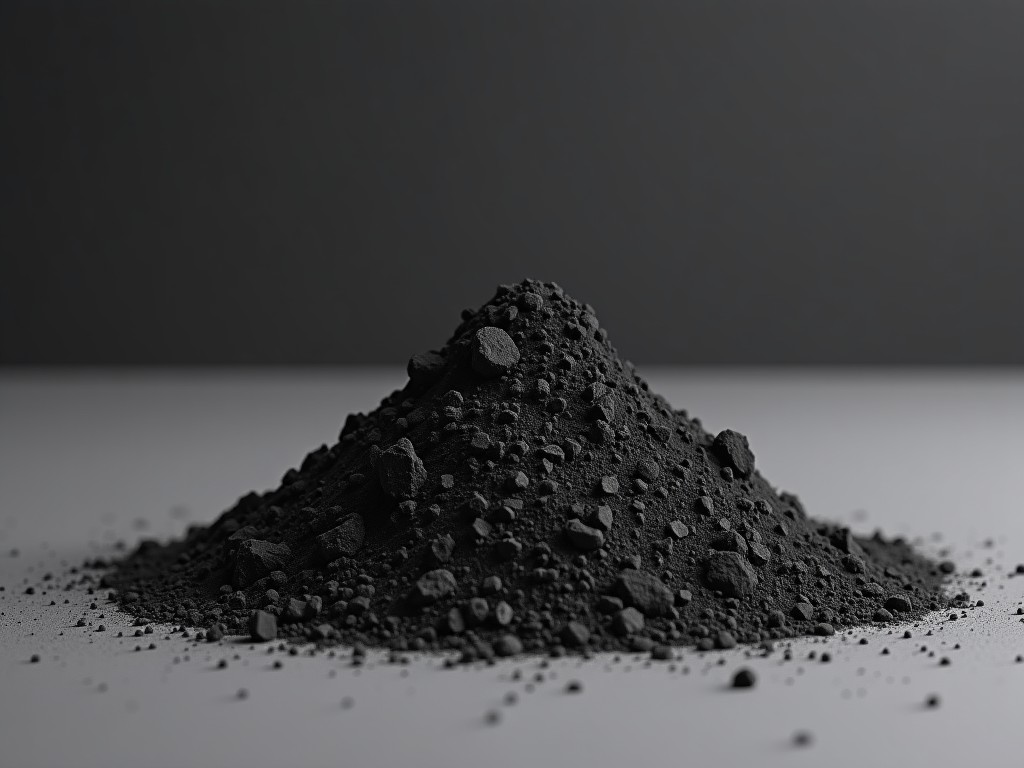
Powdered Graphite Lubricant
OEM Lubricating Powdered Graphite Lube
ed graphite lubricants provide a critical dry-film solution for OEM components where traditional liquid lubricants fail due to thermal degradation, vacuum conditions, or chemical incompatibility. In high-precision engineering, graphite serves as a stable boundary lubricant that reduces mechanical friction and prevents galling. This specific powdered formulation allows for precise integration into automated assembly processes, ensuring consistent coverage across mating surfaces without the risks associated with grease migration.
Technical Specifications and Performance
| Property | Typical Value / Range |
|---|---|
| Particle Size Distribution | 1.5 microns to 45 microns (Customizable) |
| Bulk Density | 0.4 - 0.8 g/cm³ |
| Continuous Operating Temperature | -50°C to 600°C |
| Coefficient of Friction (Steel) | 0.05 - 0.15 (Dry) |
| Purity Level | ≥ 98% Synthetic Graphite |
| Electrical Conductivity | Conductive (Static dissipation) |
Tribological Mechanism and Thermal Stability
The lubricating efficiency of powdered graphite stems from its unique hexagonal crystal structure, where carbon planes are held together by weak van der Waals forces. These forces allow the layers to slide over one another with minimal resistance, creating a low-shear lubricant film on metal substrates. This mechanism remains effective in extreme environments where hydrocarbon-based oils would evaporate or carbonize under oxidative stress.
In vacuum applications where outgassing is a primary concern, graphite is the preferred alternative because it does not release volatile components that could contaminate optical sensors or electronic assemblies. Furthermore, the material maintains structural integrity under high loads, providing a protective barrier that prevents metal-to-metal contact and subsequent wear during reciprocating cycles.
Industrial Application Scenarios
OEM manufacturers utilize powdered graphite across various sectors to solve specific mechanical challenges where standard lubrication is insufficient.
Aerospace and Defense: Used in deployment mechanisms and actuators that must operate in the vacuum of space or under extreme temperature fluctuations.
Automotive Powertrain: Applied to high-temperature gears and valve components where operating temperatures exceed the flash point of synthetic gre.
Steel Manufacturing: Employed on rollers and guides that are exposed to radiant heat and heavy mechanical loads in rolling mills.
Electronics: Used as a static-dissipative coating to prevent electrostatic discharge damage in sensitive circuit assemblies.
OEM Customization and Integration Options
Integrating dry lubricants into an OEM production line requires precise control over particle size and carrier media. We provide graphite in various mesh sizes to ensure the lubricant fits the specific clearance tolerances of the component design. Finer powders are ideal for micro-scale precision bearings, while coarser particles offer better load-bearing capacity for heavy industrial sliding surfaces.
Clients can also request the graphite be pre-blended with specific carrier materials for spray-coating applications or dip-coating processes. This flexibility ensures that the lubricant is applied uniformly during the manufacturing stage, reducing manual labor and improving the repeatability of the final product assembly performance.
Quality Assurance and Testing Protocols
To ensure performance reliability, every batch of powdered graphite undergoes rigorous testing against established industry standards. We measure particle size distribution using laser diffraction to ensure consistency across orders. Additionally, thermal analysis is performed to verify the purity and the absence of moisture or volatile impurities that could compromise the lubricant film in high-temperature environments.
Frequently Asked Questions
Can the graphite be customized for specific mesh sizes?
Yes, we can adjust the particle size distribution to meet specific micron requirements based on the clearance tolerances and application needs of the OEM's mechanical design.
What is the maximum safe temperature for operation?
Graphite is typically stable up to 600°C in air, though performance may vary slightly depending on the atmospheric composition and the presence of other lubricants.
Is this lubricant compatible with vacuum environments?
Absolutely; graphite is highly recommended for vacuum use as it exhibits negligible outgassing, making it ideal for aerospace and high-vacuum hardware.
Request Technical Documentation
If your project requires specific material data sheets, custom blends, or samples, our engineering team is available to assist with the integration process.
Inquire for Technical Specifications


×