-
Call Now ! +86 18231158869
-
Email Now [email protected]

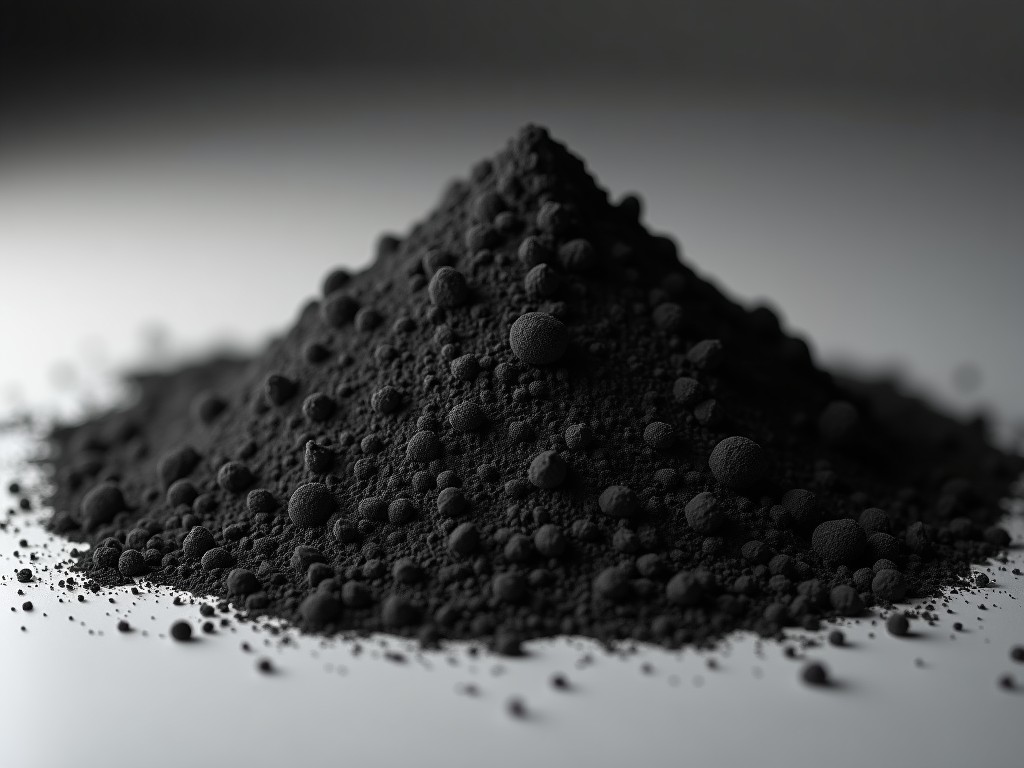
Graphite Powder Price Per Pound
OEM Price of Graphite Powder per Pound
Establishing the OEM price of graphite powder per pound requires a technical understanding of material specifications, manufacturing complexity, and volume-based procurement strategies. Unlike standardized commodities, the cost of graphite powder fluctuates significantly based on chemical purity, particle size distribution, and the morphology of the flakes or particles. Procurement engineers must look beyond the base price to evaluate how specific material properties impact the performance of the final industrial component or process.
Market dynamics are influenced by the global availability of natural graphite and the energy-intensive processes required for synthetic production. For high-performance applications like lithium-ion battery manufacturing or thermal management, the demand for ultra-high purity often commands a premium compared to standard industrial-grade lubricants.
Factors Influencing Graphite Powder Pricing
The primary driver of price variance is the carbon content percentage. Standard-grade graphite typically ranges from 94% to 98% carbon, while specialized synthetic or electronic grades can exceed 99.99%. Achieving each additional degree of purity requires more rigorous chemical purification or thermal treatment, which directly increases the per-pound cost.
Particle Size Distribution (D50): Finer powders (sub-micron) require intensive milling processes and result in lower yields, increasing the unit price.
Morphology: Flake graphite is preferred for lubricity properties, whereas spherical graphite is engineered for flowability and packing density in composite applications.
Surface Treatment: Coatings such as oxidation or metallization to improve bonding with polymer matrices add a manufacturing step and associated cost.
Ash Content: Lower levels of mineral impurities (ash) are critical for electrical conductivity and command higher price points.
Comparison of Graphite Types
Choosing between natural and synthetic graphite involves a trade-off between cost-efficiency and crystalline consistency. Natural graphite is mined and retains its natural layered structure, which is highly effective for dry lubrication applications. Synthetic graphite, produced from petroleum coke, offers a much more uniform particle shape and higher purity, making it essential for precision engineering components.
| Material Type | Typical Purity | Primary Application | Relative Price Tier |
|---|---|---|---|
| Natural Flake Graphite | 94% - 98% | Lubricants, Electrodes | Base |
| Synthetic Flake | 98% - 99.5% | Refractories, Casting | Medium |
| High-Purity Spherical | 99.9%+ | Batteries, Thermal Paste | Premium |
Typical OEM Pricing Tiers
OEM pricing is rarely static and follows a tiered structure based on volume. Small-scale laboratory orders (kilograms) carry high per-pound costs due to handling and packaging overhead. Industrial-scale procurement (tonnage levels) benefits from economies of scale and optimized logistics routes.
Note: The following are market estimates for illustrative purposes. Actual quotes vary based on current raw material indices and specific technical requirements.
Industrial Applications and Material Selection
Material selection is dictated by the functional environment of the end product. In thermal interface materials, graphite powder is selected for its high thermal conductivity to dissipate heat from sensitive electronic components. Conversely, in the manufacturing of plastic-molded parts, graphite is added to reduce friction and improve the wear resistance of mechanical parts.
Engineers must also consider the moisture content of the powder. High moisture can interfere with chemical reactions or high-temperature sintering processes, necessitating the use of pre-dried graphite variants which may carry a higher OEM cost.
Quality Control and Logistics Considerations
Quality assurance for graphite powder involves testing for particle size distribution via laser diffraction and chemical analysis via oxygen combustion methods. OEM buyers typically require a Certificate of Analysis (COA) for every batch to ensure lot-to-lot consistency in their production lines.
Logistics also play a significant role in the final price per pound. Because graphite powder is dense and heavy, shipping costs can impact the total landed cost. Utilizing bulk packaging, such as 500kg FIBC bags, generally reduces the unit price compared to smaller 25kg fiber sacks.
Request a technical data sheet or volume quote for your specific requirements.
Inquire OEM Quote


×