-
Call Now ! +86 18231158869
-
Email Now [email protected]

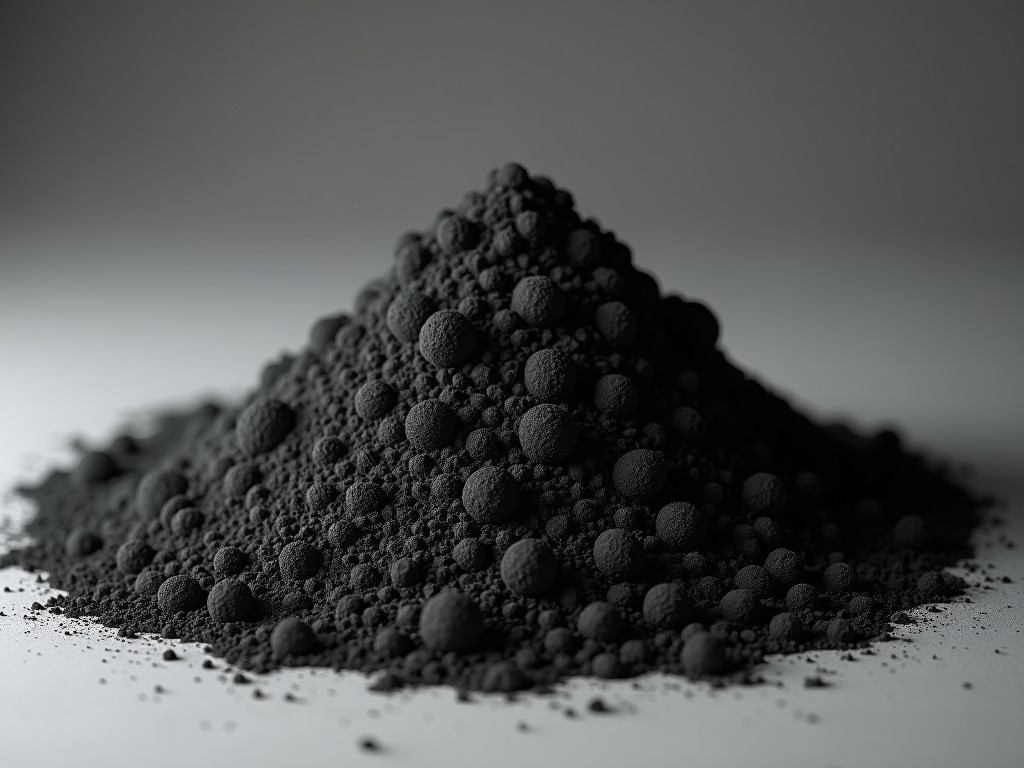
Purified Spherical Graphite Powder Price
Purified Spherical Graphite Powder Price and Technical Specifications
The cost of purified spherical graphite powder is determined primarily by the energy intensity required to achieve high chemical purity and the precision of the particle morphology. Unlike standard flake graphite, spherical graphite undergoes a multi-stage transformation process involving controlled milling and spheroidization to ensure a uniform round structure. This specific geometry is critical for applications where high tap density and isotropic conductivity are required, such as in lithium-ion battery anode production or high-performance synthetic lubricants.
Procurement engineers must account for the "nines" of purity—ranging from 99.9% to over 99.999%—when evaluating market pricing. Higher purity levels necessitate more rigorous thermal acid leaching or vacuum thermal treatments to remove metallic impurities like iron, aluminum, and silicon, which can impact the electrochemical performance of the final composite or battery cell.
Factors Influencing Unit Pricing
Purity levels serve as the most significant driver of cost. As the concentration of ash content drops below 0.01%, the chemical consumption and processing time increase exponentially, leading to higher price points. Furthermore, the particle size distribution (D50 and D90 values) plays a role; sub-micron spherical powders require specialized grinding equipment and lower yield rates compared to coarser micron-grade granules.
Surface treatment also impacts the final invoice. For battery-grade applications, graphite often requires a carbon coating applied via Chemical Vapor Deposition (CVD) to improve the interface stability with the electrolyte. This secondary secondary processing step adds a layer of technical complexity to the base price of the raw purified spherical powder.
| Property | Typical Values | Technical Impact |
|---|---|---|
| Carbon Purity (C) | 99.9% - 99.999% | Affects electrical conductivity and thermal stability. |
| Particle Size (D50) | 5μm - 25μm | Determines tap density and flowability. |
| Ash Content | <0.01%<> | Crucial for preventing parasitic reactions. |
| Density | 2.1 - 2.3 g/cm³ | Influences volumetric energy density. |
| Morphology | Spherical | Ensures uniform stress and low friction. |
Industrial Applications and Technical Logic
In the energy sector, spherical graphite is the preferred material for high-capacity anodes. The spherical shape allows for higher packing efficiency compared to flake graphite, which directly translates to higher energy density in the battery cell. The uniform surface area minimizes the mechanical stress during the expansion and contraction cycles of lithium intercalation, extending the cycle life of the device.
Mechanical engineering utilizes purified spherical graphite in advanced dry-lubricants. Because the particles act as microscopic ball bearings, they reduce the coefficient of friction between metal surfaces under high-temperature conditions. This is particularly vital in aerospace and automotive components where liquid lubricants might evaporate or undergo thermal degradation.
Quality Assurance and Inspection Protocols
To ensure consistency across batches, materials undergo rigorous analytical testing. Scanning Electron Microscopy (SEM) is used to verify the sphericity and detect any presence of irregular fragments or aggregates that could compromise material performance. Inductively Coupled Plasma (ICP) mass spectrometry is employed to quantify trace metal elements, ensuring the purity meets the stringent specifications required for sensitive electronic applications.
Particle size analysis is conducted via laser diffraction to provide a narrow distribution. A narrow distribution is essential for maintaining predictable behavior in composite formulations, where oversized particles could create structural weaknesses in the polymer matrix.
Frequently Asked Questions
How does the price vary between 99.9% and 99.999% purity?
The jump from 99.9% to 99.999% often involves a significant price increase due to the multiple purification cycles and specialized chemical reagents required to eliminate trace-level impurities.
Can particle size be customized for specific manufacturing processes?
Yes, spherical graphite can be tuned from sub-micron levels to 50μm depending on the requirements of the manufacturing process, such as extrusion or slurry coating needs.
What is the typical lead time for bulk orders?
Standard stock items are typically ship in 2-4 weeks, while custom-coated or ultra-pure grades may require 8-12 weeks depending on production volume.
Accurate technical pricing depends on your specific purity and particle size distribution requirements. Contact our engineering team for a detailed technical consultation and formal quotation.
Request a Technical Quote


×