-
Call Now ! +86 18231158869
-
Email Now [email protected]

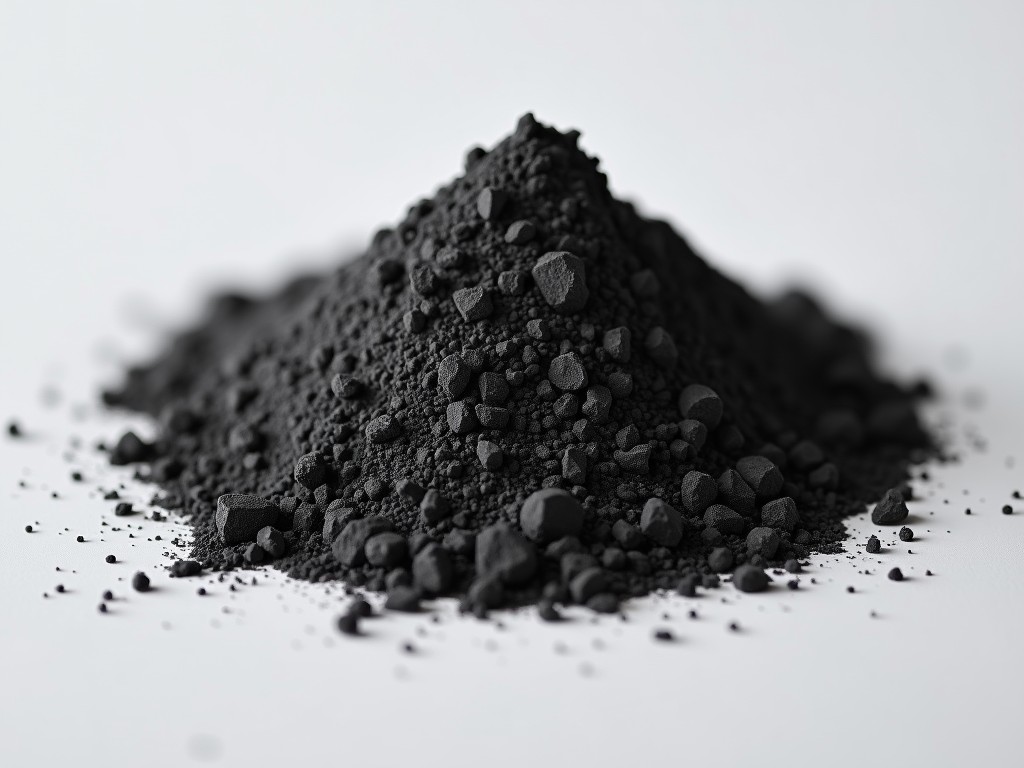
Silver Ultra Fine Graphite Powder Source Factory
Silver Ultra Fine Graphite Powder Source Factory
Ultra-fine graphite powder represents a critical material component for high-performance engineering applications where thermal and electrical conductivity are non-negotiable. By reducing the particle size to the sub-micron range, the specific surface area increases significantly, allowing for better interfacial contact in composite matrices and conductive inks. This silver-grade high-purity graphite production focuses on maintaining the crystalline morphology of the graphite flakes while ensuring that mechanical milling processes do not introduce excessive defects that would impede electron flow.
The performance of ultra-fine graphite is dictated largely by its particle size distribution (PSD). A narrow distribution ensures predictable behavior during manufacturing, preventing structural weak points in the final electronic component or mechanical product. Our manufacturing process prioritizes the preservation of the metallic-like properties of the graphite, ensuring high thermal conductivity even at low loading percentages.
Technical Specifications
| Technical Parameter | Typical Values / Range | Testing Method |
|---|---|---|
| Particle Size (D50) | 0.5μm - 5μm | Laser Diffraction |
| Purity (Carbon) | ≥ 99.5% | Oxygen Fusion |
| Thermal Conductivity | Up to 400 W/mK (Bulk) | Flash Heat Analysis |
| Electrical Conductivity | ≥ 105 % IACS | Four-Point Probe |
| Apparent Density | 0.4 - 0.8 g/cm³ | Pycnometry |
Manufacturing Process
The production of ultra-fine graphite begins with the selection of high-purity synthetic or natural graphite. Unlike traditional ball milling which can introduce metallic contamination and damage the lattice structure, jet milling utilizes high-velocity air streams to collide particles against each other. This method preserves the structural integrity of the graphite flake intact, which is vital for maintaining high electrical conductivity.
Following milling, the de-aggregation stage is critical to break up the ultra-fine clusters. Small particles tend to clump due to Van der Waals forces; by employing controlled ultrasonic treatment or chemical surface modification, we ensure the powder remains free-flowing and dispersible in resins, polymers, or solvents.
Industrial Applications
EMI/RFI Shielding: The high surface area allows for the formation of a conductive network within polymer housings, effectively blocking electromagnetic interference in 5G base equipment and sensitive aerospace electronics.
Thermal Interface Materials (TIMs): Used in thermal pastes and pads, the ultra-fine particles reduce thermal contact resistance between high-heat-generating components like processors and heat sinks.
Conductive Inks: In printed electronics, silver-grade graphite powder provides a stable, cost-effective alternative to pure silver inks while maintaining necessary electrical pathways.
High-Performance Lubricants: In vacuum environments where oils fail, this powder integrates into greases to reduce friction without outgassing volatile organic compounds.
Quality Control and Inspection
Consistency in industrial batches is maintained through rigorous analytical protocols. Every shipment undergoes Scanning Electron Microscopy (SEM) imaging to verify particle morphology and ensure no large aggregates have formed during the packaging process.
Elemental analysis is performed via Inductively Coupled Plasma Optical Emission Spectroscopy (ICP-OES) to trace metal impurities. This is particularly important for customers in the semiconductor and battery industries where even parts per billion of contamination can affect device failure.
Customization Options
Standard powder specifications often require modification to fit specific engineering constraints. We offer customization of the particle size distribution to match the specific viscosity requirements of your carrier medium. Furthermore, surface treatments—such as silane coupling agents or oxidation—can be applied to enhance the compatibility between the graphite and specific polymer matrices.
Requires a project-specific technical data sheet or a custom sample for your thermal management project?
Request Technical Inquiry & Quote


×