-
Call Now ! +86 18231158869
-
Email Now [email protected]

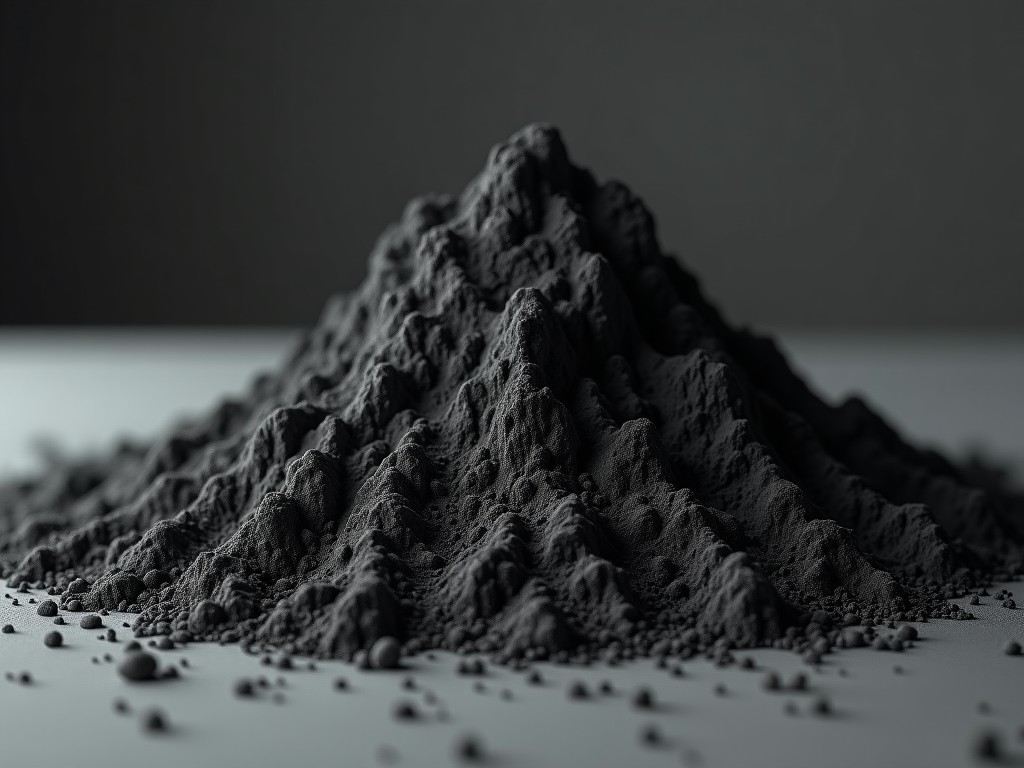
Synthetic Graphite Production Process Manufacturers
Synthetic Graphite Production Process Manufacturers
Synthetic graphite is a highly engineered material produced through the controlled transformation of carbon precursors like petroleum pitch or coal tar pitch. Unlike natural graphite, which is subject to geological variations, the synthetic process allows for precise control over chemical purity, crystalline structure, and mechanical properties. This predictability is critical for industrial applications where thermal stability and electrical conductivity are non-negotiable.
The Synthetic Graphite Manufacturing Process
The manufacturing of synthetic graphite is a multi-stage thermal journey designed to convert amorphous carbon into a highly crystalline structure. The process begins with the selection of high-quality coke, typically chosen for its high carbon content and low impurity profile. This material is then crushed and molded into specific geometries to form the structural foundation of the final component.
Carbonization and Molding: Needled coke is ground to specific particle size distributions and mixed with binders. The mixture is then pressed under high hydraulic pressure to create "green" blocks, which are heated in an inert atmosphere to drive off volatile components.
Impregnation: To reduce the porosity inherent in the molding process, the blocks are impregnated with liquid pitch or resin. This cycle is often repeated multiple times to ensure the final material reaches the required density for structural integrity.
Graphitization: This is the most critical stage, where the material is heated in induction furnaces at temperatures ranging from 2500°C to 3000°C. At these extremes, the carbon atoms rearrange themselves into hexagonal planar layers, significantly increasing electrical conductivity and thermal resistance.
Key Material Properties and Engineering Advantages
Engineers specify synthetic graphite primarily for its performance in extreme environments. Because the process filters out many impurities, the resulting material exhibits much lower metallic content—such as boron or silicon—often found in natural deposits. This high purity makes it indispensable for semiconductor manufacturing and metallurgical applications where contamination would lead to batch failure.
Beyond chemical purity, synthetic graphite offers a low coefficient of thermal expansion and high thermal shock resistance. These characteristics ensure dimensional stability during rapid heating and cooling cycles. Its inertness toward most acids and bases further extends the lifespan of components in corrosive chemical reactors and processing environments.
| Property | Synthetic Graphite | Natural Graphite |
|---|---|---|
| Purity Level (C) | Up to 99.999% | Variable (90% - 99%) |
| Crystalline Consistency | Highly Uniform | Irregular |
| Electrical Conductivity | High & Predictable | Variable |
| Thermal Shock Resistance | Excellent | Good |
Industrial Applications
The selection of synthetic graphite is driven by the specific stressors of the operating environment. In the semiconductor industry, it is utilized for wafer carriers and heating elements because its high purity prevents the introduction of dopants into the silicon wafers.
In metallurgy, synthetic graphite crucibles and electrodes are preferred for melting-ferrous metals. The ability to withstand high temperatures without reacting with the melt ensures the integrity of the alloy composition. Furthermore, in the nuclear sector, high-grade graphite is used as reflectors due to its unique neutron absorption properties and stability under radiation flux.
Quality Control and Testing Standards
Manufacturers ensure performance reliability through rigorous testing protocols that validate the internal structure. This includes X-ray diffraction (XRD) to measure the degree of crystallinity, which directly correlates to the material's electrical conductivity.
Density and Porosity: Measured via Archimedes method to ensure proper impregnation and compaction.
Electrical Bulk Resistivity: Tested to verify the conductivity performance across different axes.
Ash Content Analysis: Performed to quantify trace metallic impurities like sulfur, vanadium, and alkali metals.
Thermal Expansion Coefficient: Determined to ensure dimensional accuracy in precision engineered assemblies.
Frequently Asked QuestionsCan synthetic graphite components be customized for specific dimensions?
Yes, manufacturers can machine synthetic graphite from blocks or extrude complex shapes to meet tight tolerances, often down to +/-0.05mm.
What is the typical production lead time for large-scale orders?
Lead times vary based on the complexity of the required graphitization cycles and impregnation steps, typically ranging from 6 to 12 weeks for custom components.
What information is required before requesting a quotation?
To provide an accurate quote, engineers require the specified purity grade, target density, electrical conductivity requirements, and final dimensional drawings or specifications.
Can synthetic graphite components be customized for specific dimensions?
Yes, manufacturers can machine synthetic graphite from blocks or extrude complex shapes to meet tight tolerances, often down to +/-0.05mm.
What is the typical production lead time for large-scale orders?
Lead times vary based on the complexity of the required graphitization cycles and impregnation steps, typically ranging from 6 to 12 weeks for custom components.
What information is required before requesting a quotation?
To provide an accurate quote, engineers require the specified purity grade, target density, electrical conductivity requirements, and final dimensional drawings or specifications.
Ready to discuss technical specifications for your high-temperature applications?
Request a Technical Consultation


×