-
Call Now ! +86 18231158869
-
Email Now [email protected]

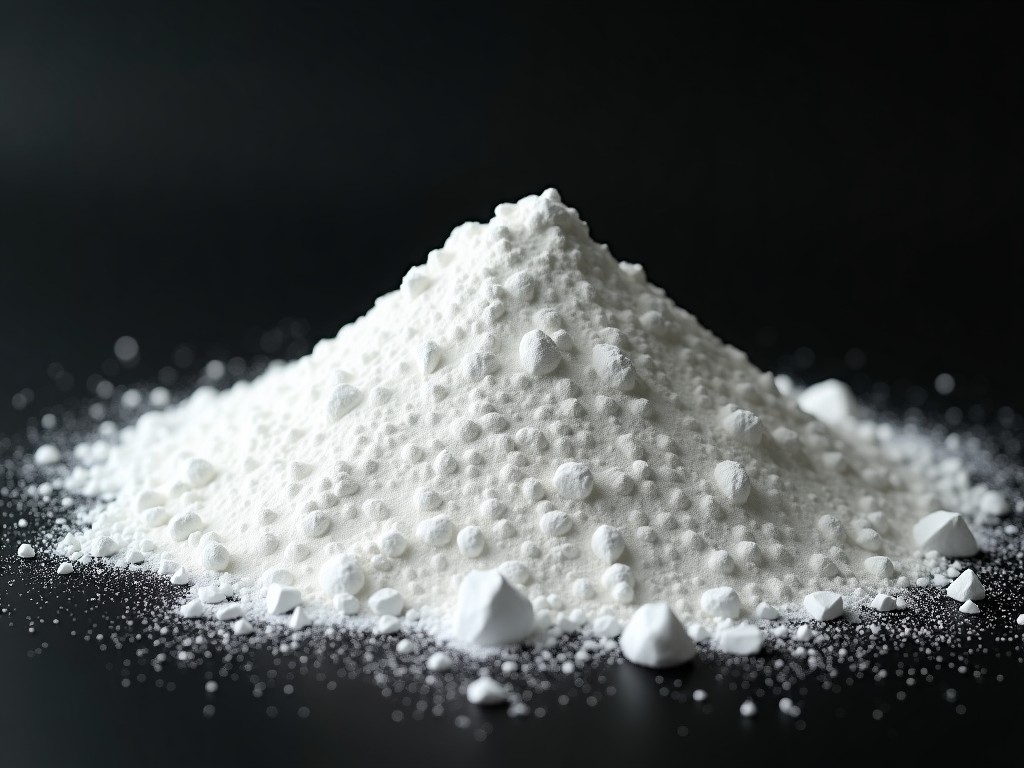
White Graphite Powder Lubricant Source Factory
white graphite powder lubricant Source Factory
White graphite powder, technically referred to as hexagonal boron nitride (hBN), functions as a high-performance dry lubricant and functional additive designed for industrial environments requiring extreme thermal stability and chemical inertness. Unlike standard carbon-based graphite, this material is electrically non-conductive, making it the primary choice for semiconductor and electronics manufacturing where metallic short circuits would be a catastrophic risk.
The molecular structure of hBN consists of hexagonal layers held together by weak van der Waals forces. This architecture allows the layers to slide over one another with minimal resistance, providing a low coefficient of friction across a vast temperature range. Because the powder remains white or translucent, it does not compromise the aesthetic properties or structural integrity of light-colored polymers, plastics, or coatings.
Physical and Chemical Properties Analysis
Engineering performance of white graphite is dictated by its high thermal conductivity and resistance to oxidation. It remains structurally stable up to 900°C in atmospheric conditions and can withstand 2000°C in inert atmospheres. This thermal profile ensures that the lubricant does not degrade or outgas where organic oils or greases would vapor.
Chemical inertness is another critical metric; hBN does not react with most acids, bases, or molten metals. This stability allows for its use in corrosive chemical environments and as a release agent in metal casting where traditional lubricants contaminate the alloy.
| Technical Specification | Typical Values / Range |
|---|---|
| Chemical Formula | BN |
| Appearance | White to Translucent Powder |
| Thermal Stability (Air) | Up to 900°C |
| Thermal Stability (Inert Gas) | Up to 2000°C |
| Electrical Conductivity | Insulating (> 10¹² Ω/cm) |
| Coefficient of Friction | 0.1 - 0.2 |
| Specific Density | 2.1 - 2.2 g/cm³ |
Industrial Applications and Logic
Integration of white graphite into industrial processes is driven by specific mechanical and thermal requirements that standard lubricants cannot meet.
Injection Molding and Extrusion: Added to polymer compounds, hBN reduces the viscosity of the melt and improves mold release properties. This results in shorter cycle times and a superior surface finish without the discoloration associated with carbon black.
Semiconductor Manufacturing: Utilized as a dry lubricant for precision components and wafer processing. Its non-conductive nature prevents electrical interference during nano-scale component fabrication.
Aerospace and Defense: Applied in vacuum environments where liquid-based lubricants would evaporate or freeze. The powder maintains a consistent friction coefficient under extreme temperature fluctuations in space.
Specialty Coatings and Paints: Serves as a thermal management filler in high-performance coatings to dissipate heat away from electronic components while maintaining electrical insulation.
Manufacturing Process and Quality Control
Production of high-purity white graphite begins with the synthesis of boron and nitrogen precursors at high temperatures in controlled environments. The resulting material is then subjected to mechanical milling or jet milling to achieve specific particle size distributions (PSD). Control over particle size is vital, as it directly influences the dispersion efficiency of the lubricant within a host matrix.
Quality assurance protocols involve multi-stage testing to ensure batch consistency. We utilize laser diffraction for particle size analysis and X-ray diffraction (XRD) to verify crystalline purity and phase structure. These metrics ensure that every shipment meets the rigorous tolerances required for precision-grade applications.
Customization and Sourcing Options
Sourcing white graphite from a technical factory requires understanding the end application's environmental constraints. We provide several customization parameters to align with specific engineering specifications:
Particle Size
Available mesh sizes range from sub-micron powders to 45+ microns, depending on the need for surface coating vs. bulk filler properties.
Purity Levels
Standard purity is 99%+, with high-grade variants (99.9%) available for sensitive electronic and aerospace applications.
Carrier Materials
Powder can be pre-dispersed in waxes, polymers, or specialized carriers for direct-application methods.
Packaging
Options include 25kg moisture-proof bags, fiber drums, or custom bulk packaging for industrial-scale production.
Require technical data sheets or a sample for your specific application testing?
Request a Technical Consultation


×