-
Call Now ! +86 18231158869
-
Email Now [email protected]

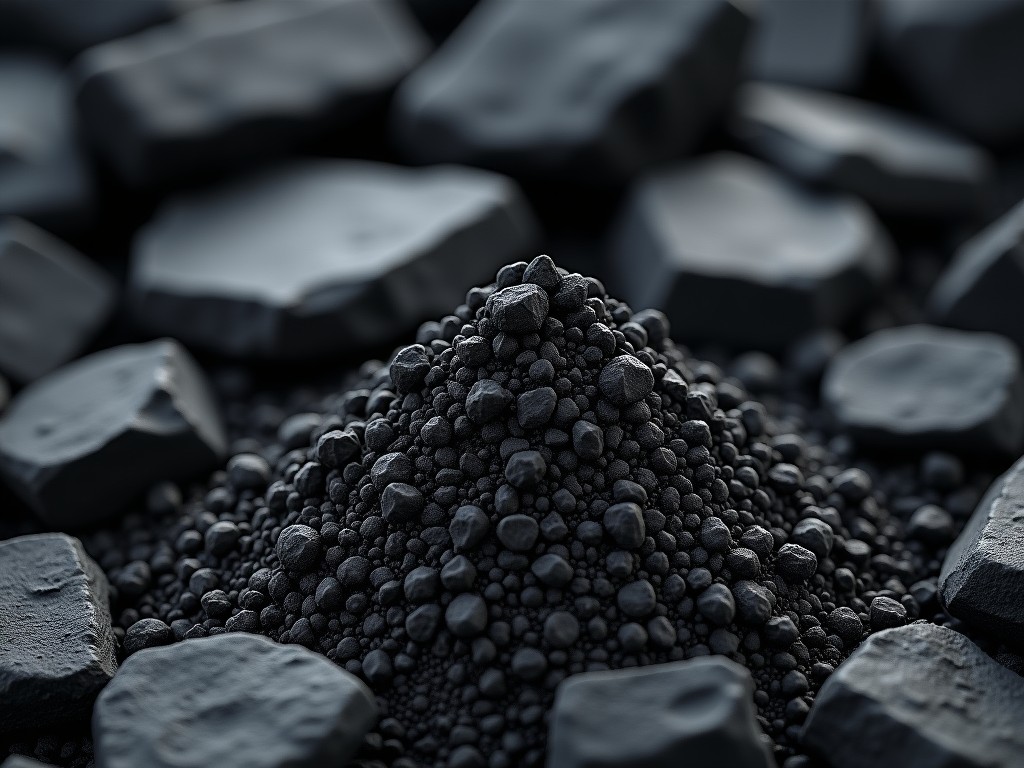
Electrically Calcined Anthracite Coal
Electrically Calcined Anthracite Coal
Electrically calcined anthracite coal represents a specialized carbonaceous material that has undergone high-temperature thermal treatment within an electric arc furnace. Unlike raw anthracite, this processed material fundamentally alters the molecular structure, significantly reducing volatile matter and increasing the fixed carbon content. The resulting material is characterized by its exceptional thermal stability and chemical inertness, making it suitable for critical industrial processes where purity and predictable performance are mandatory.
The calcination process typically involves heating the raw anthracite between 1200°C and 1500°C in a controlled atmosphere. This intense thermal energy facilitates the removal of moisture and gaseous hydrocarbons that would otherwise affect performance in high-temperature applications. For engineers, this translates to a product with a lower shrinkage rate and a reduced impurity profile, ensuring consistency in metallurgical and chemical environments.
The Electric Calcination Process
Utilizing an electric arc furnace (EAF) for calcination allows for precise temperature control that traditional rotary kilns often cannot match. This precision ensures uniform heat distribution throughout the coal particles, preventing localized degradation or inconsistent carbonization levels. The resulting uniformity is vital for maintaining the mechanical integrity of the coal when used in filtration media or as pressurized reductants.
During the thermal cycle, the carbon structure of the anthracite is reorganized into a more stable crystalline state. This structural shift increases the hardness of the material and improves its thermal conductivity. By eliminating elements such as sulfur and oxygen during the process, the final electrically calcined anthracite provides a high-purity source that minimizes contamination in steel and alloy manufacturing.
Technical Specifications
The following table outlines the typical physicochemical properties of electrically calcined anthracite coal. These values may be adjusted based on the specific feedstock material and the required calcination temperature.
| Property | Typical Values |
|---|---|
| Fixed Carbon (%) | 85% - 96% |
| Volatile Matter (%) | lt 3% |
| Ash Content (%) | lt 5% |
| Moisture Content (%) | lt 0.5% |
| Hardness (Mohs) | 5 - 7 |
| Specific Gravity (g/cm³) | 2.1 - 2.4 |
Industrial Applications
The unique chemical profile of electrically calcined anthracite makes it indispensable in several high-stakes industrial sectors. Its selection is driven by the need for a material that remains stable under extreme conditions.
Metallurgical Reduction: Used as a high-purity reductant in steelmaking and alloy production. Its low ash and sulfur content prevent the introduction of unwanted impurities into the molten metal, maintaining melt grade integrity.
Water and Gas Filtration: Due to its high mechanical strength and chemical resistance, it is utilized in deep-bed filtration systems. The material does not easily crush under high pressure, ensuring long-term filter stability.
Carbon Manufacturing: Acts as a critical precursor in the production of graphite electrodes and specialty carbon. The high fixed carbon content ensures predictable yields during the final manufacturing stages.
Foundry Applications: Employed as an agent in molding sands to improve surface finish and thermal properties of the casting.
Material Selection and Customization
Selecting the correct grade of calcined anthracite requires an analysis of the specific application environment. For filtration applications, a uniform mesh size is critical to maintain optimal porosity and prevent pressure drop increases. Conversely, for metallurgical uses, finer particle sizes may be required to increase the surface area for chemical reactions within the furnace.
We provide various particle sizing options ranging from fine powders to large granules to meet diverse engineering requirements. Furthermore, the calcination temperature can be adjusted to meet specific chemical property targets, such as specific levels of de-sulfurization or further de-volatilization. Each batch undergoes rigorous laboratory testing to ensure that the delivered material matches the technical parameters defined by your engineering team.
Technical Inquiry
To determine the most suitable electrically calcined anthracite for your project, please contact our technical support team. We can provide detailed data sheets, material analysis reports, and customization feasibility studies to ensure the product integrates seamlessly into your industrial process.


×