-
Call Now ! +86 18231158869
-
Email Now [email protected]

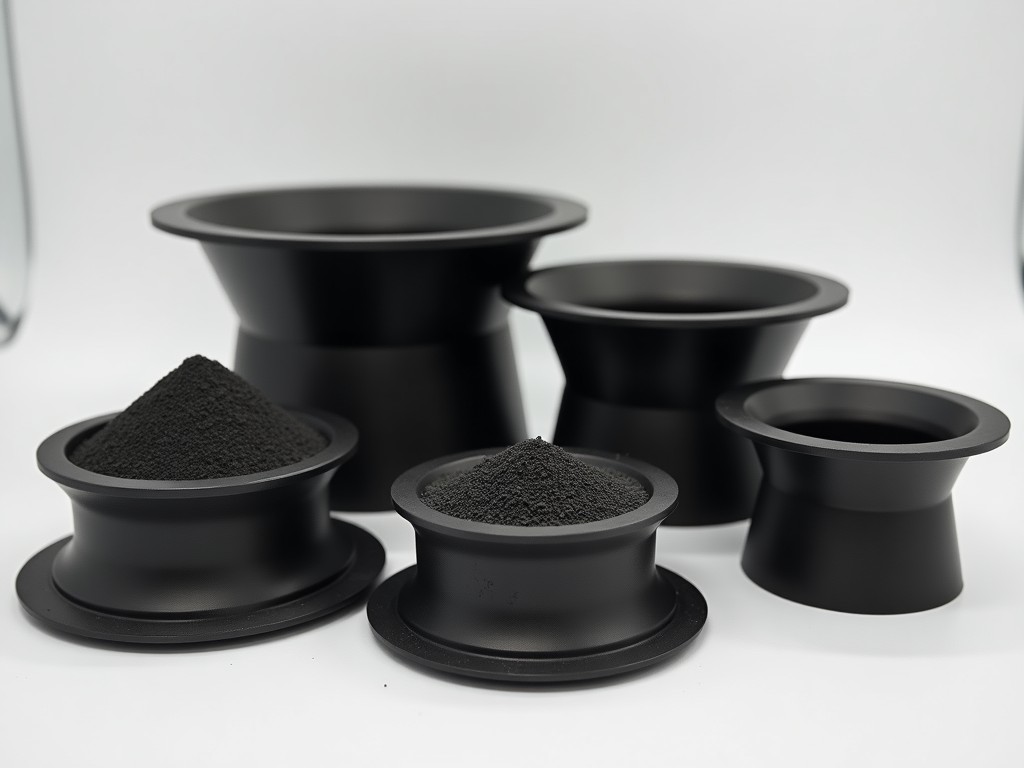
Recarburizer Carbon Factory Supplier Price
Recarburizer Carbon Factory Supplier Price and Technical Specifications
Recarburizer carbon is a critical medium in the heat treatment process, specifically engineered to restore surface carbon content in low-carbon steel components. In pack furnace operations, this material facilitates the diffusion of carbon into the steel surface, achieving the necessary case hardness while maintaining structural integrity. Selecting the correct grade requires a technical understanding of how chemical composition and particle morphology impact the metallurgical performance of the final industrial part.
Technical Composition of Recarburizer Blends
The formulation typically consists of natural graphite as the primary carbon source, combined with a catalyst—usually iron oxide (Fe₂O₃). This catalyst is essential because it accelerates the chemical reaction that allows carbon to penetrate the steel's lattice structure at high temperatures. The ratio between carbon and catalyst is precisely controlled to ensure a uniform carbon potential across the entire batch of parts within the furnace.
Purity levels are defined by the absence of specifically ash content and moisture levels. High ash content can lead to impurities forming on the steel surface, potentially compromising the fatigue resistance and finish quality of the component. Engineers prioritize blends with low moisture to prevent steam-induced oxidation and to maintain a consistent thermal environment during the carburizing cycle.
Factors Influencing Factory Pricing for Industrial Carbon
The factory-level price of recarburizer carbon is primarily dictated by the purity of the raw graphite source and the precision of the manufacturing process. High-purity graphite with minimal ash content commands a premium because it prevents unwanted inclusions in the steel surface. Additionally, the physical form—whether powdered, granulated, or briquette—affects processing costs.
Volume requirements also play a significant role. Granulated recarburizer is often preferred for large-scale industrial use due to easier handling, whereas powdered forms may be used for specific applications requiring faster surface reaction times. Procurement teams must evaluate the total cost of ownership, including the reaction rate and the part rejection rate, when sourcing from a supplier.
| Property | Typical Grade (Standard) | High-Purity Grade (Premium) |
|---|---|---|
| Carbon Content (%) | 80% - 88% | 90% - 96% |
| Iron Oxide (%) | 5% - 12% | 3% - 8% |
| Ash Content (%) | lt; 3.0% | lt; 1.5% |
| Moisture Content (%) | lt; 1.5% | lt; 0.5% |
| Particle Size (Mesh) | 60 - 200 mesh | Customizable per project |
Industrial Applications and Material Selection Logic
Application of recarburizer carbon is driven by the specific mechanical requirements of the component. For instance, automotive gears and shafts require a high-carbon layer to resist wear, while the core must remain ductile to absorb impact loads. This duality is achieved through the controlled carbon diffusion provided by the carburizing medium.
In heavy machinery manufacturing, bearings and large pins often undergo this process to ensure surface longevity under high contact stress. The choice of the recarburizer grade depends on the furnace atmosphere control; a finer powder distribution increases the surface area for the reaction, potentially shortening the cycle time but requiring more precise temperature monitoring.
Quality Control and Inspection Standards
To ensure consistent results, industrial suppliers employ rigorous testing protocols. Sieve analysis is performed to verify that the particle size distribution meets the specification, preventing segregation issues that could cause uneven carburization. Chemical analysis is also conducted to confirm the carbon-to-oxide ratio and monitor impurity levels.
Furthermore, furnace-test testing is sometimes performed on sample batches. This involves running a short test cycle in a controlled environment to measure the resulting carbon case depth and hardness profile. This empirical data reduces the risk for the buyer by validating performance before large-scale production runs.
Need specific technical specifications or a bulk quote for your facility's heat treatment needs? We provide technical data sheets and custom formulations based on your engineering requirements.
Request a Technical Quote and Consultation


×